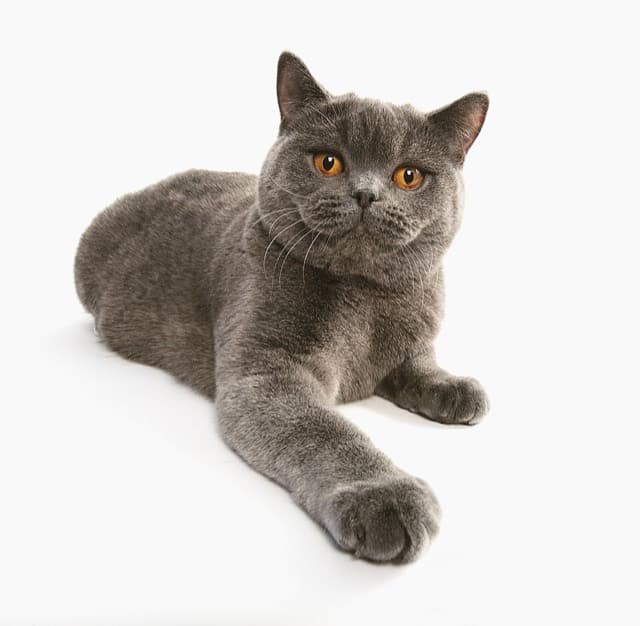
British Shorthair
Great Britain
- Size
- Medium
- Weight
- 4–8 kg
- Life expectancy
- 12–17 yrs
- placid
- loyal
- independent
- easy-going
Weights are typical adult ranges; individual cats vary.
About the British Shorthair
The British Shorthair is one of the oldest English breeds, descended from the everyday street and farm cats of Britain and refined into a pedigree in the late nineteenth century. It is a compact, heavy-boned cat with a broad chest, round head, full cheeks and a very dense, plush coat. The blue-grey variety is the best known, but many colours and patterns exist.
Temperament
Placid, dignified and affectionate without fuss. Most British Shorthairs dislike being picked up but enjoy being near their people. They tend to be tolerant of children and other pets and are rarely vocal.
Play & activity
Low to moderate energy. A few short daily play sessions keep it trim and engaged. Adults often prefer watching to joining in.
Grooming
The dense coat sheds steadily and heavily in spring. Brush once or twice a week to remove loose undercoat.
Care & wellbeing
Matures slowly and can be prone to obesity, so keep an eye on body condition. Hypertrophic cardiomyopathy and polycystic kidney disease are recognised in the breed.
Daily needs at a glance
For a typical 6 kg adult- Water
- 240 ml–360 ml
- a day
- Energy
- ≈ 320 kcal
- a day, neutered adult
- Active play
- 15–20 min
- a day
- Grooming
- A brush once a week
Starting points from the same formulas as our calculators. Your pet's age, weight, activity and food all change the numbers. Work it out for your pet
Living with a British Shorthair
Typical tendencies for the breed. Upbringing, training and the individual matter as much.
History
The British Shorthair traces to ordinary British domestic cats that were selectively bred in the late nineteenth century into a stocky, round-faced show breed. Its dense plush coat and placid character made it popular worldwide. The blue-grey colour is the best known, though many colours exist.
Health
The breed can be prone to
- Hypertrophic cardiomyopathy (HCM)
- Polycystic kidney disease (PKD)
- Haemophilia B
Health tests to ask a breeder about
- Heart scans for HCM
- PKD DNA test
- Blood group testing
Not every British Shorthair is affected, and this isn't a diagnosis. Read about common conditions and when to see a vet.
Cost to keep
About average- Moderate food and insurance costs
- Little or no professional grooming needed
- A 12–17 year commitment
- Budget for breed-related health checks or insurance
A relative guide, not a price — costs vary a lot by country, insurer and lifestyle.
Is a British Shorthair right for you?
Could suit
- Quieter homes and relaxed routines
- People who'd rather not spend much time grooming
Common questions
How big does a British Shorthair get?
Adult British Shorthairs typically weigh around 4–8 kg. Individuals vary, and males are often larger than females.
How long do British Shorthairs live?
Typically 12–17 years. Keeping them lean, active and up to date with vet checks gives the best chance of a long, healthy life.
How active is a British Shorthair?
Expect to spend around 15–20 minutes a day on play, ideally in short sessions with toys they can chase and pounce on.
How much grooming does a British Shorthair need?
A brush once a week. Check ears, teeth and nails as part of the routine.
Are British Shorthairs affectionate?
Usually friendly, with a balance of company and independence. Every cat is an individual, and early handling shapes how sociable they become.
Do British Shorthairs shed?
A moderate amount. Regular brushing keeps loose hair under control.
Are British Shorthairs good with children?
They usually do well with children. Always supervise young children with any cat, and teach them to give the cat space.
Can a British Shorthair live in a flat?
Usually, yes — with plenty of play, climbing space and enrichment.
What health problems do British Shorthairs have?
The breed can be prone to hypertrophic cardiomyopathy (hcm), polycystic kidney disease (pkd), haemophilia b. Not every British Shorthair is affected — ask a breeder about health testing, and your vet about what to watch for.
Written by Petopedia as general guidance, not veterinary advice.