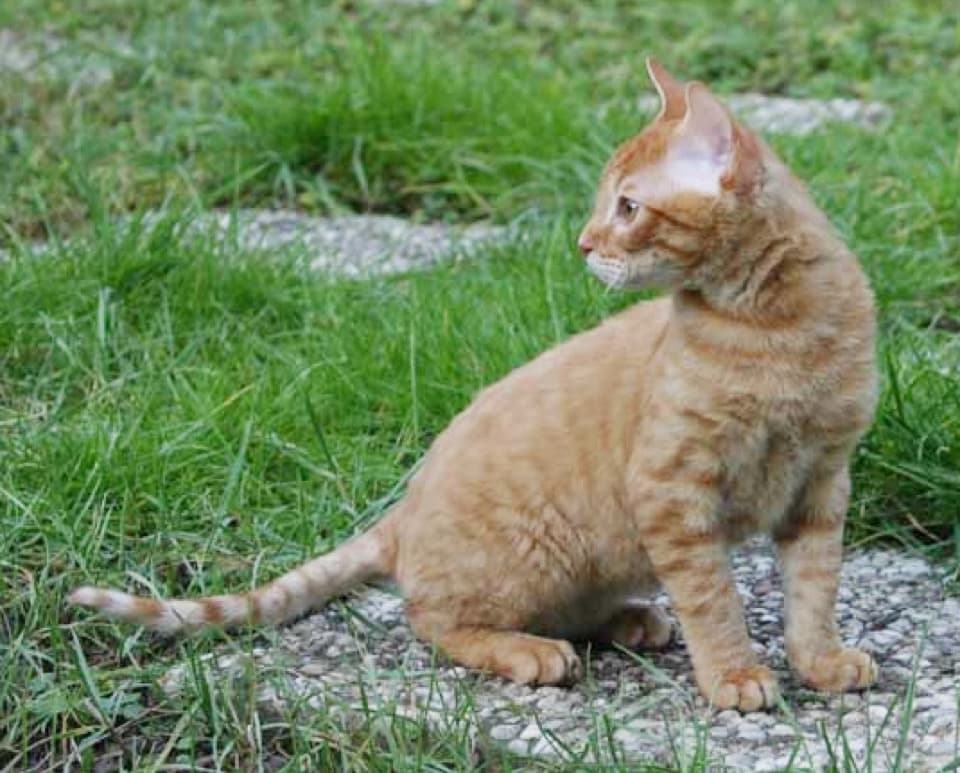
German Rex
Germany
- Size
- Medium
- Weight
- 3–5 kg
- Life expectancy
- 12–16 yrs
- playful
- friendly
- lively
- people-oriented
Weights are typical adult ranges; individual cats vary.
About the German Rex
The German Rex is a medium-sized, muscular cat with a soft, wavy coat caused by a recessive gene, probably the same one as in the Cornish Rex. It is generally sturdier and less extreme in shape than the Cornish Rex, with a rounder head and a body closer to that of a European shorthaired cat. It remains rare.
Temperament
Friendly, lively and people-oriented. German Rex cats are reported to be playful well into adulthood and to enjoy company, though information on the breed is limited because so few exist.
Play & activity
Moderate to high. Regular play and opportunities to climb suit them well.
Grooming
The fine, curly coat needs only gentle handling; stroking with the hand or a soft mitt is enough. Harsh brushing can break the hairs.
Care & wellbeing
The thin coat gives less insulation, so a warm resting place helps in winter. As with any rare breed, finding a breeder with a healthy, varied line is important.
Daily needs at a glance
For a typical 4 kg adult- Water
- 160 ml–240 ml
- a day
- Energy
- ≈ 240 kcal
- a day, neutered adult
- Active play
- 30–45 min
- a day
- Grooming
- An occasional brush is plenty
Starting points from the same formulas as our calculators. Your pet's age, weight, activity and food all change the numbers. Work it out for your pet
Living with a German Rex
Typical tendencies for the breed. Upbringing, training and the individual matter as much.
History
The breed began with a curly-coated stray female found in East Berlin in the early 1950s, known as Lämmchen. Kittens descended from her carried the curly coat, and breeders in Germany continued the line. It is recognised by FIFe and the WCF but remains uncommon even in Germany.
Health
The breed can be prone to
- Limited health data because the breed is rare
- Cold sensitivity due to thin coat
Health tests to ask a breeder about
- Routine vet checks
Not every German Rex is affected, and this isn't a diagnosis. Read about common conditions and when to see a vet.
Cost to keep
About average- Moderate food and insurance costs
- Little or no professional grooming needed
- A 12–16 year commitment
- Budget for breed-related health checks or insurance
A relative guide, not a price — costs vary a lot by country, insurer and lifestyle.
Is a German Rex right for you?
Could suit
- Homes with time for lots of interactive play
- People who'd rather not spend much time grooming
- People who want an affectionate, people-focused cat
Think twice if
- The cat will be alone and unoccupied for long stretches
Common questions
How big does a German Rex get?
Adult German Rexs typically weigh around 3–5 kg. Individuals vary, and males are often larger than females.
How long do German Rexs live?
Typically 12–16 years. Keeping them lean, active and up to date with vet checks gives the best chance of a long, healthy life.
How active is a German Rex?
Expect to spend around 30–45 minutes a day on play, ideally in short sessions with toys they can chase and pounce on.
How much grooming does a German Rex need?
An occasional brush is plenty. Check ears, teeth and nails as part of the routine.
Are German Rexs affectionate?
Typically very people-focused and affectionate. Every cat is an individual, and early handling shapes how sociable they become.
Do German Rexs shed?
Very little. Regular brushing keeps loose hair under control.
Are German Rexs good with children?
They usually do well with children. Always supervise young children with any cat, and teach them to give the cat space.
Can a German Rex live in a flat?
Usually, yes — with plenty of play, climbing space and enrichment.
What health problems do German Rexs have?
The breed can be prone to limited health data because the breed is rare, cold sensitivity due to thin coat. Not every German Rex is affected — ask a breeder about health testing, and your vet about what to watch for.
Written by Petopedia as general guidance, not veterinary advice.