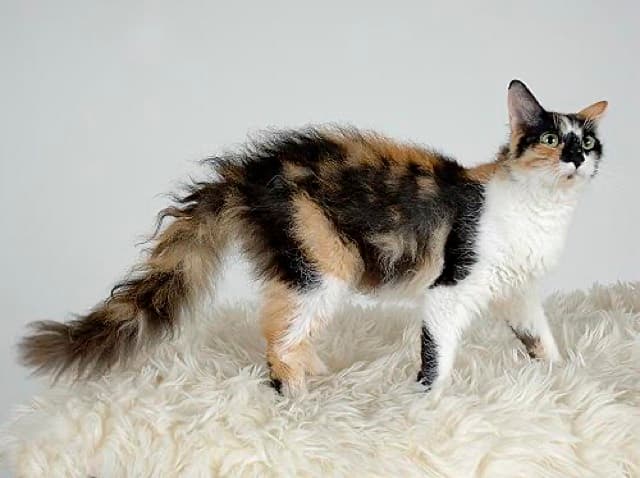
LaPerm
United States
- Size
- Medium
- Weight
- 2.5–5 kg
- Life expectancy
- 12–15 yrs
- affectionate
- gentle
- curious
- playful
Weights are typical adult ranges; individual cats vary.
About the LaPerm
The LaPerm began in Oregon in the early 1980s, when a farm cat produced a bald kitten that later grew a curly coat. The trait proved to be dominant, and breeders developed the line from those barn cats. LaPerms come in long and short coat types, both with loose curls or waves, and have a medium build and expressive almond eyes.
Temperament
Affectionate, gentle and curious. LaPerms tend to enjoy human company and laps, while staying active and interested in their surroundings.
Play & activity
Moderately active. Enjoys climbing and play, with a fondness for being near people while doing so.
Grooming
The curly coat is surprisingly low maintenance. Occasional combing with a wide-toothed comb is enough; over-brushing can flatten the curls.
Care & wellbeing
A breed drawn from working farm stock and generally considered sturdy. Coat can change with age and season, which is normal.
Daily needs at a glance
For a typical 3.8 kg adult- Water
- 152 ml–228 ml
- a day
- Energy
- ≈ 230 kcal
- a day, neutered adult
- Active play
- 20–30 min
- a day
- Grooming
- A brush once a week
Starting points from the same formulas as our calculators. Your pet's age, weight, activity and food all change the numbers. Work it out for your pet
Living with a LaPerm
Typical tendencies for the breed. Upbringing, training and the individual matter as much.
History
The LaPerm arose in the United States from a kitten born without hair that later grew a curly coat. The breed's soft, springy curls come from a dominant gene. It is affectionate, active and enjoys being close to people.
Health
There's limited reliable published information on health issues in the LaPerm. Breed clubs and your vet are the best sources.
Not every LaPerm is affected, and this isn't a diagnosis. Read about common conditions and when to see a vet.
Cost to keep
About average- Moderate food and insurance costs
- Little or no professional grooming needed
- A 12–15 year commitment
A relative guide, not a price — costs vary a lot by country, insurer and lifestyle.
Is a LaPerm right for you?
Could suit
- Homes that can offer daily play sessions
- People who'd rather not spend much time grooming
- People who want an affectionate, people-focused cat
Common questions
How big does a LaPerm get?
Adult LaPerms typically weigh around 2.5–5 kg. Individuals vary, and males are often larger than females.
How long do LaPerms live?
Typically 12–15 years. Keeping them lean, active and up to date with vet checks gives the best chance of a long, healthy life.
How active is a LaPerm?
Expect to spend around 20–30 minutes a day on play, ideally in short sessions with toys they can chase and pounce on.
How much grooming does a LaPerm need?
A brush once a week. Check ears, teeth and nails as part of the routine.
Are LaPerms affectionate?
Typically very people-focused and affectionate. Every cat is an individual, and early handling shapes how sociable they become.
Do LaPerms shed?
A little. Regular brushing keeps loose hair under control.
Are LaPerms good with children?
They usually do well with children. Always supervise young children with any cat, and teach them to give the cat space.
Can a LaPerm live in a flat?
Usually, yes — with plenty of play, climbing space and enrichment.
Written by Petopedia as general guidance, not veterinary advice.