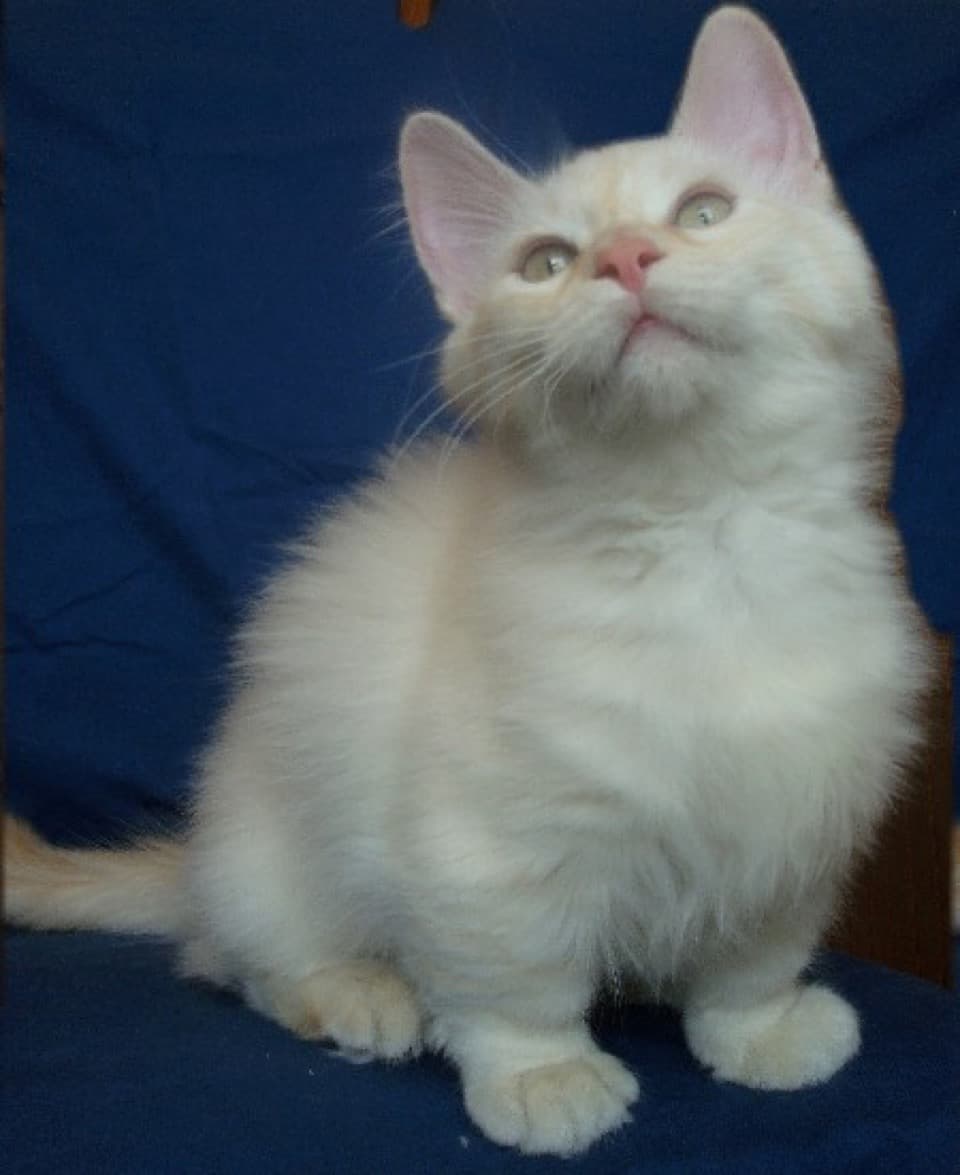
Munchkin
United States
- Size
- Small
- Weight
- 2–4 kg
- Life expectancy
- 12–15 yrs
- playful
- curious
- outgoing
- friendly
Weights are typical adult ranges; individual cats vary.
About the Munchkin
The Munchkin is defined by its short legs, caused by a dominant gene that affects the long bones, while the body and head are of normal size. It comes in every colour and in short or long coats. Standard-legged cats also occur in Munchkin litters.
Temperament
Outgoing, curious and playful. Munchkins tend to scamper rather than leap and are known for carrying off small objects. They are generally friendly with people and other pets.
Play & activity
Moderate. They run and play energetically but cannot jump as high as long-legged cats, so ramps, low shelves and floor-level toys suit them best.
Grooming
Shorthaired cats need weekly brushing; longhaired cats need brushing a few times a week. Some find it hard to groom their hindquarters fully, so owners may need to help.
Care & wellbeing
The short-leg trait is a form of chondrodysplasia, and many vets and welfare groups are concerned about effects on joints, spinal curvature and mobility, though long-term evidence is still limited. Two copies of the gene are thought to be lethal before birth. Keep the cat slim to reduce joint load, provide easy access to resting spots and see a vet promptly if your cat is limping, stiff or reluctant to move.
Daily needs at a glance
For a typical 3 kg adult- Water
- 120 ml–180 ml
- a day
- Energy
- ≈ 190 kcal
- a day, neutered adult
- Active play
- 20–30 min
- a day
- Grooming
- A brush once a week
Starting points from the same formulas as our calculators. Your pet's age, weight, activity and food all change the numbers. Work it out for your pet
Living with a Munchkin
Typical tendencies for the breed. Upbringing, training and the individual matter as much.
History
Short-legged cats were reported in various places during the twentieth century, but the modern breed traces to a short-legged stray found in Louisiana in 1983. TICA began a development programme in the 1990s and later granted recognition. The CFA, FIFe and the GCCF do not recognise it because of welfare concerns.
Health
The breed can be prone to
- Concerns about osteoarthritis and joint strain linked to short legs
- Lordosis (inward curvature of the spine) has been reported
- Pectus excavatum (sunken chest) has been reported
Health tests to ask a breeder about
- Vet assessment of joints and spine
- Body weight monitoring
Not every Munchkin is affected, and this isn't a diagnosis. Read about common conditions and when to see a vet.
Cost to keep
Lower than average- Smaller food bills and medicine doses
- Little or no professional grooming needed
- A 12–15 year commitment
- Budget for breed-related health checks or insurance
A relative guide, not a price — costs vary a lot by country, insurer and lifestyle.
Is a Munchkin right for you?
Could suit
- Homes that can offer daily play sessions
- People who'd rather not spend much time grooming
- People who want an affectionate, people-focused cat
- Smaller homes and flats
Common questions
How big does a Munchkin get?
Adult Munchkins typically weigh around 2–4 kg. Individuals vary, and males are often larger than females.
How long do Munchkins live?
Typically 12–15 years. Keeping them lean, active and up to date with vet checks gives the best chance of a long, healthy life.
How active is a Munchkin?
Expect to spend around 20–30 minutes a day on play, ideally in short sessions with toys they can chase and pounce on.
How much grooming does a Munchkin need?
A brush once a week. Check ears, teeth and nails as part of the routine.
Are Munchkins affectionate?
Typically very people-focused and affectionate. Every cat is an individual, and early handling shapes how sociable they become.
Do Munchkins shed?
A moderate amount. Regular brushing keeps loose hair under control.
Are Munchkins good with children?
They usually do well with children. Always supervise young children with any cat, and teach them to give the cat space.
Can a Munchkin live in a flat?
Usually, yes — with plenty of play, climbing space and enrichment.
What health problems do Munchkins have?
The breed can be prone to concerns about osteoarthritis and joint strain linked to short legs, lordosis (inward curvature of the spine) has been reported, pectus excavatum (sunken chest) has been reported. Not every Munchkin is affected — ask a breeder about health testing, and your vet about what to watch for.
Written by Petopedia as general guidance, not veterinary advice.