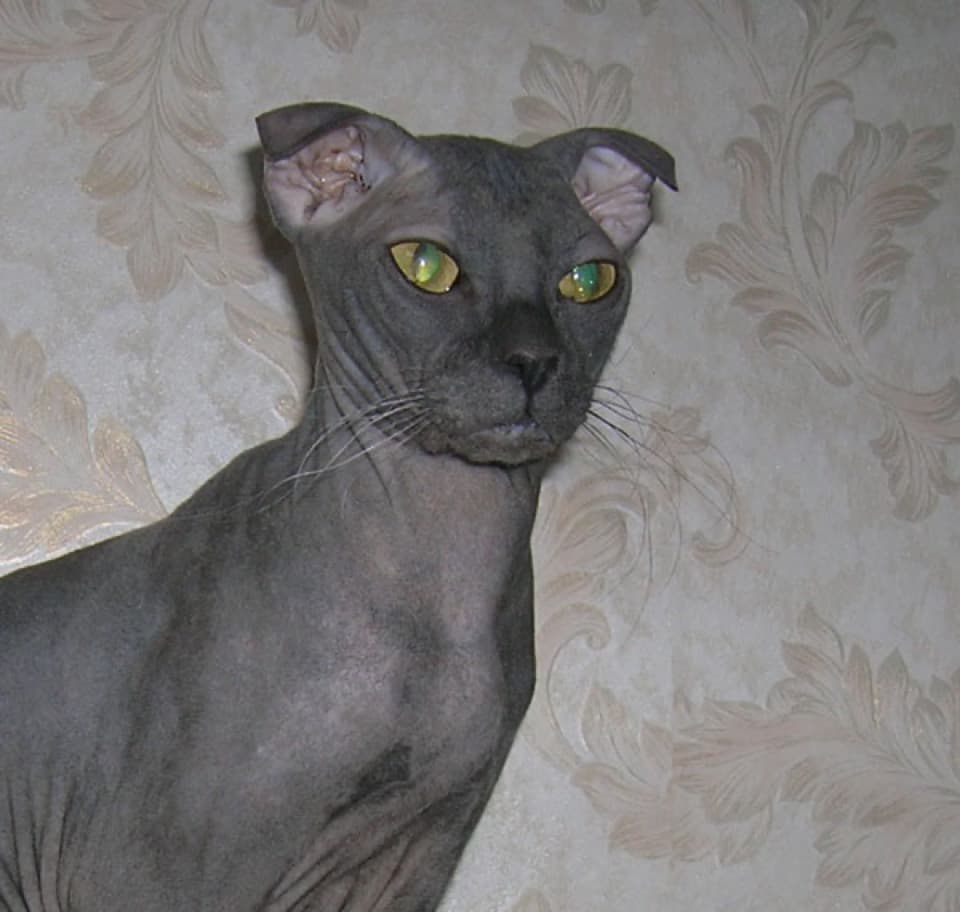
Ukrainian Levkoy
Ukraine
- Size
- Medium
- Weight
- 3–5 kg
- Life expectancy
- —
- playful
- friendly
- affectionate
- curious
Weights are typical adult ranges; individual cats vary.
About the Ukrainian Levkoy
The Ukrainian Levkoy is a medium-sized cat combining two unusual traits: hairlessness and ears that fold forwards and down. Its angular head and folded ears give it a distinctive, almost dog-like profile. It is not recognised by major international registries.
Temperament
Reported to be friendly, playful and attached to people. Evidence about temperament is mostly anecdotal because the breed is rare.
Play & activity
Moderate. They enjoy play and warmth.
Grooming
Like other hairless cats, regular skin cleaning is needed to remove oils, along with ear cleaning.
Care & wellbeing
Folded ears in cats are usually linked to a cartilage defect that can cause painful joint disease, and hairlessness brings sensitivity to sun and cold. These concerns have led many registries to decline recognition. If you own one, keep it warm and out of strong sun, watch for stiffness or reluctance to jump and see a vet about any lameness or swollen joints.
Daily needs at a glance
For a typical 4 kg adult- Water
- 160 ml–240 ml
- a day
- Energy
- ≈ 240 kcal
- a day, neutered adult
- Active play
- 20–30 min
- a day
- Grooming
- Brushing a few times a week
Starting points from the same formulas as our calculators. Your pet's age, weight, activity and food all change the numbers. Work it out for your pet
Living with a Ukrainian Levkoy
Typical tendencies for the breed. Upbringing, training and the individual matter as much.
History
The breed was created in Ukraine in the early 2000s by crossing Donskoy cats with Scottish Folds. It is recognised by some smaller Eastern European and Russian organisations but not by major registries. The name refers to the levkoy (stock) flower, whose leaves fold over.
Health
The breed can be prone to
- Possible osteochondrodysplasia associated with folded ears
- Sun and cold sensitivity
- Skin problems related to hairlessness
Health tests to ask a breeder about
- Vet assessment of joints
- Skin checks
Not every Ukrainian Levkoy is affected, and this isn't a diagnosis. Read about common conditions and when to see a vet.
Cost to keep
About average- Moderate food and insurance costs
- Little or no professional grooming needed
- A commitment of many years
- Budget for breed-related health checks or insurance
A relative guide, not a price — costs vary a lot by country, insurer and lifestyle.
Is a Ukrainian Levkoy right for you?
Could suit
- Homes that can offer daily play sessions
- People who want an affectionate, people-focused cat
Common questions
How big does a Ukrainian Levkoy get?
Adult Ukrainian Levkoys typically weigh around 3–5 kg. Individuals vary, and males are often larger than females.
How active is a Ukrainian Levkoy?
Expect to spend around 20–30 minutes a day on play, ideally in short sessions with toys they can chase and pounce on.
How much grooming does a Ukrainian Levkoy need?
Brushing a few times a week. Check ears, teeth and nails as part of the routine.
Are Ukrainian Levkoys affectionate?
Typically very people-focused and affectionate. Every cat is an individual, and early handling shapes how sociable they become.
Do Ukrainian Levkoys shed?
Very little. Regular brushing keeps loose hair under control.
Are Ukrainian Levkoys good with children?
Many get on well with children. Always supervise young children with any cat, and teach them to give the cat space.
Can a Ukrainian Levkoy live in a flat?
Usually, yes — with plenty of play, climbing space and enrichment.
What health problems do Ukrainian Levkoys have?
The breed can be prone to possible osteochondrodysplasia associated with folded ears, sun and cold sensitivity, skin problems related to hairlessness. Not every Ukrainian Levkoy is affected — ask a breeder about health testing, and your vet about what to watch for.
Written by Petopedia as general guidance, not veterinary advice.