IVDD in Dogs: Slipped Disc Signs and Emergency Care
In short
Intervertebral disc disease (IVDD) happens when a cushioning disc in the spine bulges or bursts and presses on the spinal cord. It can cause anything from back pain to sudden paralysis. **A dog that suddenly becomes wobbly, drags their legs or can't walk needs a vet the same day — speed can make a real difference to recovery.**
At a glance
| What it is | Damage to the discs between the bones of the spine, which can press on the spinal cord or nerves |
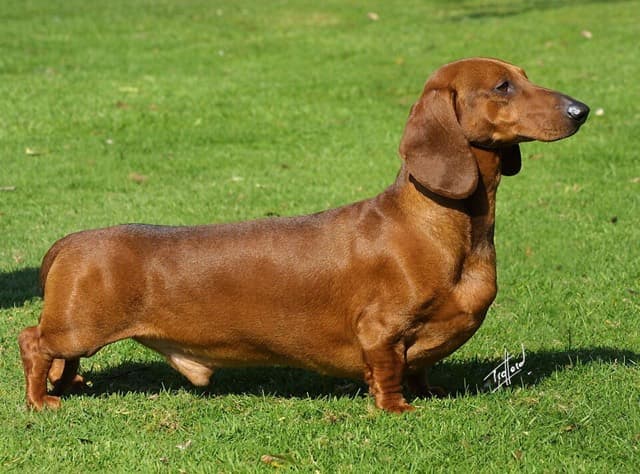
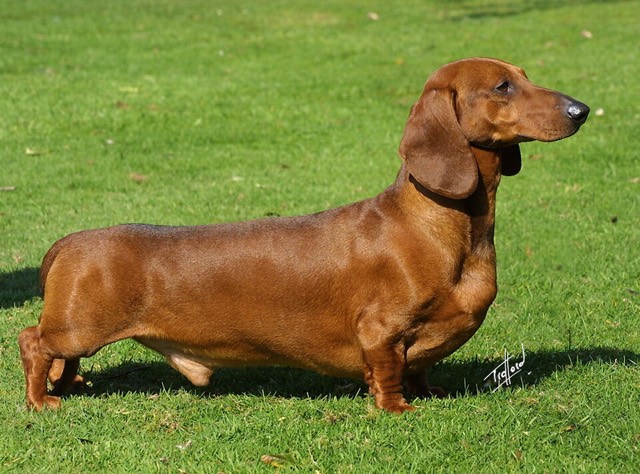
| Who's at risk | Long-backed, short-legged breeds such as dachshunds, and French bulldogs, usually from young middle age; also older larger dogs |
| Main signs | Back or neck pain, hunched posture, reluctance to move, wobbliness, weakness or paralysis of the legs |
| Contagious? | No |
| Can it be prevented? | Not fully, but a lean body, fewer big jumps and choosing screened breeding lines may lower the risk |
What it is
The spine is a chain of bones (vertebrae) with the spinal cord running through a channel in the middle. Between each pair of vertebrae sits a disc — a tough outer ring with a softer, jelly-like centre — that acts as a shock absorber and lets the back bend.
In IVDD, a disc degenerates and then pushes upwards into the spinal canal, squashing the spinal cord or the nerves leaving it. Vets usually describe two broad patterns:
- Sudden disc extrusion. In certain breeds, the discs dry out and harden early in life. A hardened disc can burst suddenly, often during an ordinary movement such as jumping off the sofa, and fire material into the spinal canal. This is the classic "slipped disc" seen in dachshunds and similar breeds, often from about three to seven years of age.
- Gradual disc protrusion. In other dogs, typically older and larger, a disc bulges slowly over months, causing signs that creep on gradually.
Discs anywhere along the spine can be affected. Problems in the neck tend to cause severe pain, while problems in the middle or lower back more often cause weakness or paralysis of the back legs.
Signs to watch for
Signs range from mild discomfort to complete loss of movement, and they can change quickly.
Signs of pain:
- A hunched back, or holding the head low and stiff
- Reluctance to jump, climb stairs, or lower the head to eat or drink
- Crying out when picked up or touched
- Trembling, panting or restlessness
- A tense, hard tummy (from guarding the back)
- Unwillingness to walk or to wag the tail
Signs the spinal cord is affected:
- A wobbly, "drunken" walk, or crossing the back legs
- Scuffing or knuckling over the back feet, so the top of the paw drags
- Weakness in one or more legs
- Being unable to stand or walk, dragging the back legs
- Losing control of the bladder or bowels, or being unable to pass urine
When to see a vet
Treat any of the following as an emergency and contact your vet or nearest emergency clinic straight away:
- Sudden wobbliness, weakness or knuckling of the feet
- Inability to stand, walk or use the back legs
- Dragging one or both back legs
- Loss of bladder or bowel control, or straining without passing urine
- Severe pain — crying out, shaking, refusing to move
When the spinal cord is badly compressed, the chance of a good recovery can fall the longer it goes untreated. Don't wait to see if it improves overnight.
While you arrange to see a vet, keep your dog as still and calm as possible. Confine them to a crate or small space, carry them rather than letting them walk, and support both the chest and the back end so the spine stays level. Don't give any human painkillers. Our pet first aid basics has more on moving an injured animal safely.
If your dog has milder signs, such as back pain alone, still phone your vet the same day. Mild cases can worsen suddenly, and early pain control and rest matter.
How vets diagnose it
Your vet will carry out a neurological examination. This includes watching your dog stand and walk, testing reflexes, checking whether your dog knows where their feet are, and gently feeling along the spine for pain. A crucial test is whether your dog can still feel a firm pinch to the toes — this "deep pain" response helps judge how severe the damage is and guides decisions about treatment.
Plain X-rays may show narrowed disc spaces or other problems, but they can't show the spinal cord itself. To pinpoint which disc is affected and how badly the cord is compressed, an MRI or CT scan is needed, usually at a referral centre. These scans are essential if surgery is being considered.
Other conditions can look similar, including spinal strokes, infections, tumours and injuries, so tests also help rule these out.
Treatment and management
There are two broad approaches, and your vet will advise based on your dog's signs, their scan results and your circumstances.
Conservative management is often used for dogs with pain alone or mild wobbliness who can still walk:
- Strict crate rest for several weeks. This means a small pen or crate, with brief, carried or lead-only toilet trips. It is very hard work for owners, but it gives the disc and surrounding tissues time to settle.
- Pain relief, which may include anti-inflammatory medication and other pain medicines prescribed by your vet.
- Careful monitoring. If your dog gets worse during rest, call your vet immediately.
Surgery is generally recommended for dogs who can't walk, who have repeated episodes, or whose pain doesn't settle. A specialist surgeon removes the disc material pressing on the spinal cord. Surgery gives many dogs the best chance of walking again, especially when done promptly, but outcomes depend on how severely the cord was damaged.
Rehabilitation is a big part of recovery after either approach. Physiotherapy, hydrotherapy and exercises at home help rebuild strength and coordination. Some dogs who can't empty their bladder need help with this for a while; your vet team will show you how.
Some dogs don't regain full use of their back legs. Many of these still enjoy a good quality of life with nursing care and, in some cases, a mobility cart.
Living with it
Dogs who have had one disc episode are at risk of another, so long-term habits matter:
- Use a harness rather than a collar, especially for dogs with neck problems.
- Discourage jumping on and off furniture and beds. Ramps or steps help.
- Use stair gates if stairs are a challenge.
- Pick your dog up with one hand under the chest and one under the back end, keeping the spine level.
- Keep your dog slim — extra weight strains the back. See our guide to obesity in pets.
- Keep up the exercises your physiotherapist recommends, since good core muscle supports the spine.
Know the emergency signs above and act quickly if they appear again.
Prevention
IVDD can't be prevented entirely, especially in breeds where disc changes are inherited. Keeping your dog lean, fit and well muscled, and reducing repeated high-impact jumping, may help. For dachshunds, some breed clubs run X-ray screening schemes to help breeders select dogs less likely to pass on severe disc disease, and genetic tests related to early disc degeneration exist for some breeds. If you are buying a puppy from an at-risk breed, ask what screening the parents have had.
Breeds more at risk
Sudden disc extrusion is especially common in breeds with short legs and long backs, or other body shapes linked to early disc degeneration. Well-known examples include the dachshund, French bulldog, Pekingese, shih tzu, beagle, basset hound, Welsh corgi and cocker spaniel. Gradual disc bulging is seen more often in older large breeds such as the German shepherd. Crossbreeds of these breeds can be affected too.
Written by the Petopedia editorial team to our editorial standards. This is general information, not veterinary advice — if you're worried about your pet, contact your vet.