Africanis
Also known as African Dog · Khoekhoe Dog · Zulu Dog · Tswana Dog · Xhosa Dog
South Africa, Landraces and village dogs
- Size
- Medium
- Height
- 50–62 cm
- Weight
- 18–30 kg
- Life expectancy
- 12–15 yrs
- Gentle
- Intelligent
- Hardy
- Watchful
Heights and weights are typical adult ranges; individual dogs vary.
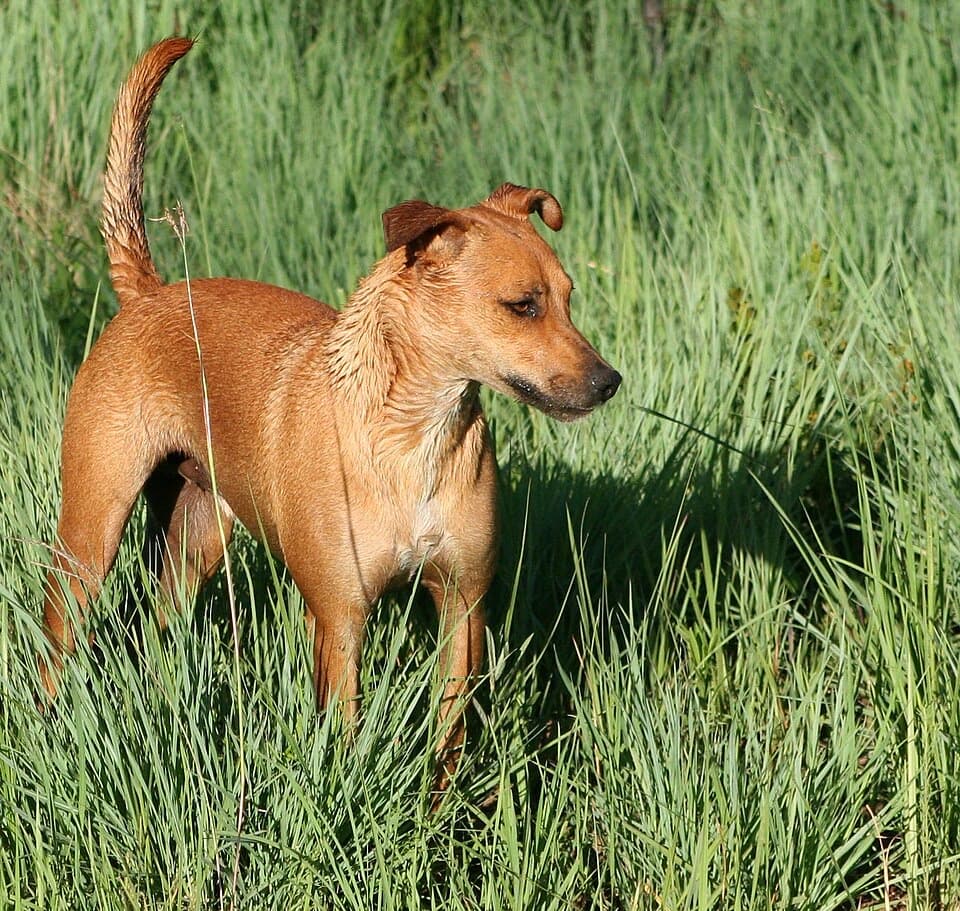
The Africanis is the traditional village dog of southern Africa, a lean, medium-sized landrace with a short coat and a long, narrow muzzle. It comes in almost every colour, often with white markings, and some have a dark patch on the upper tail. Although it varies from region to region, it breeds true to a recognisable, athletic shape that some people compare to a mix of greyhound, terrier and dingo.
Size
- Size
- Medium
- Height at shoulder
- 50–62 cm
- Adult weight
- 18–30 kg
Typical adult ranges. Males are often at the top of the range and females at the bottom. Most reach adult size by around 12 months.
Lifespan
12–15 years
Most Africaniss live 12–15 years. Like other medium dogs, they're usually considered senior from about 8, when twice-yearly vet checks help catch problems early. Keeping them lean is one of the most effective things you can do for a long life. How old is that in human years?
Temperament
Owners describe these dogs as affectionate, intelligent and gentle, and generally eager to please. They respond well to reward-based training and are often good family dogs, but they are naturally watchful and can be territorial around home.
- Gentle
- Intelligent
- Hardy
- Watchful
Food
For a typical 24 kg adult- Energy
- ≈ 1,210 kcal
- a day, neutered adult
- Water
- 960 ml–1.4 L
- a day, from all sources
- Most adults do well on two measured meals a day rather than one large one.
- Choose a complete food for their life stage, and ask your vet before changing diet if they have a health condition.
Starting points only — age, activity and the food itself change the numbers. Work out portions for your dog · Foods to avoid
Exercise
90–120 min a dayThese are active, athletic dogs that enjoy a good daily walk or run and time to explore. They do well with a mix of exercise and training games.
Grooming & shedding
The short coat needs little more than an occasional brush. Check for ticks and other parasites, especially in warm climates.
Health
Adapted over many generations to local conditions, the Africanis is known for being hardy. Preservation groups try to keep it as one landrace rather than split it into separate breeds. Outside southern Africa it is rarely seen. Keep vaccinations and parasite control up to date, and see a vet for any lameness or skin problems.
The breed can be prone to
- No breed-specific health problems are well documented
- Parasites and infectious disease are the main risks in free-ranging village populations
Health tests to ask a breeder about
- General veterinary health check
Not every Africanis is affected, and this isn't a diagnosis. See common conditions and the symptom checker.
History
Dogs reached Africa from Asia several thousand years ago, with early remains found in the Nile Delta. Their descendants spread south with herding peoples and reached southern Africa by around the sixth century. There they guarded homes, helped herd livestock and joined people on hunts. The Africanis Society of Southern Africa was founded in 1998 to protect and promote these dogs.
- Country of origin
- South Africa
- Type
- Landraces and village dogs
- Recognition
- Promoted by the Africanis Society of Southern Africa; not recognised by the FCI, AKC or The Kennel Club
Is a Africanis right for you?
Could suit
- Active owners who enjoy long walks, running or hiking
- People who'd rather not spend much time grooming
- First-time owners prepared to train consistently
Think twice if
- You can't give well over an hour of exercise a day, every day
Cost to keep
About average- Moderate food and insurance costs
- Little or no professional grooming needed
- A 12–15 year commitment
- Budget for breed-related health checks or insurance
A relative guide, not a price — costs vary a lot by country, insurer and lifestyle.
Not sure? Try the breed finder.
Africanis FAQ
How big does a Africanis get?
Adult Africaniss typically stand about 50–62 cm at the shoulder and weigh around 18–30 kg. Individuals vary, and males are often larger than females.
How long do Africaniss live?
Typically 12–15 years. Keeping them lean, active and up to date with vet checks gives the best chance of a long, healthy life.
How much exercise does a Africanis need?
As a guide, around 90–120 minutes a day, split between walks, play and sniffing time. Puppies and older dogs need shorter, gentler sessions.
How much grooming does a Africanis need?
An occasional brush is plenty. Check ears, teeth and nails as part of the routine.
Are Africaniss easy to train?
Usually quick to learn with reward-based training.
Do Africaniss shed?
A little. Regular brushing keeps loose hair under control.
Are Africaniss good with children?
They usually do well with children. Always supervise young children with any dog, and teach them to give the dog space.
Can a Africanis live in a flat?
It's usually a challenge — as long as they get enough daily exercise and time outdoors.
What health problems do Africaniss have?
The breed can be prone to no breed-specific health problems are well documented, parasites and infectious disease are the main risks in free-ranging village populations. Not every Africanis is affected — ask a breeder about health testing, and your vet about what to watch for.
Written by the Petopedia editorial team to our editorial standards. General guidance, not veterinary advice.