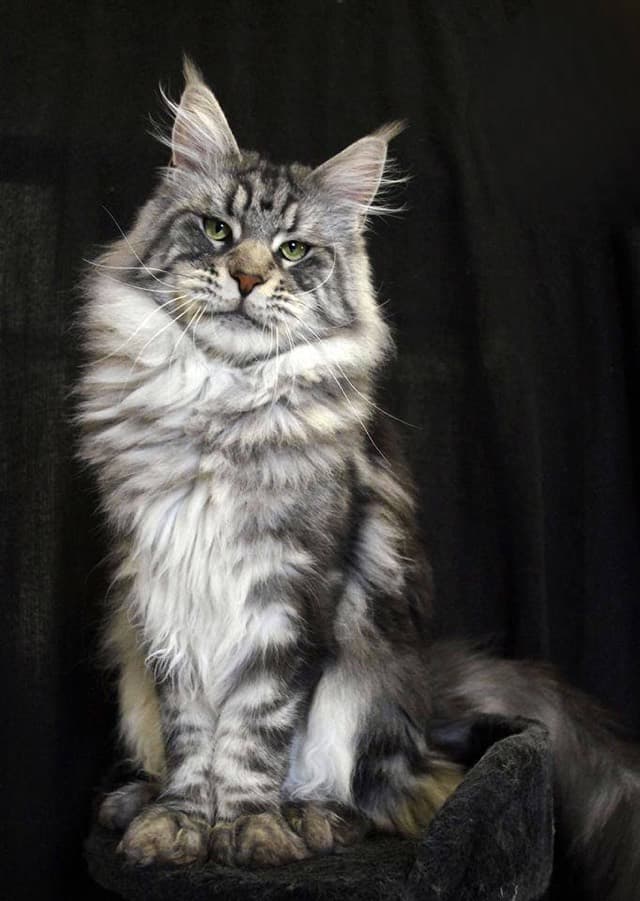
Maine Coon
United States
- Size
- Large
- Weight
- 4.5–9 kg
- Life expectancy
- 12–15 yrs
- friendly
- gentle
- sociable
- playful
Weights are typical adult ranges; individual cats vary.
About the Maine Coon
The Maine Coon is a natural breed from the north-eastern United States, where it developed as a hardy farm and ship's cat in a cold climate. It is one of the largest domestic breeds, with a long body, large tufted ears, big paws and a thick, shaggy, water-resistant coat that is longer on the ruff, belly and tail.
Temperament
Friendly, good-natured and sociable. Maine Coons often get along with children, dogs and other cats. Many make chirping sounds rather than loud meows and enjoy being involved in family life.
Play & activity
Moderately active and playful. Needs sturdy cat trees and space to climb, and enjoys chasing and retrieving toys.
Grooming
The heavy coat needs brushing two or three times a week to prevent mats, especially on the belly and behind the legs.
Care & wellbeing
Matures slowly over several years. Hypertrophic cardiomyopathy and hip dysplasia are recognised in the breed, and spinal muscular atrophy has been described; DNA tests exist for some of these. Choose large, stable furniture and litter trays.
Daily needs at a glance
For a typical 6.8 kg adult- Water
- 272 ml–408 ml
- a day
- Energy
- ≈ 350 kcal
- a day, neutered adult
- Active play
- 20–30 min
- a day
- Grooming
- Brushing a few times a week
Starting points from the same formulas as our calculators. Your pet's age, weight, activity and food all change the numbers. Work it out for your pet
Living with a Maine Coon
Typical tendencies for the breed. Upbringing, training and the individual matter as much.
History
The Maine Coon is one of the oldest natural breeds of North America, developed in the state of Maine as a hardy farm and barn cat. Its large size, tufted ears and water-resistant shaggy coat suited cold winters. It is gentle, sociable and often called a gentle giant.
Health
The breed can be prone to
- Hypertrophic cardiomyopathy (HCM)
- Hip dysplasia
- Spinal muscular atrophy (SMA)
- Polycystic kidney disease (PKD)
Health tests to ask a breeder about
- Heart scans for HCM
- HCM DNA test
- SMA DNA test
- Hip checks
Not every Maine Coon is affected, and this isn't a diagnosis. Read about common conditions and when to see a vet.
Cost to keep
Higher than average- Food, insurance and medicines cost more for a big dog
- Little or no professional grooming needed
- A 12–15 year commitment
- Budget for breed-related health checks or insurance
A relative guide, not a price — costs vary a lot by country, insurer and lifestyle.
Is a Maine Coon right for you?
Could suit
- Homes that can offer daily play sessions
- People who want an affectionate, people-focused cat
Common questions
How big does a Maine Coon get?
Adult Maine Coons typically weigh around 4.5–9 kg. Individuals vary, and males are often larger than females.
How long do Maine Coons live?
Typically 12–15 years. Keeping them lean, active and up to date with vet checks gives the best chance of a long, healthy life.
How active is a Maine Coon?
Expect to spend around 20–30 minutes a day on play, ideally in short sessions with toys they can chase and pounce on.
How much grooming does a Maine Coon need?
Brushing a few times a week. Check ears, teeth and nails as part of the routine.
Are Maine Coons affectionate?
Typically very people-focused and affectionate. Every cat is an individual, and early handling shapes how sociable they become.
Do Maine Coons shed?
Quite a lot. Regular brushing keeps loose hair under control — expect more around spring and autumn.
Are Maine Coons good with children?
They usually do well with children. Always supervise young children with any cat, and teach them to give the cat space.
Can a Maine Coon live in a flat?
It can work — with plenty of play, climbing space and enrichment.
What health problems do Maine Coons have?
The breed can be prone to hypertrophic cardiomyopathy (hcm), hip dysplasia, spinal muscular atrophy (sma). Not every Maine Coon is affected — ask a breeder about health testing, and your vet about what to watch for.
Written by Petopedia as general guidance, not veterinary advice.