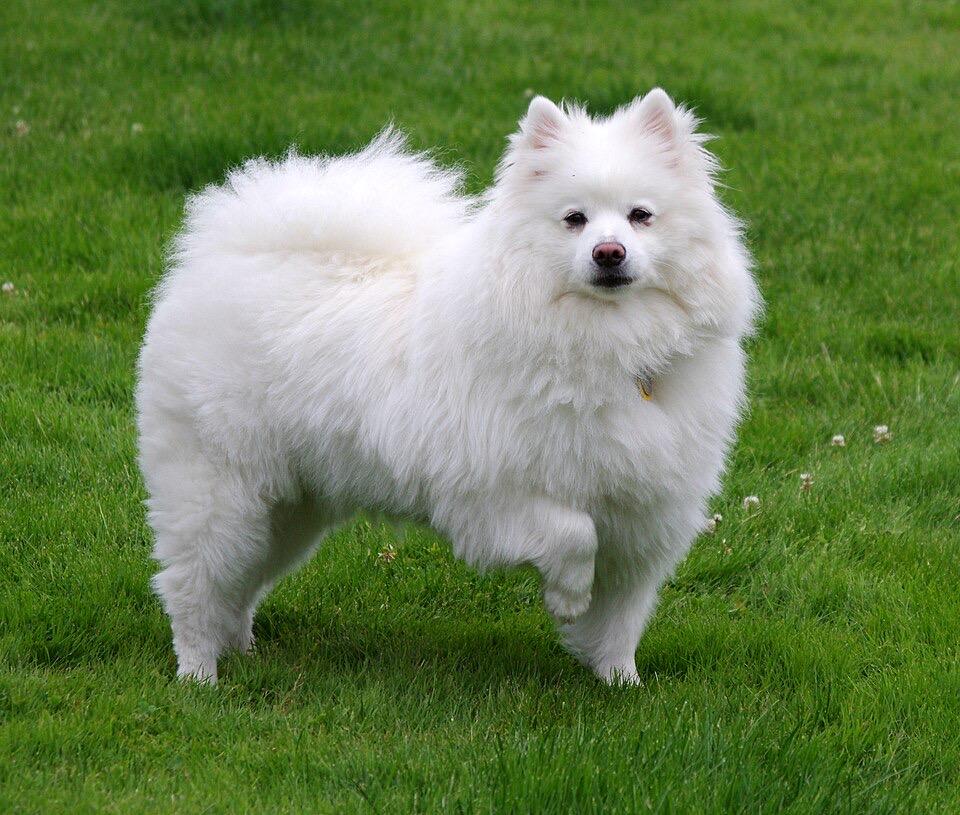
American Eskimo Dog
Also known as Eskie · American Spitz
United States, Spitz and northern dogs
- Size
- Small
- Height
- 23–48 cm
- Weight
- 3–16 kg
- Life expectancy
- 13–15 yrs
- Intelligent
- Alert
- Affectionate
- Lively
Heights and weights are typical adult ranges; individual dogs vary.
The American Eskimo Dog is a white spitz with a thick stand-off coat, a ruff around the neck, pointed ears and a plumed tail curled over the back. It comes in three sizes: toy, miniature and standard. Despite its name it has no Inuit link; it comes from German spitz dogs brought to the United States by immigrants.
Size
- Size
- Small
- Height at shoulder
- 23–48 cm
- Adult weight
- 3–16 kg
Typical adult ranges. Males are often at the top of the range and females at the bottom. Most reach adult size by around 12 months.
Lifespan
13–15 years
Most American Eskimo Dogs live 13–15 years. Like other small dogs, they're usually considered senior from about 9, when twice-yearly vet checks help catch problems early. Keeping them lean is one of the most effective things you can do for a long life. How old is that in human years?
Temperament
Eskies are bright, lively and very people-oriented. They are usually affectionate with their family, alert to anything unusual and quick to bark, which makes them good watchdogs. Some can be wary of strangers.
- Intelligent
- Alert
- Affectionate
- Lively
Food
For a typical 9.5 kg adult- Energy
- ≈ 610 kcal
- a day, neutered adult
- Water
- 380 ml–570 ml
- a day, from all sources
- Small dogs burn energy quickly — two or three measured meals a day suit most adults, and toy breeds shouldn't go long without food.
- Choose a complete food for their life stage, and ask your vet before changing diet if they have a health condition.
Starting points only — age, activity and the food itself change the numbers. Work out portions for your dog · Foods to avoid
Exercise
90–120 min a dayThey need daily walks and plenty of play and training to stay happy. They are clever and enjoy learning tricks, obedience and agility.
Grooming & shedding
The dense double coat needs brushing several times a week and daily during heavy moults. Despite being white, the coat sheds dirt fairly well once dry.
Health
Reward-based training and early socialisation help manage barking and wariness of strangers. Eskies dislike being left alone for long periods. Ask breeders about eye testing in particular. See a vet for cloudy eyes, night blindness or limping.
The breed can be prone to
- Progressive retinal atrophy
- Juvenile cataracts
- Hip dysplasia
- Patellar luxation
Health tests to ask a breeder about
- PRA (prcd) DNA test
- Eye examination
- Hip scoring
- Patella examination
Not every American Eskimo Dog is affected, and this isn't a diagnosis. See common conditions and the symptom checker.
History
German immigrants brought spitz dogs to the US in the late 1800s and early 1900s. Anti-German feeling around the First World War led owners to call them American Spitz and later American Eskimo dogs. Circus acts in the 1920s and 1930s made them popular. The UKC registered the breed from 1919 and the AKC recognised it in 1995. It has since developed differently from the German Spitz.
- Country of origin
- United States
- Type
- Spitz and northern dogs
- Recognition
- Recognised by the AKC, UKC and Canadian Kennel Club; not recognised by the FCI or The Kennel Club
Is a American Eskimo Dog right for you?
Could suit
- Active owners who enjoy long walks, running or hiking
- First-time owners prepared to train consistently
- Smaller homes, as long as daily exercise needs are met
- Owners ready for a long commitment — often well into their teens
Think twice if
- You can't give well over an hour of exercise a day, every day
- You don't have time for frequent brushing or the cost of professional grooming
Cost to keep
Lower than average- Smaller food bills and medicine doses
- Regular professional grooming adds up
- A 13–15 year commitment
- Budget for breed-related health checks or insurance
A relative guide, not a price — costs vary a lot by country, insurer and lifestyle.
Not sure? Try the breed finder.
American Eskimo Dog FAQ
How big does a American Eskimo Dog get?
Adult American Eskimo Dogs typically stand about 23–48 cm at the shoulder and weigh around 3–16 kg. Individuals vary, and males are often larger than females.
How long do American Eskimo Dogs live?
Typically 13–15 years. Keeping them lean, active and up to date with vet checks gives the best chance of a long, healthy life.
How much exercise does a American Eskimo Dog need?
As a guide, around 90–120 minutes a day, split between walks, play and sniffing time. Puppies and older dogs need shorter, gentler sessions.
How much grooming does a American Eskimo Dog need?
Brushing most days. Check ears, teeth and nails as part of the routine.
Are American Eskimo Dogs easy to train?
Usually quick to learn with reward-based training.
Do American Eskimo Dogs shed?
Quite a lot. Regular brushing keeps loose hair under control — expect more around spring and autumn.
Are American Eskimo Dogs good with children?
Many get on well with children. Always supervise young children with any dog, and teach them to give the dog space.
Can a American Eskimo Dog live in a flat?
It can work — as long as they get enough daily exercise and time outdoors.
What health problems do American Eskimo Dogs have?
The breed can be prone to progressive retinal atrophy, juvenile cataracts, hip dysplasia. Not every American Eskimo Dog is affected — ask a breeder about health testing, and your vet about what to watch for.
Written by the Petopedia editorial team to our editorial standards. General guidance, not veterinary advice.