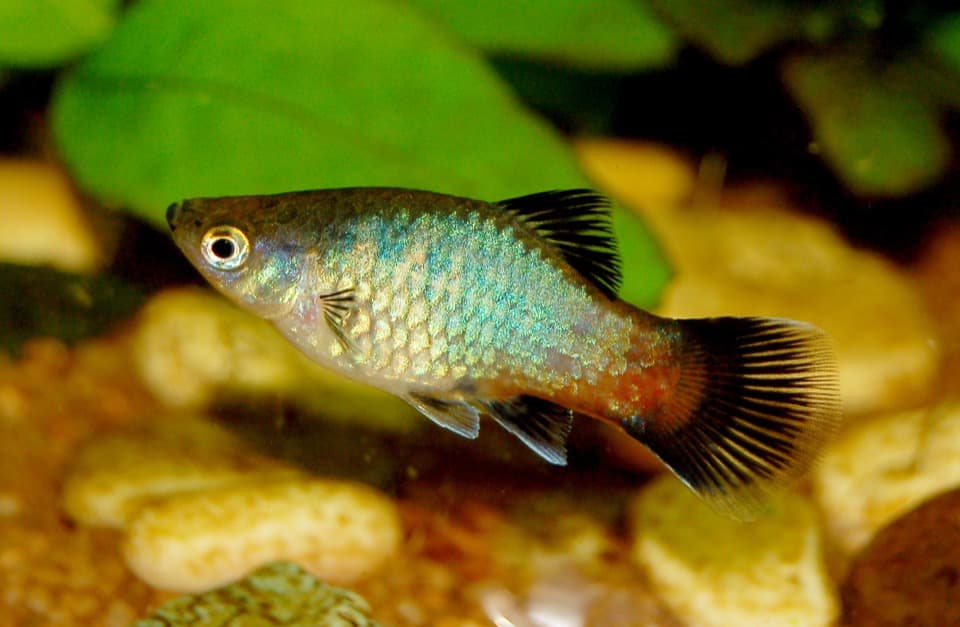
Platy
Also known as Southern platyfish, Xiphophorus maculatus, Variatus platy
- Adult size
- About 4–6 cm
- Lifespan
- 2–4 years
- Origin
- Mexico and Central America
- Company
- Keep in a group, ideally with more females than males
- Hardy
- Peaceful
- Colourful
- Easy-going
About the Platy
Platies are sturdy little livebearers available in a wide range of colours, from red and orange to blue, yellow and patterned forms such as the mickey mouse platy. They are close relatives of swordtails and can interbreed with them.
With their compact bodies, cheerful colours and calm nature, platies are often recommended as one of the more forgiving community fish. They are easy to sex: males have a modified anal fin called a gonopodium, while females have a fan-shaped one.
Temperament
Platies are peaceful and get along with most small, non-aggressive community fish. Males can pester females, so keeping more females than males is wise. They are generally not fin-nippers and are rarely bullies themselves.
Tank & water
A group of platies needs a heated tank of at least about 60 litres, kept at roughly 20–26°C. They prefer moderately hard, neutral to slightly alkaline water. A standard filter, some open swimming space and well-planted areas suit them well, and plants also offer cover for fry.
Diet
Platies are omnivores with a strong appetite for plant matter, so a flake food containing vegetable ingredients is a good staple. They will graze soft algae and enjoy blanched vegetables as well as small frozen foods. Feed small portions once or twice daily.
Behaviour & tank mates
Platies browse plants and surfaces for algae and food throughout the day, so live plants and natural decor give them plenty to do. They are social and do best in a small group. Their calm nature makes them good companions for other peaceful species such as corydoras and small tetras.
Tank maintenance
Weekly partial water changes of around a quarter, combined with gravel vacuuming, keep conditions stable. Watch for the population growing, as platies breed freely and extra fish increase the load on the filter.
Health
Platies are generally hardy but can suffer from white spot, fin rot and bacterial infections when water quality slips or after transport. Females may struggle with repeated pregnancies if constantly harassed. Quarantine new fish and consult an aquatic vet or experienced specialist for illnesses that do not respond to improved water conditions.
Prone to
- White spot (ich)
- Fin rot
- Bacterial infections
- Stress from constant breeding
Call a vet if you notice
- Fish gasping at the surface — test the waterEmergency
- White spots scattered across body and fins
- Fins frayed or eroding
- Fish hiding and refusing food
- Swollen belly with raised scales
An aquatic vet or experienced aquatic specialist is best placed to help. Find one before you need them.
Common questions
Are platies good for beginners?
Yes, platies are one of the more forgiving fish for newcomers, provided the tank has been properly cycled first. They are hardy, peaceful and easy to feed.
How can I tell if my platy is pregnant?
A pregnant female becomes noticeably rounder and may show a darker patch near the vent, called the gravid spot. Platies typically give birth every few weeks.
Can platies live with guppies?
Yes, they generally share a tank well, as both are peaceful livebearers with similar needs. They will not interbreed with each other.
Written by the Petopedia editorial team to our editorial standards. General guidance, not veterinary advice.