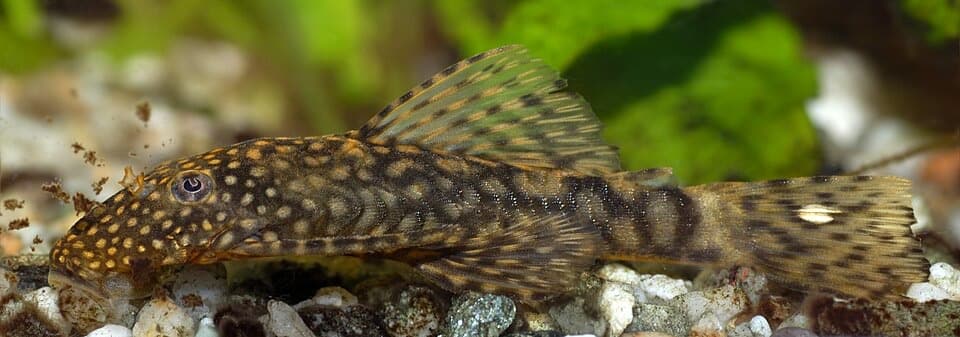
Bristlenose pleco
Also known as Bristlenose catfish, Bushynose pleco, Ancistrus
- Adult size
- About 12–15 cm
- Lifespan
- 5–12 years
- Origin
- Rivers of South America, especially the Amazon basin
- Company
- Can live alone; keep only one male in smaller tanks
- Peaceful
- Hardy
- Nocturnal
- Grazing
About the Bristlenose pleco
The bristlenose pleco is a small, sucker-mouthed catfish named for the fleshy, branching tentacles that grow on the snout, especially in males. It is a much more practical choice for home tanks than the common pleco, which can grow very large.
Bristlenoses spend their time rasping algae and biofilm from glass, rocks and wood. Several colour forms are available, including the common brown, albino and long-finned varieties.
They are hardy and long-lived, and they often breed in aquariums, with males guarding eggs in caves.
Temperament
Bristlenose plecos are peaceful with other species and generally ignore fish that swim above them. Males can be territorial towards each other, particularly over caves, so in smaller tanks one male is best. They make good companions for most community fish that are not large enough to bully them.
Tank & water
A tank of at least around 100 litres suits an adult, with water at roughly 23–27°C. Good filtration and well-oxygenated water are important. Driftwood is strongly recommended, as they rasp on it and it is thought to aid their digestion, and caves give them secure hiding places. Make sure there are no gaps where they could become stuck behind equipment.
Diet
Bristlenoses are mainly herbivorous grazers and should be fed sinking algae wafers and fresh vegetables such as courgette, cucumber and blanched spinach. Occasional meaty foods are appreciated. Do not rely on algae in the tank alone, as it is rarely enough to keep them well fed.
Behaviour & tank mates
Bristlenoses are most active at dusk and night, exploring wood, rocks and glass. Several caves and pieces of wood give them choices and reduce disputes. Offering a variety of vegetables provides interest as well as nutrition.
Tank maintenance
Bristlenoses produce a fair amount of waste, so weekly partial water changes and regular substrate cleaning are important. Remove uneaten vegetables within a day to stop them fouling the water.
Health
Bristlenoses are generally hardy but can suffer from bacterial infections and white spot in poor conditions. A sunken belly may indicate underfeeding, while damage to the mouth or fins can result from rough surfaces or aggression. If one seems unwell, check water quality and seek advice from an aquatic vet or specialist.
Prone to
- Bacterial infections
- White spot (ich)
- Malnutrition from relying on algae
- Injuries from equipment or rough surfaces
Call a vet if you notice
- Rapid gill movement or gasping — test the waterEmergency
- A sunken or hollow belly
- White patches or fuzzy growths
- Lying upside down or failing to stick to surfaces
- Red or inflamed areas on the belly or mouth
An aquatic vet or experienced aquatic specialist is best placed to help. Find one before you need them.
Common questions
How big do bristlenose plecos get?
Most reach around 12–15 cm. This makes them far more suitable for typical aquariums than the common pleco, which can grow very large.
Do bristlenose plecos need driftwood?
Driftwood is strongly recommended. They rasp on it, and it is thought to play a part in their digestion, as well as providing shelter.
Will a bristlenose pleco clean my tank?
They graze algae and biofilm from glass, wood and rocks, which helps keep surfaces tidier. They will not keep a tank clean by themselves, though, and still need proper feeding and regular water changes.
Written by the Petopedia editorial team to our editorial standards. General guidance, not veterinary advice.