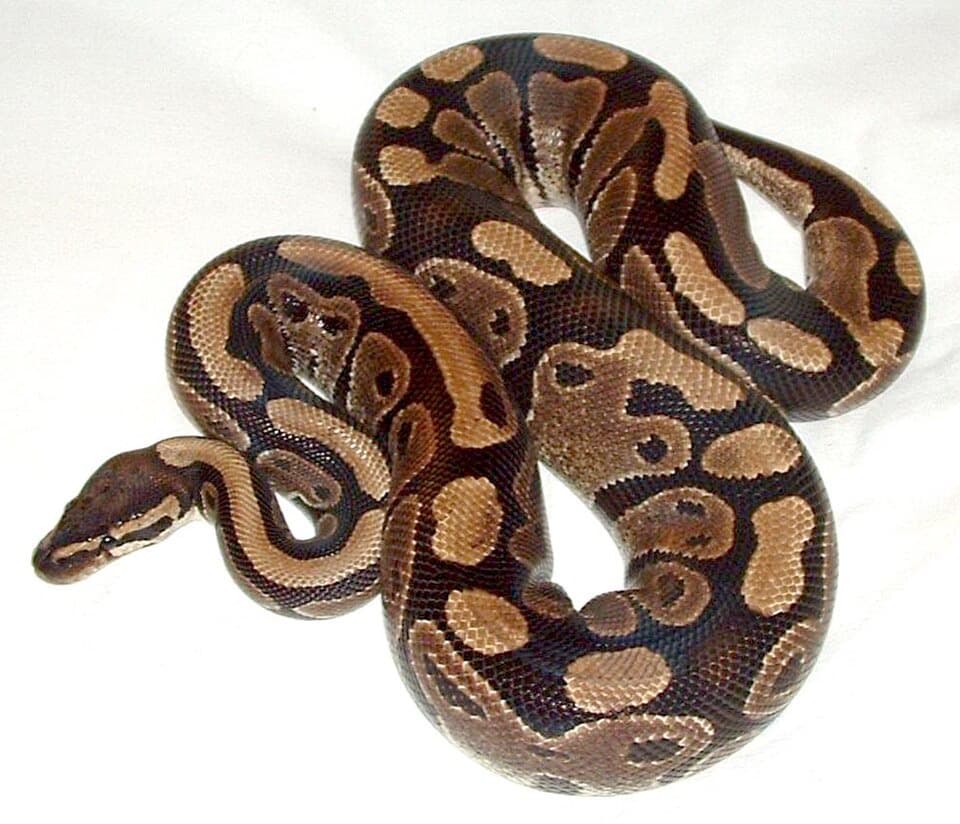
Royal python
Also known as Ball python, Python regius
- Adult size
- 90–150 cm long
- Lifespan
- 20–30 years
- Origin
- West and Central Africa
- Company
- Kept alone; housing together causes stress and feeding problems
- Shy
- Gentle
- Long-lived
- Placid
About the Royal python
The royal python, known as the ball python in North America, is a stocky, non-venomous constrictor from the grasslands and open woodland of West and Central Africa. It earned the name 'ball' from its habit of curling into a tight ball with its head tucked inside when frightened.
It is one of the most popular pet snakes thanks to its calm nature and manageable size. They are long-lived, sometimes 30 years or more, and are known for refusing food for weeks or months, which can worry new owners. Some colour morphs, notably the 'spider' line, are linked with a neurological condition causing head wobble, and this is worth knowing before choosing a morph.
Temperament
Royal pythons are typically gentle and shy, preferring to hide rather than strike. They are generally tolerant of calm handling and move slowly. A stressed royal python is more likely to ball up than bite.
Enclosure, heat & light
An adult needs a vivarium of at least around 120 x 60 x 60 cm, with snug hides at both the warm and cool ends where the snake can feel enclosed. Use a thermostat-controlled heat source to create a warm end and cooler end, checked with a thermometer, and avoid unguarded lamps or heat mats that can burn. They like higher humidity than corn snakes, so a moisture-retaining substrate and humid hide help, without making the enclosure soggy. Low-level UVB is increasingly suggested as beneficial with plenty of shade.
Diet
Royal pythons eat frozen-thawed rodents sized to roughly the snake's widest girth. Juveniles feed every week or so and adults every 10–14 days or less often. Long fasts are common, particularly in winter or among adult males, and are often normal if weight stays stable, but weigh the snake regularly to be sure.
Enrichment & handling
Branches and low climbing structures, extra hides and leaf litter give a royal python more to explore. Changing layouts occasionally adds novelty. Handle gently, supporting the body, and keep sessions calm and unhurried.
Shedding & hygiene
They shed in one piece when humidity is right; a dry enclosure often leads to patchy sheds and retained eye caps. Clean waste promptly and replace water regularly. Wash your hands after handling.
Health
Respiratory infections, retained shed, mouth rot and obesity are common. Burns from heaters can occur, and mites may spread in collections. A head wobble or corkscrewing can indicate a neurological problem, either linked to certain morphs or to illness, and needs vet attention.
Prone to
- Respiratory infection
- Retained shed
- Mouth rot
- Obesity
- Neurological wobble in some morphs
- Burns from heat sources
Call a vet if you notice
- Wheezing, mucus or open-mouth breathing
- Weight dropping steadily during a fast
- Swelling or discolouration in the mouth
- Burns or blisters on the belly
- Head tremors, stargazing or loss of balance
- Prolapse from the ventEmergency
A vet with experience of exotic pets is best placed to help. Find one before you need them.
Common questions
Why won't my royal python eat?
Royal pythons often fast, especially in winter or breeding season, and this is usually not a problem if weight remains stable. Check temperatures and humidity, and see a vet if weight drops or other signs of illness appear.
Are royal pythons good for beginners?
Yes, they are among the most recommended beginner snakes for their calm temperament. Be prepared for a commitment of 20–30 years or more.
What is the difference between a ball python and a royal python?
There is no difference; they are the same species. 'Ball python' is the common name in North America, while 'royal python' is more common in the UK and Europe.
How big do royal pythons get?
Most adults are around 90–150 cm, with females usually larger and heavier than males. Even a big female is a heavy-bodied rather than a long snake, so she remains manageable to handle.
Written by the Petopedia editorial team to our editorial standards. General guidance, not veterinary advice.