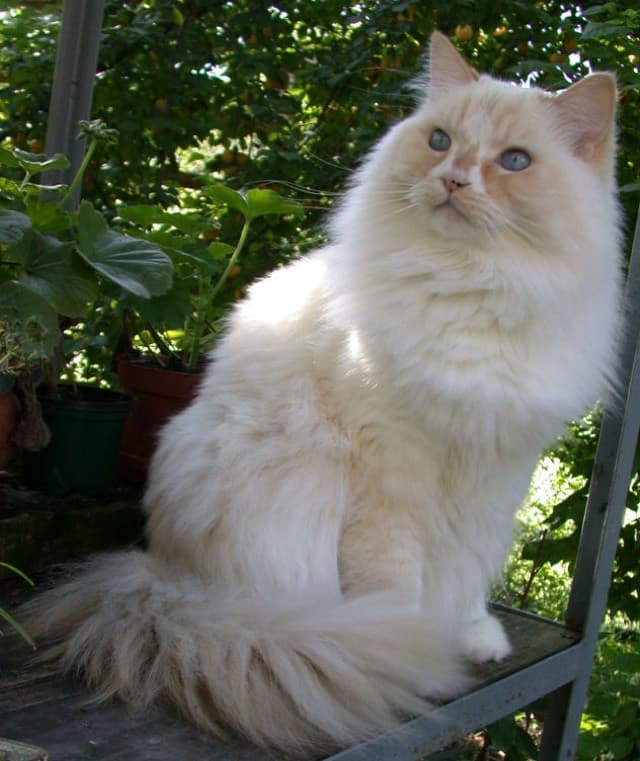
Ragamuffin
United States
- Size
- Large
- Weight
- 4.5–9 kg
- Life expectancy
- 12–16 yrs
- docile
- affectionate
- gentle
- sociable
Weights are typical adult ranges; individual cats vary.
About the Ragamuffin
The Ragamuffin developed from the Ragdoll in the United States in the 1990s, when a group of breeders split away and began working with a wider range of colours and patterns. It is a large, heavy-boned cat with a rabbit-like soft coat of medium length, a sweet expression and walnut-shaped eyes.
Temperament
Docile, affectionate and very people-focused. Ragamuffins tend to enjoy being held and following family around, and are usually patient with children and other pets.
Play & activity
Low to moderate energy. Gentle play sessions help maintain a healthy weight. Typically better suited to indoor living.
Grooming
The soft coat is less prone to matting than many longhairs, but weekly brushing and attention to the belly help.
Care & wellbeing
Being large and laid-back, they gain weight easily. Hypertrophic cardiomyopathy and polycystic kidney disease have been reported in related lines.
Daily needs at a glance
For a typical 6.8 kg adult- Water
- 272 ml–408 ml
- a day
- Energy
- ≈ 350 kcal
- a day, neutered adult
- Active play
- 15–20 min
- a day
- Grooming
- A brush once a week
Starting points from the same formulas as our calculators. Your pet's age, weight, activity and food all change the numbers. Work it out for your pet
Living with a Ragamuffin
Typical tendencies for the breed. Upbringing, training and the individual matter as much.
History
The Ragamuffin developed from Ragdoll lines in the United States, with breeders choosing a separate course and recognising more colours. It is large and soft-coated, and very placid and gentle.
Health
The breed can be prone to
- Hypertrophic cardiomyopathy (HCM)
- Polycystic kidney disease (PKD)
Health tests to ask a breeder about
- Heart scans for HCM
- PKD DNA test
Not every Ragamuffin is affected, and this isn't a diagnosis. Read about common conditions and when to see a vet.
Cost to keep
Higher than average- Food, insurance and medicines cost more for a big dog
- Little or no professional grooming needed
- A 12–16 year commitment
- Budget for breed-related health checks or insurance
A relative guide, not a price — costs vary a lot by country, insurer and lifestyle.
Is a Ragamuffin right for you?
Could suit
- Quieter homes and relaxed routines
- People who'd rather not spend much time grooming
- People who want an affectionate, people-focused cat
Common questions
How big does a Ragamuffin get?
Adult Ragamuffins typically weigh around 4.5–9 kg. Individuals vary, and males are often larger than females.
How long do Ragamuffins live?
Typically 12–16 years. Keeping them lean, active and up to date with vet checks gives the best chance of a long, healthy life.
How active is a Ragamuffin?
Expect to spend around 15–20 minutes a day on play, ideally in short sessions with toys they can chase and pounce on.
How much grooming does a Ragamuffin need?
A brush once a week. Check ears, teeth and nails as part of the routine.
Are Ragamuffins affectionate?
Typically very people-focused and affectionate. Every cat is an individual, and early handling shapes how sociable they become.
Do Ragamuffins shed?
Quite a lot. Regular brushing keeps loose hair under control — expect more around spring and autumn.
Are Ragamuffins good with children?
They usually do well with children. Always supervise young children with any cat, and teach them to give the cat space.
Can a Ragamuffin live in a flat?
Usually, yes — with plenty of play, climbing space and enrichment.
What health problems do Ragamuffins have?
The breed can be prone to hypertrophic cardiomyopathy (hcm), polycystic kidney disease (pkd). Not every Ragamuffin is affected — ask a breeder about health testing, and your vet about what to watch for.
Written by Petopedia as general guidance, not veterinary advice.