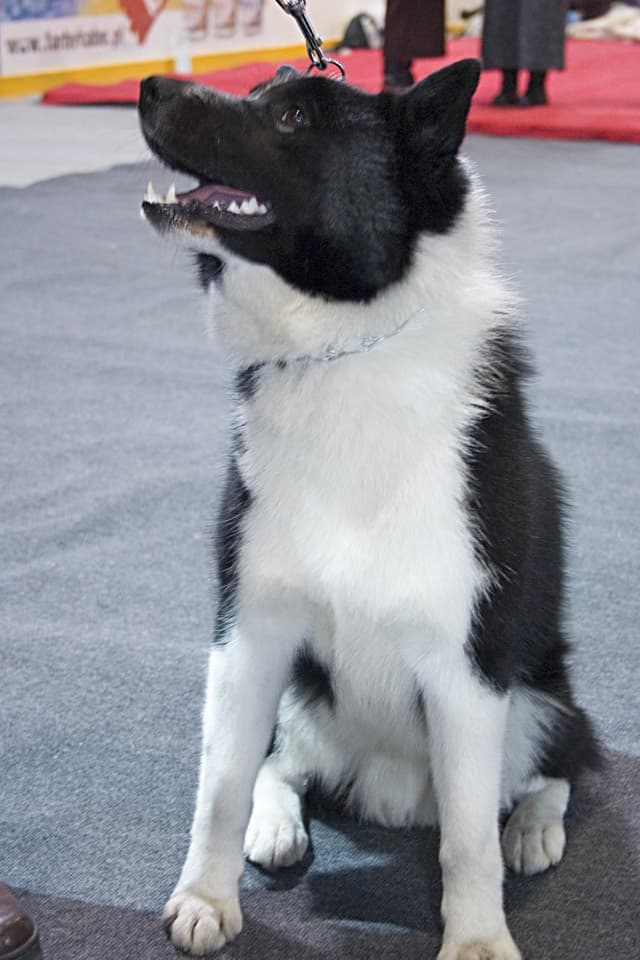
Russian-European Laika
Also known as Russko-Evropeïskaïa Laïka · Laika Russo-Europeen · Russisch-Europäischer Laïka · Laika Ruso-Europeo
Russian Federation, Nordic Hunting Dogs
- Size
- Medium
- Height
- 52–58 cm
- Weight
- 18–23 kg
- Life expectancy
- 11–13 yrs
- Independent
- Energetic
- Alert
- Prey-driven
Heights and weights are typical adult ranges; individual dogs vary.
About the Russian-European Laika
The Russian-European Laika is a spitz-type hunting dog from Russia, developed to track and bay game in forests, often by barking at treed quarry. It is a medium-sized, sturdy dog with a thick coat, prick ears and a curled tail, commonly in black and white or other patterns. It is primarily a working hunting dog.
Temperament
Alert, independent and energetic, with a strong hunting drive. Usually loyal to its family but can be reserved with strangers. Needs confident, patient handling and early socialisation.
Exercise
High: needs a long daily walk or more, ideally with secure off-lead running or work. Strong prey drive means careful management near small animals.
Grooming
Dense double coat that sheds heavily, especially seasonally. Brush a few times a week.
Care & wellbeing
Secure fencing is essential as it may roam after prey. Keep weight lean and check ears and coat after outdoor work. Vets can advise on breed-appropriate screening.
Daily needs at a glance
For a typical 20.5 kg adult- Water
- 820 ml–1.2 L
- a day
- Energy
- ≈ 1,080 kcal
- a day, neutered adult
- Exercise
- 90–120 min
- a day
- Grooming
- Brushing a few times a week
Starting points from the same formulas as our calculators. Your pet's age, weight, activity and food all change the numbers. Work it out for your pet
Living with a Russian-European Laika
Typical tendencies for the breed. Upbringing, training and the individual matter as much.
History
A Russian hunting spitz, one of several Laika types used for tracking and flushing game in forests. Developed by hunters for stamina and a strong hunting drive, and best suited to active, outdoor homes.
Health
There's limited reliable published information on health issues in the Russian-European Laika. Breed clubs and your vet are the best sources.
Not every Russian-European Laika is affected, and this isn't a diagnosis. Read about common conditions and when to see a vet.
Cost to keep
About average- Moderate food and insurance costs
- Little or no professional grooming needed
- A 11–13 year commitment
A relative guide, not a price — costs vary a lot by country, insurer and lifestyle.
Is a Russian-European Laika right for you?
Could suit
- Active owners who enjoy long walks, running or hiking
Think twice if
- You can't give well over an hour of exercise a day, every day
Not sure? Try the breed finder or read choosing the right dog breed.
Common questions
How big does a Russian-European Laika get?
Adult Russian-European Laikas typically stand about 52–58 cm at the shoulder and weigh around 18–23 kg. Individuals vary, and males are often larger than females.
How long do Russian-European Laikas live?
Typically 11–13 years. Keeping them lean, active and up to date with vet checks gives the best chance of a long, healthy life.
How much exercise does a Russian-European Laika need?
As a guide, around 90–120 minutes a day, split between walks, play and sniffing time. Puppies and older dogs need shorter, gentler sessions.
How much grooming does a Russian-European Laika need?
Brushing a few times a week. Check ears, teeth and nails as part of the routine.
Are Russian-European Laikas easy to train?
Generally trainable with consistent, reward-based practice.
Do Russian-European Laikas shed?
A moderate amount. Regular brushing keeps loose hair under control.
Are Russian-European Laikas good with children?
Many get on well with children. Always supervise young children with any dog, and teach them to give the dog space.
Can a Russian-European Laika live in a flat?
It's usually a challenge — as long as they get enough daily exercise and time outdoors.
Written by Petopedia as general guidance, not veterinary advice. Ask your vet about health screening for this breed.
Breed details
- Country of origin
- Russian Federation
- Type
- Nordic Hunting Dogs
- Internationally recognised
- 1980