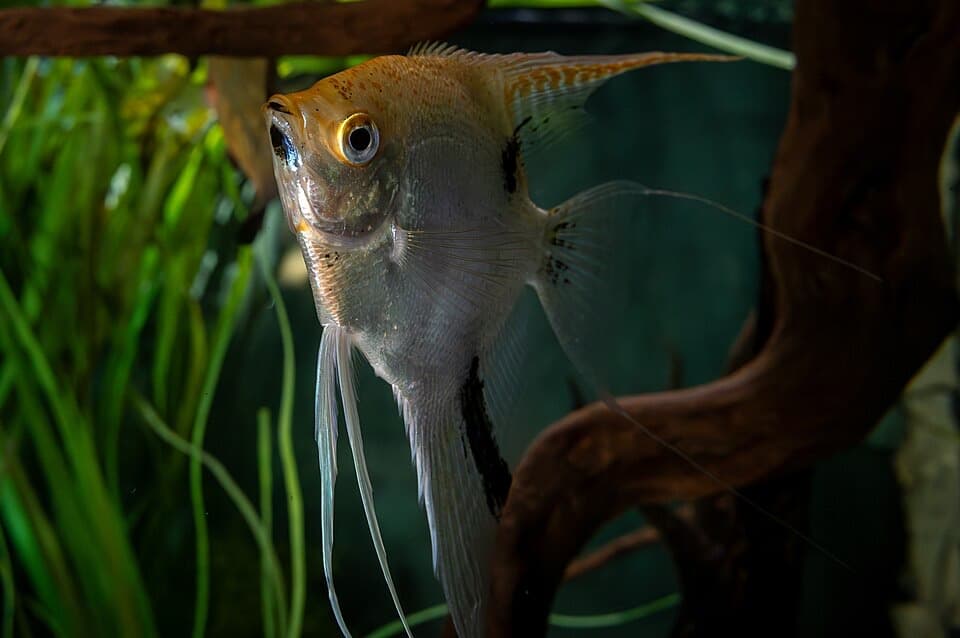
Angelfish
Also known as Freshwater angelfish, Pterophyllum scalare
- Adult size
- About 15 cm long and up to 20–25 cm tall including fins
- Lifespan
- 8–12 years
- Origin
- The Amazon basin and other rivers of tropical South America
- Company
- Best in a small group or a bonded pair
- Graceful
- Territorial
- Intelligent
- Majestic
About the Angelfish
Freshwater angelfish are tall, disc-shaped cichlids with long, flowing fins, instantly recognisable in aquariums around the world. They come in many varieties, including silver, marble, koi, black and veil-finned forms.
In the wild, angelfish live among submerged roots and plants in slow-moving waters. Although elegant and graceful, they are cichlids, and they grow larger and become more territorial than many people expect.
Angelfish often form pairs that guard their eggs and young carefully, which is fascinating to observe.
Temperament
Young angelfish are often kept in groups, but as they mature they may pair off and become territorial, especially when breeding. Adult angelfish will eat small fish such as neon tetras, so tank mates should be too large to swallow. They can be targeted by fin-nippers, which should be avoided.
Tank & water
Angelfish need a tall tank to accommodate their height; a group needs at least around 150–200 litres. Keep the water at roughly 24–30°C, soft to moderately hard, with good but not overly strong filtration. Tall plants, driftwood and open swimming areas mimic their natural habitat. Cycle the tank fully and introduce young fish together if possible.
Diet
Angelfish are omnivores that do well on quality flake or pellets supplemented with frozen or live foods such as bloodworm, brine shrimp and mysis. A varied diet supports good colour and condition. Feed once or twice daily in amounts that are quickly eaten.
Behaviour & tank mates
Angelfish like to patrol the middle levels and shelter among tall plants and wood. Breeding pairs choose flat surfaces such as broad leaves, slate or glass to lay eggs. Providing visual barriers helps reduce territorial disputes.
Tank maintenance
Weekly water changes of around a quarter or more help keep nitrate low, which angelfish appreciate. Clean the filter regularly in old tank water and vacuum uneaten food from the substrate.
Health
Angelfish can suffer from white spot, fin rot, bacterial infections and internal parasites, and outbreaks sometimes follow the introduction of new fish. Damaged fins may result from fin-nippers or fights. Quarantine new angelfish and seek advice from an aquatic vet or specialist if illness appears.
Prone to
- White spot (ich)
- Fin rot
- Bacterial infections
- Internal parasites
Call a vet if you notice
- Gasping at the surface — test the waterEmergency
- Clamped fins and darkening colour
- White, stringy droppings and weight loss
- Fin damage that becomes infected
- Lying on the bottom or swimming erratically
An aquatic vet or experienced aquatic specialist is best placed to help. Find one before you need them.
Common questions
How big do angelfish get?
Adults typically grow to around 15 cm long and can be 20–25 cm tall including their fins. They need a tall tank to accommodate this.
Can angelfish live with neon tetras?
It is risky. Adult angelfish often eat small fish like neons.
Are angelfish aggressive?
They are generally peaceful but can become territorial, especially when pairing or breeding. Providing space and plants helps.
How many angelfish should I keep?
Many keepers start with a small group of young fish and let them pair off naturally. A large tank is needed for a group of adults.
Written by the Petopedia editorial team to our editorial standards. General guidance, not veterinary advice.