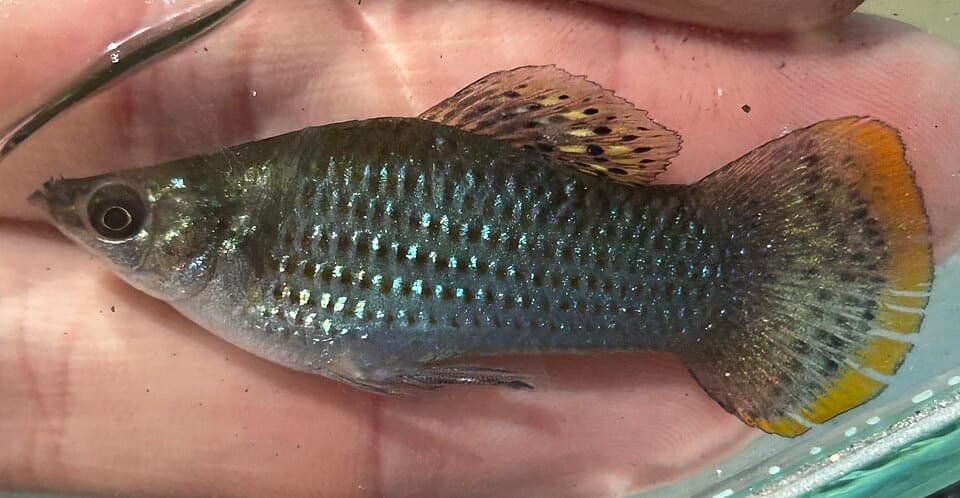
Molly
Also known as Black molly, Sailfin molly, Balloon molly, Poecilia sphenops
- Adult size
- Usually 8–12 cm
- Lifespan
- 3–5 years
- Origin
- Mexico, Central America and northern South America
- Company
- Keep in a group with more females than males
- Robust
- Grazing
- Active
- Mostly peaceful
About the Molly
Mollies are livebearers kept in many forms, including the all-black molly, the dalmatian, the tall-finned sailfin and the short, round balloon molly. Aquarium mollies are often hybrids of several wild species.
Wild mollies live in a range of habitats, from fresh rivers to coastal brackish water, and they tend to do best in harder, more mineral-rich water than many community fish. They are larger and more robust than guppies and platies.
Balloon mollies have been bred for a shortened, curved spine, and some keepers choose to avoid them because of concerns about their welfare and swimming ability.
Temperament
Mollies are mostly peaceful but larger males can be pushy, chasing females and occasionally sparring with other males. Keeping more females than males reduces harassment. They suit community tanks with similarly sized, peaceful fish that appreciate harder water.
Tank & water
Mollies need a heated tank of at least around 80 litres, with water at roughly 24–28°C. They prefer hard, alkaline water and some keepers add a small amount of aquarium salt, though this is not necessary for most aquarium strains and does not suit all tank mates. Good filtration, open swimming space and sturdy plants work well. Sailfin types need extra room for their large fins.
Diet
Mollies are keen grazers that eat a lot of plant material and algae alongside small invertebrates. A vegetable-based flake, algae wafers and blanched greens such as spinach or courgette should be offered, supplemented with small frozen foods. Feed small amounts twice daily.
Behaviour & tank mates
Mollies spend much of their time grazing on surfaces, so live plants and rocks with soft algae keep them occupied. They are active swimmers and appreciate open space as well as plant cover. A group with several females creates more natural behaviour and spreads male attention.
Tank maintenance
Change roughly a quarter of the water weekly and vacuum the substrate, as mollies are fairly heavy eaters. Keep the water's hardness consistent rather than letting it swing between changes.
Health
Mollies can develop a condition sometimes called 'the shimmies', where the fish rocks from side to side on the spot, usually linked to poor water quality, low temperature or water that is too soft. They are also prone to white spot, fin rot and bacterial infections. Improve water conditions first and contact an aquatic vet or specialist if problems persist.
Prone to
- Shimmying
- White spot (ich)
- Fin rot
- Bacterial infections
- Spinal problems in balloon strains
Call a vet if you notice
- Gasping or hanging at the surface — test the waterEmergency
- Shimmying on the spot without moving forward
- Cottony patches on the mouth or body
- Rapid weight loss despite eating
- Female struggling to give birth
An aquatic vet or experienced aquatic specialist is best placed to help. Find one before you need them.
Common questions
Do mollies need salt in their water?
Most aquarium mollies do fine in hard, alkaline fresh water without salt. Salt can be harmful to many other community fish and plants, so get advice before adding any.
Why is my molly shaking?
Rocking or shimmying in one spot is a common stress sign in mollies, often linked to poor water quality, cold water or soft water. Test the water and check the temperature first.
Can mollies live with guppies?
Yes, in a suitably sized tank with hard water, mollies and guppies generally get along. They can occasionally hybridise.
Written by the Petopedia editorial team to our editorial standards. General guidance, not veterinary advice.