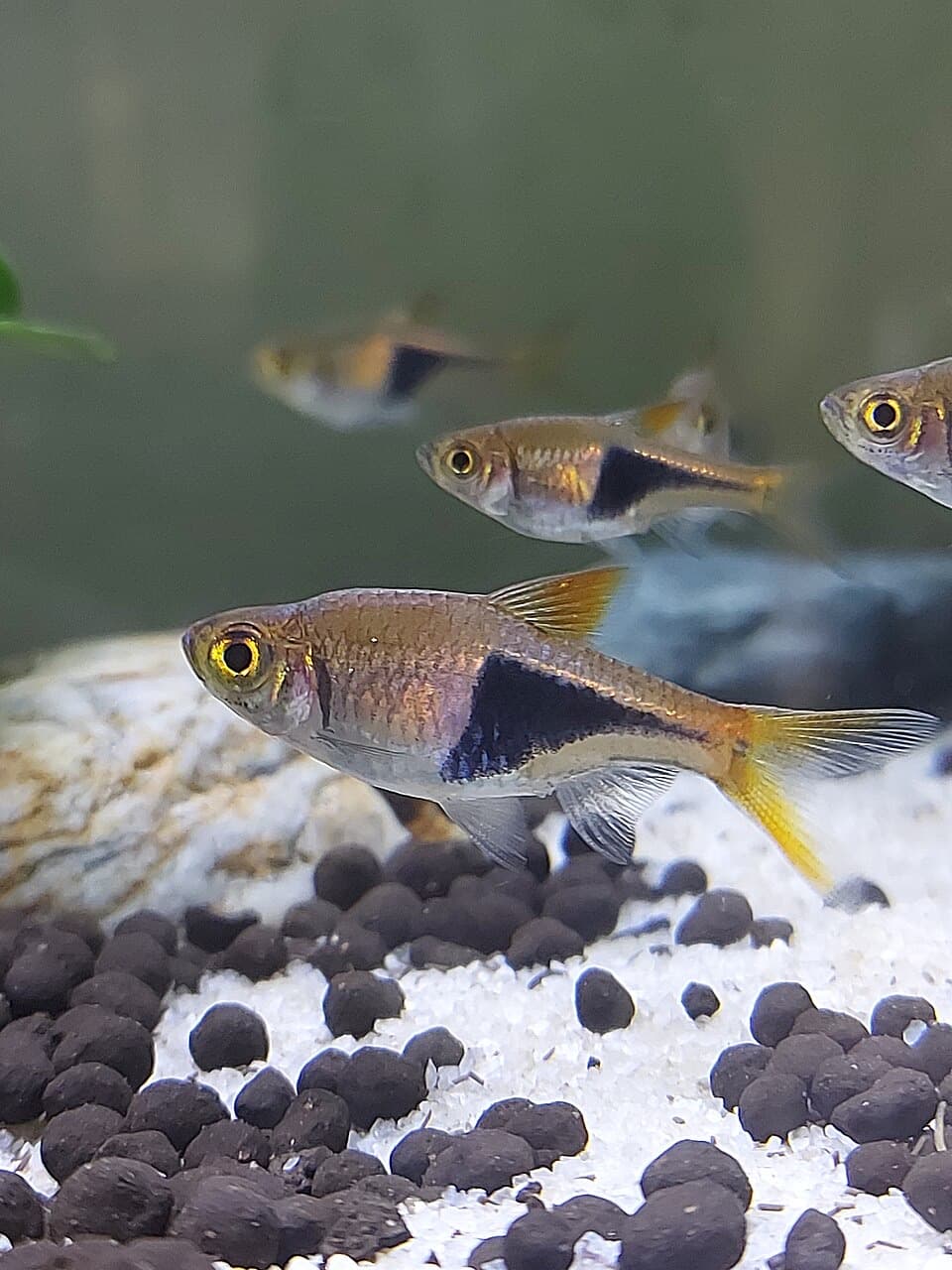
Harlequin rasbora
Also known as Harlequin, Trigonostigma heteromorpha
- Adult size
- About 4–5 cm
- Lifespan
- 4–8 years
- Origin
- Peninsular Malaysia, Singapore, Sumatra and southern Thailand
- Company
- Keep in a shoal of at least 6, ideally more
- Peaceful
- Shoaling
- Adaptable
- Graceful
About the Harlequin rasbora
Harlequin rasboras are small, peaceful shoaling fish with a coppery-orange body and a distinctive black triangular patch towards the tail. In a planted tank, a group moving together catches the light beautifully.
They come from peat swamp streams with soft, acidic water, but captive-bred harlequins are adaptable and among the easiest shoaling fish to keep. Their calm nature makes them a popular choice for community tanks.
Temperament
Harlequins are peaceful and rarely cause trouble with other fish. They feel safest in a sizeable group and become shy when kept in small numbers. Good tank mates include other small, gentle species such as corydoras, small tetras and honey gouramis.
Tank & water
A group needs a heated tank of around 60 litres or more, at roughly 22–27°C. Soft to moderately hard, slightly acidic to neutral water suits them. Use gentle filtration, plenty of plants and open swimming space in the middle of the tank. Broad-leaved plants are useful, as harlequins lay their eggs on the undersides of leaves.
Diet
Harlequins accept a quality flake or small pellet food readily. Small frozen and live foods such as daphnia, bloodworm and brine shrimp help keep them in good condition. Feed small amounts once or twice daily.
Behaviour & tank mates
Harlequins shoal in mid-water and enjoy weaving among plants, so a well-planted tank with open areas suits them perfectly. Floating plants soften the light and help them feel secure. Larger groups show more natural shoaling behaviour and better colour.
Tank maintenance
Weekly water changes of around 20–25% and light gravel vacuuming keep water clean. Harlequins appreciate stable conditions, so avoid sudden changes in temperature or water chemistry.
Health
Harlequins are generally robust once settled but can catch white spot or fin rot, particularly after transport or if water quality slips. Quarantine new additions before introducing them to an established tank. If fish become ill, test the water and seek advice from an aquatic vet or knowledgeable specialist.
Prone to
- White spot (ich)
- Fin rot
- Bacterial infections
Call a vet if you notice
- Gasping at the surface — test the waterEmergency
- White spots on the fins and body
- Frayed fins with pale or red edges
- Fish separating from the shoal and hiding
- Loss of appetite lasting more than a day or two
An aquatic vet or experienced aquatic specialist is best placed to help. Find one before you need them.
Common questions
How many harlequin rasboras should I keep?
A group of at least six is the usual minimum, but they look and behave better in groups of eight to ten or more. Small groups tend to be shy.
Are harlequin rasboras good for beginners?
Yes, captive-bred harlequins are hardy, peaceful and easy to feed. As with all fish, add them only to a fully cycled tank.
Can harlequin rasboras live with bettas?
They are often kept successfully with bettas in larger tanks, as they are peaceful and not usually fin-nippers. Every betta is different, so monitor closely.
Written by the Petopedia editorial team to our editorial standards. General guidance, not veterinary advice.