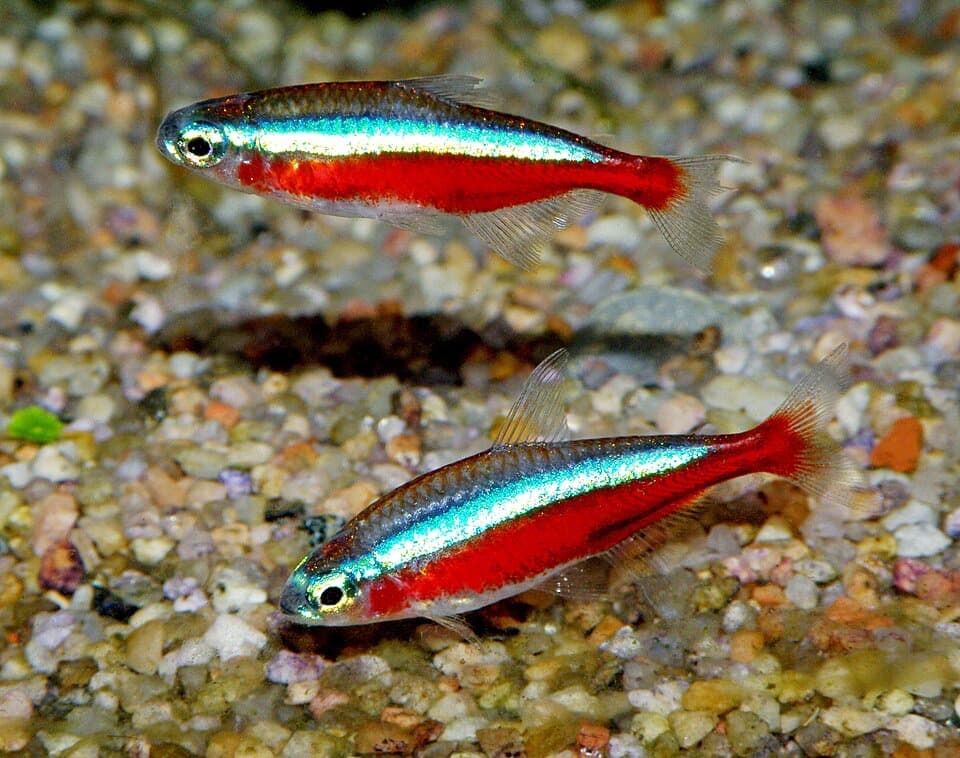
Cardinal tetra
Also known as Paracheirodon axelrodi
- Adult size
- About 4–5 cm
- Lifespan
- 3–6 years
- Origin
- Upper Orinoco and Negro rivers in South America
- Company
- Keep in a shoal of at least 6, ideally many more
- Vivid
- Peaceful
- Shoaling
- Delicate
About the Cardinal tetra
Cardinal tetras look very like neons, but their red colour extends along the whole length of the lower body, giving them an even more vivid appearance. They are slightly larger than neons and are often seen in carefully designed planted aquariums.
Many cardinals sold in shops are still collected from the wild, particularly in the Rio Negro region, where the fishery is an important source of local income. They come from very soft, acidic blackwater, so they are generally more demanding than neons.
Temperament
Cardinals are gentle, peaceful shoaling fish that become nervous and pale if kept in small numbers. They suit calm community tanks with other small fish of similar temperament. Avoid larger predatory fish and boisterous or nippy species.
Tank & water
A shoal needs a well-established, heated tank of at least around 60–80 litres. Cardinals prefer warmer water than neons, around 24–29°C, which makes them good companions for species that like it warm. Soft, acidic water and gentle filtration are ideal, along with dense plants, driftwood and shaded areas. Add them only to a fully cycled and mature tank.
Diet
Offer a quality micro-pellet or fine flake as a base, supplemented with small frozen or live foods such as daphnia and brine shrimp. Cardinals feed mostly in mid-water and have small mouths, so food should be appropriately sized. Feed a little once or twice a day.
Behaviour & tank mates
Cardinals look their best schooling in open water against a backdrop of plants and wood. Leaf litter and tannin-stained water recreate the blackwater conditions they come from and can encourage more natural behaviour. A large group is far more interesting to watch and more relaxed than a handful of fish.
Tank maintenance
Small, regular water changes of around 20% weekly help keep conditions stable without sudden shifts in chemistry. Match the replacement water's temperature and, ideally, its softness.
Health
Wild-caught cardinals can be stressed on arrival and may carry parasites, so a period of quarantine and careful acclimatisation is especially worthwhile. Like neons, they can develop white spot, fin rot and other bacterial infections in poor conditions. If fish decline, test the water and contact an aquatic vet or specialist.
Prone to
- White spot (ich)
- Fin rot
- Parasites in wild-caught fish
- Stress after transport
Call a vet if you notice
- Fish gasping at the surface — test the waterEmergency
- Losing colour persistently during the day
- White spots or a velvety coating
- Fish not eating and hiding constantly
- Sudden deaths in newly bought fish
An aquatic vet or experienced aquatic specialist is best placed to help. Find one before you need them.
Common questions
Are cardinal tetras harder to keep than neons?
Generally yes. They prefer soft, acidic, warm water and are more sensitive to instability, so they suit keepers with a little experience.
Can cardinal and neon tetras be kept together?
They can, though they will not usually shoal as one group, and their temperature ranges only overlap partly. Aim for a temperature that suits both.
How warm should water be for cardinal tetras?
Around 24–29°C suits them, which is warmer than many community fish prefer. This makes them good companions for discus or rams.
Written by the Petopedia editorial team to our editorial standards. General guidance, not veterinary advice.