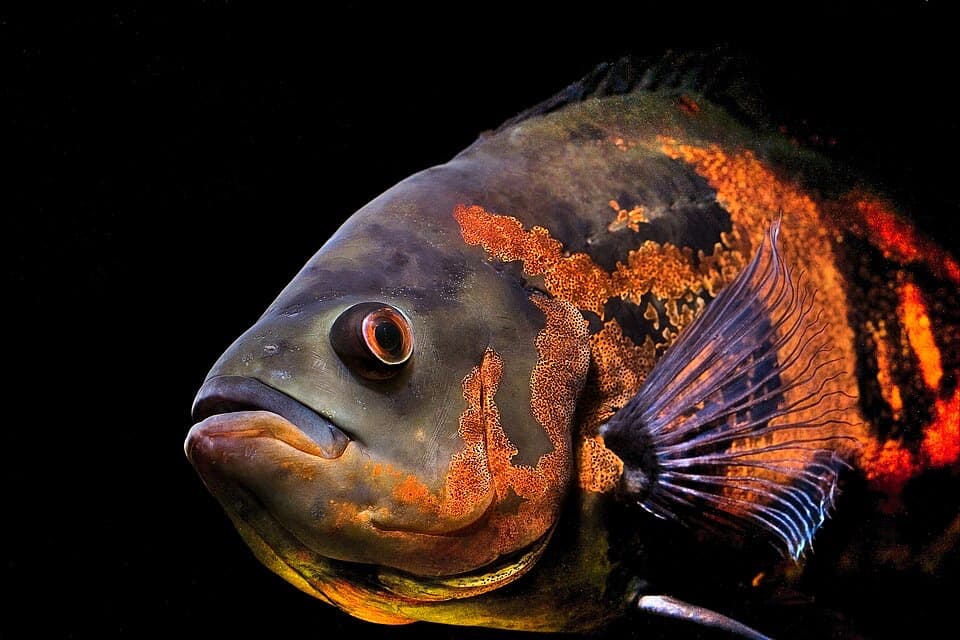
Oscar
Also known as Velvet cichlid, Tiger oscar, Astronotus ocellatus
- Adult size
- Commonly 30–35 cm
- Lifespan
- 10–15 years
- Origin
- Rivers of the Amazon basin and neighbouring parts of tropical South America
- Company
- Often kept alone, or with large robust fish in a very big tank
- Intelligent
- Interactive
- Messy
- Predatory
About the Oscar
The oscar is a big, heavy-bodied cichlid with velvety skin and an eye-spot near the tail. Popular forms include the tiger oscar with red-orange markings, the red oscar and albino types.
Oscars are sold as small, cute juveniles but grow fast, often reaching over 30 cm. Their size, appetite and waste production mean they need a far larger tank than most people first imagine.
They are often described as the 'pet' of the fish world because many learn to recognise their keepers, follow movement outside the glass and respond eagerly at feeding time.
Temperament
Oscars are predators that will eat any fish that fits in their large mouths. They can be territorial, especially as they mature or when breeding, though individuals vary from placid to quite bullying. They are often kept alone or alongside other large, sturdy fish in very big aquariums.
Tank & water
A single adult oscar needs a tank of at least around 300 litres, and more if any tank mates are added. Keep the water at roughly 22–28°C with very powerful filtration, as oscars are messy feeders. Heavy rocks and wood that cannot topple, plus a firmly secured lid, are important because oscars like to dig, move objects and occasionally jump. Delicate plants are usually uprooted.
Diet
Oscars are carnivorous and should have a quality large cichlid pellet as their staple. Frozen foods such as prawns, mussel and earthworms add variety. Live feeder fish are best avoided because they can carry disease and offer poor nutrition, and oscars should not be overfed despite their constant begging.
Behaviour & tank mates
Oscars are curious and need things to investigate: they dig in sand, push stones around and rearrange their surroundings. Some keepers offer floating objects or hand-feed with long tongs to give them stimulation. Varying the position and type of food also keeps them engaged.
Tank maintenance
Expect to change a substantial portion of the water at least weekly and to clean filters often. Remove uneaten food quickly, as large meaty leftovers rapidly pollute the tank.
Health
Oscars are particularly associated with hole-in-the-head, where pits appear on the head and along the body, often linked to poor water quality and diet. They can also suffer from bacterial infections, internal parasites, cloudy eyes and injuries from decor. Oscars sometimes sulk and lie still after changes, but persistent lethargy or refusal to eat warrants advice from an aquatic vet or specialist.
Prone to
- Hole-in-the-head
- Bacterial infections
- Internal parasites
- Cloudy eyes
- Injuries from decor
Call a vet if you notice
- Gasping at the surface — test the waterEmergency
- Pits or holes appearing around the head
- Refusing food for several days
- Cloudy or bulging eyes
- Lying on its side for long periods
- Red, inflamed patches on the body
An aquatic vet or experienced aquatic specialist is best placed to help. Find one before you need them.
Common questions
How big do oscars get?
Oscars commonly grow to 30–35 cm and can do so within a year or two. Planning for the adult size before buying a juvenile is essential.
Can oscars live with other fish?
They can share a very large tank with other big, sturdy fish, but small fish will be eaten. Many oscars are kept alone or in pairs.
Do oscars recognise their owners?
Many keepers report that their oscars respond differently to them than to strangers and get excited at their approach. They are widely regarded as one of the most interactive aquarium fish.
Why is my oscar lying on the bottom?
Oscars can sulk after water changes or decor moves, but lying still can also indicate poor water or illness. Test the water and watch for other symptoms, and seek help if it continues.
Written by the Petopedia editorial team to our editorial standards. General guidance, not veterinary advice.