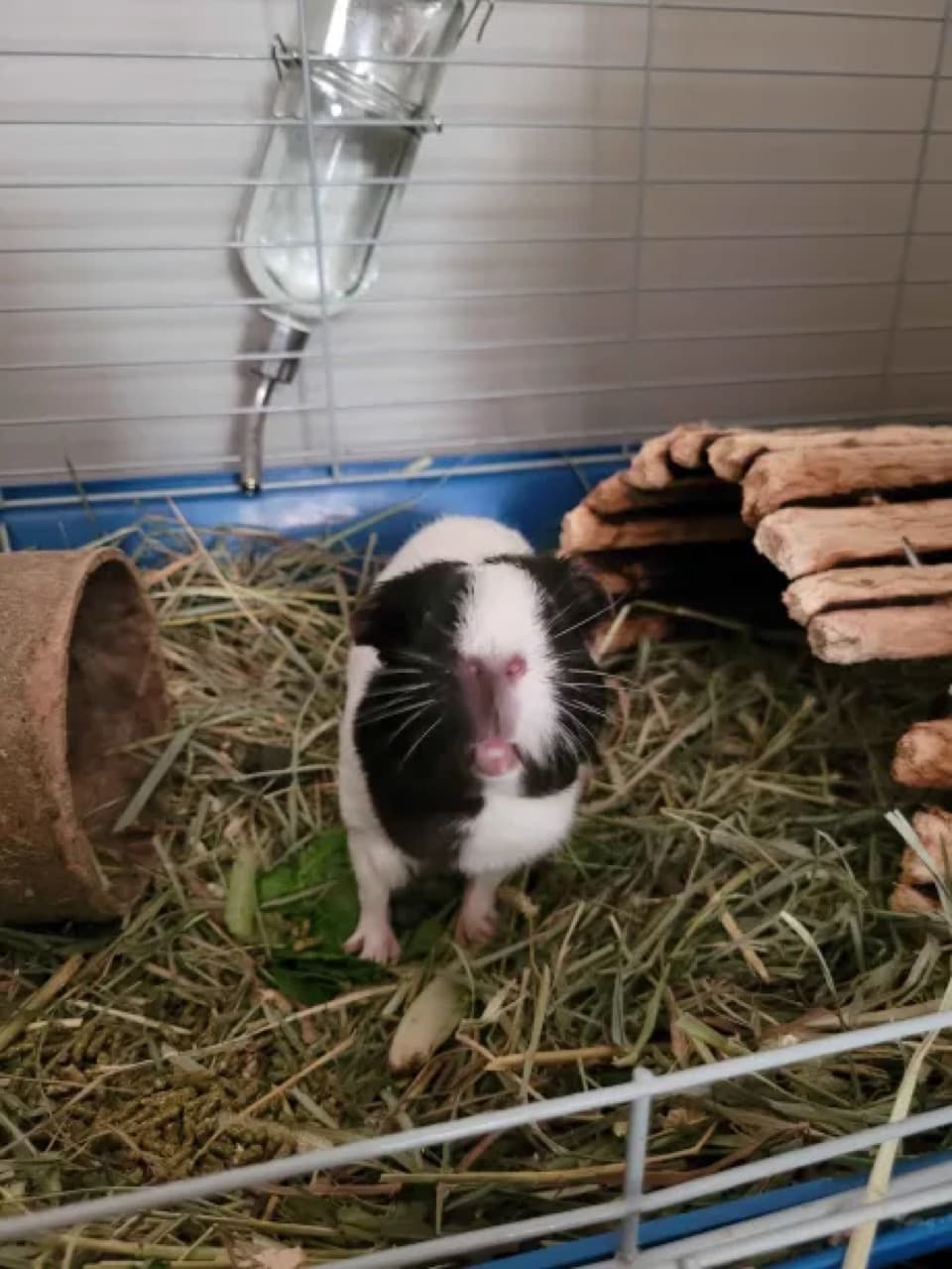
American guinea pig
Also known as Smooth-coated guinea pig, English guinea pig, Short-haired guinea pig
- Adult size
- About 20–25 cm long; 0.7–1.2 kg
- Lifespan
- 5–7 years
- Origin
- Domesticated in the Andes of South America; breed standard developed in Europe and North America
- Company
- Keep in pairs or small groups
- Gentle
- Vocal
- Sociable
- Easy-care
About the American guinea pig
The American is the classic smooth, short-coated guinea pig and probably the most common type kept as a pet. Its glossy coat lies flat with no rosettes, and it comes in a wide range of colours and patterns.
Guinea pigs were domesticated in the Andes centuries ago, and smooth-coated types became widespread as pets in Europe and beyond. The American is often recommended for first-time owners because its coat is simple to care for.
Temperament
American guinea pigs are typically gentle, vocal and sociable, greeting familiar people with squeaks and wheeks, especially around feeding time. They can be shy at first but often become confident with calm, regular handling. Like all guinea pigs, they are prey animals and may freeze or dash for cover when startled.
Housing
Keep at least two guinea pigs in a spacious, solid-floored enclosure, far bigger than most pet-shop cages, with room to run laps and separate hides for each animal. Indoor housing is often easiest to keep at a comfortable, stable temperature; they cope poorly with heat and with cold, damp conditions. Use absorbent bedding and spot-clean daily.
Diet
Unlimited fresh hay should make up most of the diet, keeping teeth and digestion healthy. Guinea pigs cannot make their own vitamin C, so they need a daily supply from fresh vegetables such as bell pepper and leafy greens, plus a measured amount of guinea-pig-specific pellets. Fresh water should always be available, and rabbit food should not be used as a substitute.
Exercise & enrichment
Tunnels, hideaways, piles of hay to burrow in and scattered vegetables encourage natural foraging. Supervised floor time in a safe area gives extra exercise. Pick them up with one hand under the chest and the other supporting the rear, and hold them close to your body.
Grooming
The short coat needs only an occasional brush, more during shedding. Trim nails every few weeks, and check the teeth, feet and bottom regularly.
Health
Common problems include vitamin C deficiency (scurvy), dental overgrowth, respiratory infections and skin mites. Bladder stones can occur, so straining to urinate needs prompt attention. Guinea pigs hide illness well, so a change in appetite, weight or behaviour should be checked by a vet experienced with small animals.
Prone to
- Vitamin C deficiency (scurvy)
- Dental overgrowth
- Respiratory infections
- Skin mites
- Bladder stones
Call a vet if you notice
- Not eating or drinking, even for part of a dayEmergency
- Laboured breathing, crackling sounds or discharge from the noseEmergency
- Straining to urinate, blood in urine or squeaking while peeing
- Hair loss, intense scratching or scabs
- Weight loss, reluctance to move or swollen joints
A vet with experience of exotic pets is best placed to help. Find one before you need them.
Common questions
How long do American guinea pigs live?
Most live around 5 to 7 years, and some longer with excellent care. Diet, housing and prompt vet care all play a part.
Do American guinea pigs need a friend?
Yes. Guinea pigs are herd animals and should live with at least one other guinea pig. Same-sex pairs or a neutered male with females are common combinations.
How much vitamin C does a guinea pig need?
They need a daily source of vitamin C from fresh vegetables and quality guinea pig pellets. A vet can advise on the right balance for your guinea pig, especially if it is ill, pregnant or elderly.
Written by the Petopedia editorial team to our editorial standards. General guidance, not veterinary advice.