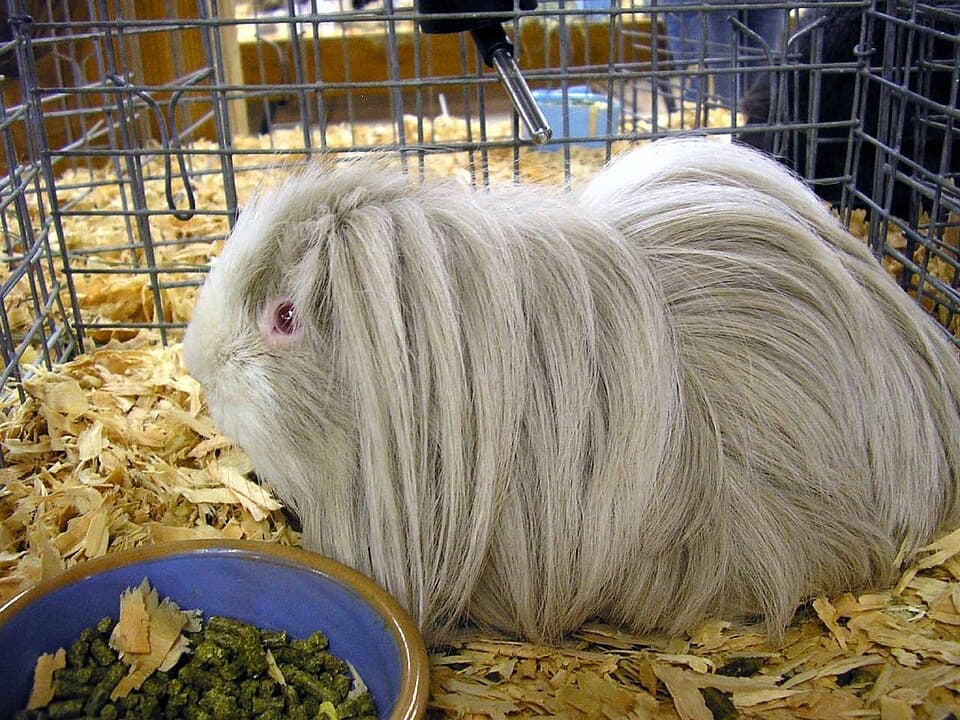
Himalayan guinea pig
- Adult size
- About 20–25 cm long; 0.7–1.2 kg
- Lifespan
- 5–7 years
- Origin
- Uncertain (selective breeding; name refers to colouring, not location)
- Company
- Keep in pairs or small groups
- Gentle
- Calm
- Friendly
- Pointed
About the Himalayan guinea pig
The Himalayan guinea pig is white with dark points on the nose, ears and feet, and red or pink eyes, similar in pattern to Himalayan rabbits and Siamese cats. It is technically a form of albino, and its points develop as it matures.
The colour of the points is sensitive to temperature and health: they may fade in warm conditions or during illness or stress. The name refers to the colour pattern rather than any link to the Himalayas.
Temperament
Himalayan guinea pigs are typically gentle, calm and friendly. Many become very used to handling and enjoy interaction with their owners. They need companions of their own kind.
Housing
Provide a spacious, solid-floored enclosure with multiple hides. Keep them indoors or in sheltered housing away from direct sunlight, as their pale skin and pink eyes are sensitive to bright light. Maintain a stable, comfortable temperature.
Diet
Feed unlimited hay, daily vitamin C-rich vegetables and a measured portion of guinea pig pellets. Fresh water must always be available. Introduce new foods gradually.
Exercise & enrichment
Tunnels, hay piles and foraging toys keep them engaged. Floor time in a shaded area is ideal. Gentle, regular handling helps them bond with their owners.
Grooming
Their short coat needs only an occasional brush. Check nails, teeth and skin regularly, and note any fading of the points, which can sometimes signal stress or illness.
Health
Their pink eyes and pale skin may be more sensitive to bright light and sunlight. They share common guinea pig risks such as scurvy, dental problems and respiratory infections. Fading points can be normal in warm weather but may also be a sign of ill health, so check overall behaviour and appetite.
Prone to
- Light sensitivity
- Vitamin C deficiency
- Dental problems
- Respiratory infections
Call a vet if you notice
- Not eatingEmergency
- Breathing difficultyEmergency
- Squinting, cloudy or weepy eyes
- Points fading along with lethargy or weight loss
- Swollen joints or reluctance to move
A vet with experience of exotic pets is best placed to help. Find one before you need them.
Common questions
Why do Himalayan guinea pigs' points change colour?
Their pigment is temperature-sensitive, so points may lighten in warm conditions and darken in cooler ones. Stress and illness can also cause fading.
Are Himalayan guinea pigs albino?
They are a form of albino with temperature-sensitive pigment on the extremities. That is why they have red or pink eyes.
Are Himalayan guinea pigs from the Himalayas?
No. The name refers to the colour pattern, which is shared with Himalayan rabbits.
Written by the Petopedia editorial team to our editorial standards. General guidance, not veterinary advice.