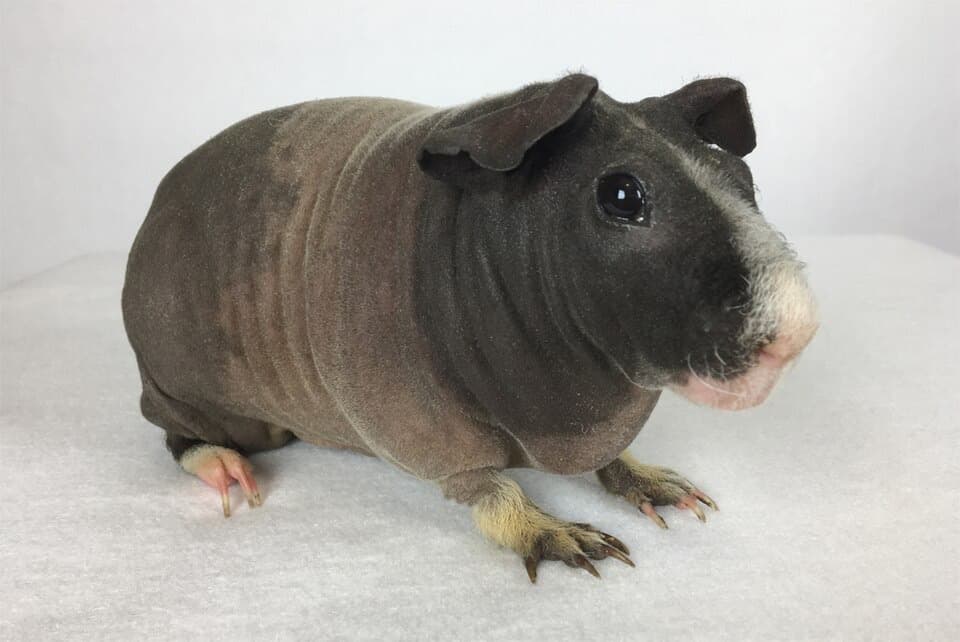
Skinny pig
Also known as Hairless guinea pig
- Adult size
- About 20–25 cm long; 0.7–1.2 kg
- Lifespan
- 5–7 years
- Origin
- Canada (laboratory strain)
- Company
- Keep in pairs or small groups
- Affectionate
- Curious
- Sociable
- Hairless
About the Skinny pig
The Skinny pig is a largely hairless guinea pig, usually with a little hair on the nose, feet and legs. It descends from a hairless mutation found in a laboratory colony in Canada in the late 1970s, and hairless guinea pigs later became pets.
Without a coat, Skinny pigs need warmer housing, skin care and protection from injury. They are sociable and often very affectionate, but they are not a low-maintenance option.
Temperament
Skinny pigs are typically friendly, curious and sociable. Many enjoy being held and cuddled, perhaps partly for the warmth. They need companions of their own kind, which also helps them keep warm.
Housing
Keep Skinny pigs indoors in a warm, stable environment, as they lose body heat easily and are vulnerable to cold and draughts. Provide soft bedding, such as fleece, and cosy hides or snuggle sacks. Keep them out of direct sunlight, which can burn their skin, and avoid rough materials that could scratch them.
Diet
Skinny pigs often eat more than haired guinea pigs, as they use more energy to keep warm. Provide unlimited hay, daily vitamin C-rich vegetables and measured guinea pig pellets. Fresh water must always be available.
Exercise & enrichment
Tunnels, soft hides and foraging opportunities keep Skinny pigs engaged. Supervised floor time should be in a warm, safe area. Gentle handling is usually welcome, and many enjoy being wrapped in a soft blanket on a lap.
Grooming
Their skin needs regular checks for dryness, cuts or irritation; ask a vet before using any skin products. Clean folds of skin gently if they become dirty, and trim nails regularly.
Health
Skin injuries, dryness and infections are more common because the skin is unprotected. They are at risk of becoming cold and of sunburn. They share common guinea pig risks such as scurvy, dental problems and respiratory infections.
Prone to
- Skin injuries and infections
- Dry skin
- Cold stress
- Sunburn
- Vitamin C deficiency
Call a vet if you notice
- Not eatingEmergency
- Cold to the touch, lethargic or shiveringEmergency
- Breathing difficultyEmergency
- Cuts, sores or red, inflamed skin
- Flaky, cracked or crusty skin
A vet with experience of exotic pets is best placed to help. Find one before you need them.
Common questions
Do Skinny pigs need to be kept warm?
Yes. They lose heat easily and should live indoors in a warm, draught-free room, with soft hides and companions to snuggle with.
Do Skinny pigs eat more than other guinea pigs?
Often, yes, because they use extra energy to keep warm. Provide plenty of hay and fresh vegetables, and monitor their weight.
Are Skinny pigs hypoallergenic?
Not truly. Allergies can be triggered by skin flakes, saliva and urine, as well as by hay, so allergy sufferers may still react.
Written by the Petopedia editorial team to our editorial standards. General guidance, not veterinary advice.