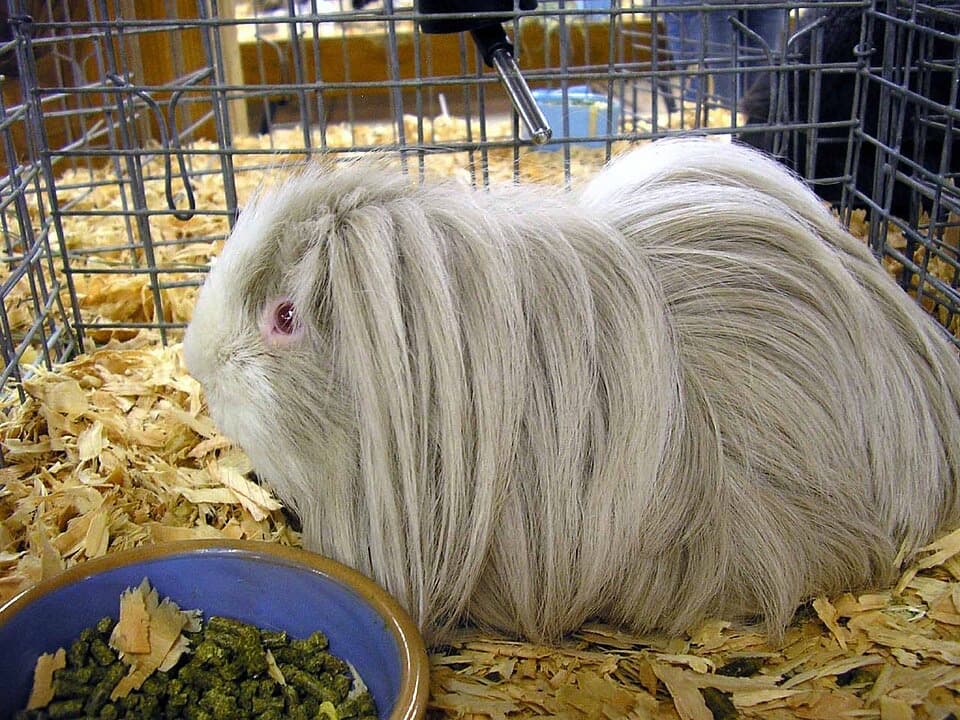
Texel guinea pig
- Adult size
- About 20–25 cm long, not including hair; 0.7–1.2 kg
- Lifespan
- 5–7 years
- Origin
- United Kingdom
- Company
- Keep in pairs or small groups
- Calm
- Gentle
- Placid
- Curly
About the Texel guinea pig
The Texel is a long-haired guinea pig with curly, ringleted hair covering its body, giving it a distinctive, almost corkscrewed appearance. It was developed in Britain in the 1980s, reportedly by crossing Shelties with Rex guinea pigs.
Texels are popular show guinea pigs and attractive pets, but their curly coat is one of the most demanding to keep tidy.
Temperament
Texels are generally calm and gentle, often tolerating handling well. Many are relaxed companions that enjoy quiet attention. Like all guinea pigs, they need company of their own kind.
Housing
Provide a spacious enclosure with clean, non-tangling bedding such as fleece. Clean frequently, as curls trap urine and debris. Keep them indoors or in a well-protected, cool environment, as long coats increase the risk of overheating.
Diet
Offer unlimited hay, daily vitamin C-rich vegetables and a measured amount of guinea pig pellets. Fresh water should always be available. Hay racks help reduce the amount of hay caught in the curls.
Exercise & enrichment
Hides, tunnels and foraging opportunities keep Texels content. Floor time in a clean area allows exercise without picking up debris. Make grooming sessions short and positive to maintain trust.
Grooming
The curly coat needs careful, regular attention to prevent mats; finger-separating curls or gently brushing is often recommended over heavy combing. Many pet owners trim the coat shorter, especially around the rear. Check nails, teeth and skin often.
Health
Soiled or matted curls can lead to skin infections and flystrike, so hygiene is essential. Curly coats can hide weight loss and skin problems, so weigh them regularly. They share common guinea pig risks such as scurvy, dental problems and respiratory infections.
Prone to
- Matting
- Skin infections
- Flystrike
- Vitamin C deficiency
- Dental problems
Call a vet if you notice
- Not eatingEmergency
- Fly eggs or maggots in the coatEmergency
- Laboured breathingEmergency
- Red, sore or smelly skin under the curls
- Weight loss
A vet with experience of exotic pets is best placed to help. Find one before you need them.
Common questions
How do you groom a Texel guinea pig?
Gently separate curls with your fingers or a wide-toothed comb, and trim soiled or matted areas. Many owners keep pets trimmed short for easier care.
Are Texel guinea pigs good pets?
They are calm and attractive, but their coat makes them high-maintenance. They suit owners who enjoy regular grooming.
Where do Texel guinea pigs come from?
They were developed in Britain in the 1980s, reportedly from crossing Sheltie and Rex guinea pigs.
Written by the Petopedia editorial team to our editorial standards. General guidance, not veterinary advice.