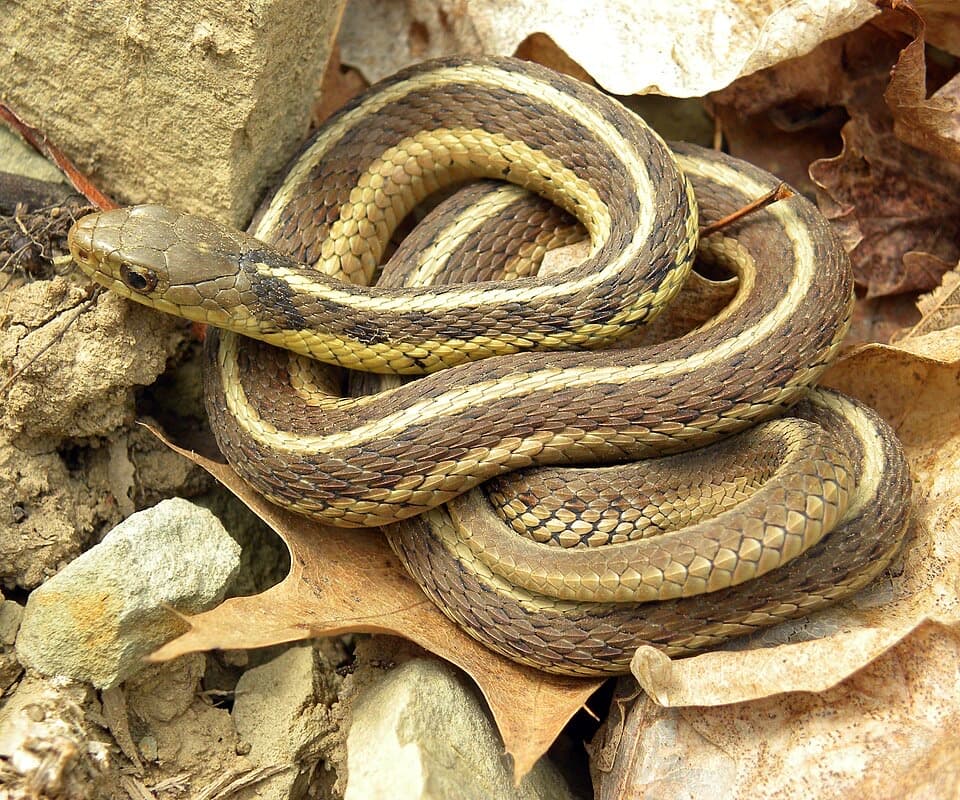
Garter snake
Also known as Common garter snake, Thamnophis sirtalis
- Adult size
- 45–90 cm long
- Lifespan
- 6–10 years
- Origin
- North America
- Company
- Can sometimes be kept in small groups of similar size; watch for food competition
- Active
- Diurnal
- Alert
- Slender
About the Garter snake
Garter snakes are slender, often striped snakes found across North America near ponds, meadows and wetlands. Several species are kept, with the common garter snake the best known, and they are active during the day, which makes them engaging to watch.
Unlike most pet snakes, garter snakes eat fish and earthworms as well as rodents, and some are kept in small groups. Feeding them correctly takes a little research, as some fish cause a vitamin deficiency if fed too often.
Temperament
Garter snakes are lively and alert, and many tolerate handling well once used to it. They may musk or nip when first handled. They tend to stay active and curious rather than settling still on a hand.
Enclosure, heat & light
A small group or single adult needs at least around 90 x 45 x 45 cm, with larger enclosures for groups. Provide a warm end and cool end controlled by a thermostat, checked with a thermometer, and UVB is beneficial for these daytime snakes. Hides, plants and a large water bowl for soaking and drinking are important. Keep the substrate mostly dry, as damp substrate can cause skin problems.
Diet
Garter snakes eat earthworms, suitable fish and frozen-thawed rodents, with many keepers moving them onto a mainly rodent-based diet. Some fish, such as goldfish and smelt, contain an enzyme that breaks down thiamine and can cause deficiency if fed regularly. Dusting food with supplements as advised and feeding a variety helps. Juveniles feed more often than adults.
Enrichment & handling
Daytime activity, varied hides, branches and live plants all add interest. Scatter-feeding or placing worms in a shallow dish encourages foraging. Handle gently and let them move through your hands.
Shedding & hygiene
They shed in one piece; a humid hide helps. Clean waste and change water often, as garter snakes often soak and soil water. Wash hands after handling.
Health
Problems include thiamine deficiency from unsuitable fish, blister disease from damp conditions, respiratory infections and parasites. Thiamine deficiency shows up as twitching, poor coordination or stargazing and needs prompt veterinary treatment. An exotics vet can also advise on diet and treat skin problems before they spread.
Prone to
- Thiamine deficiency
- Blister disease
- Respiratory infection
- Intestinal parasites
Call a vet if you notice
- Twitching, poor coordination or stargazing
- Blisters or reddened scales on the belly
- Mucus or wheezing
- Loss of appetite with weight loss
- SeizuresEmergency
A vet with experience of exotic pets is best placed to help. Find one before you need them.
Common questions
Can garter snakes live together?
They are one of the few snakes sometimes kept in small groups, but feed separately to avoid two snakes grabbing the same item. Keep snakes of similar size together.
What do garter snakes eat?
They eat earthworms, suitable fish and frozen-thawed rodents. Avoid feeding goldfish and smelt regularly because of thiamine problems.
Do garter snakes bite?
They may nip when first handled or frightened, but bites are minor. Many become calm with regular handling.
Written by the Petopedia editorial team to our editorial standards. General guidance, not veterinary advice.