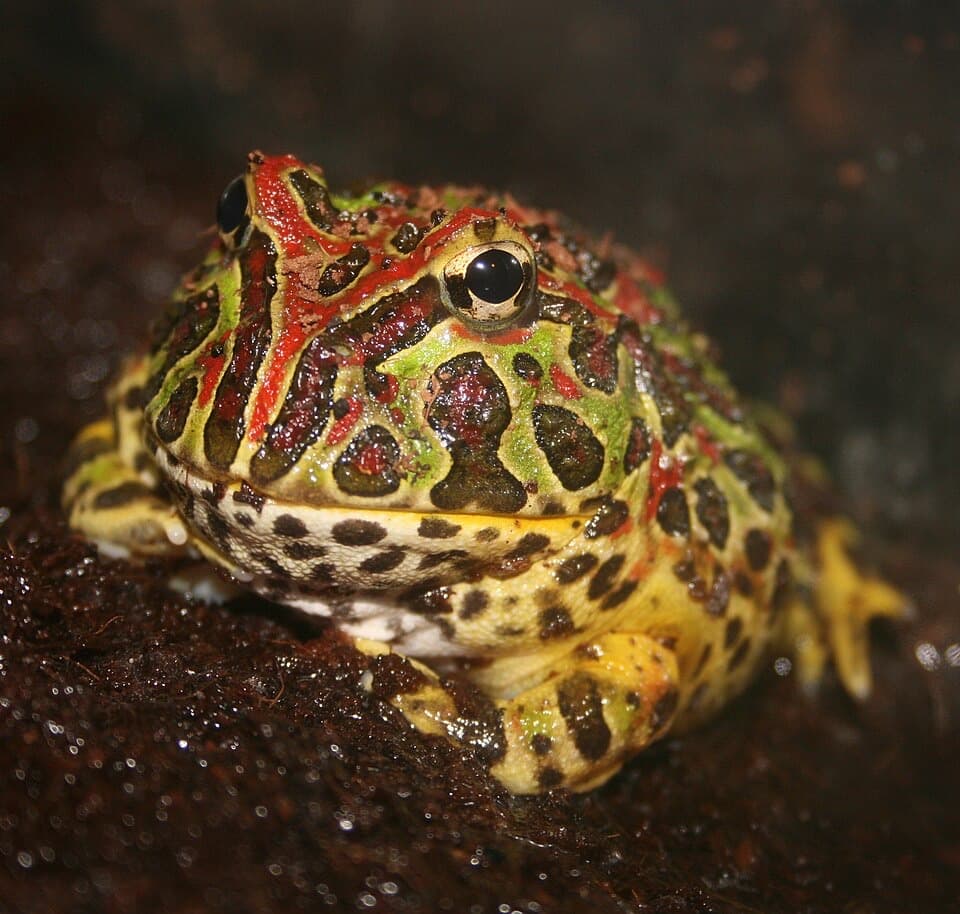
Pacman frog
Also known as Horned frog, Argentine horned frog, Cranwell's horned frog, Ceratophrys
- Adult size
- 10–15 cm long, females larger than males
- Lifespan
- 8–15 years
- Origin
- South America, including Argentina, Uruguay, Paraguay, Bolivia and southern Brazil
- Company
- Must be kept alone; they will eat or injure tankmates
- Sedentary
- Voracious
- Rotund
- Ambushing
About the Pacman frog
Pacman frogs are almost circular, wide-mouthed horned frogs named after the video game character. Most pets are Argentine or Cranwell's horned frogs, or hybrids of the two, bred in a range of colours.
In the wild they sit half-buried and ambush anything that passes, from insects to other frogs and small rodents. They are easy to house in a modest enclosure, but they are display animals rather than pets to hold, and their appetite means each must live alone.
Temperament
Pacman frogs barely move most of the time, sitting buried with only their eyes showing. They have a powerful bite and may lunge at fingers they mistake for prey. Some puff up or croak loudly when disturbed.
Enclosure, heat & light
A single adult needs a terrarium of roughly 45 x 45 x 30 cm, as they are not climbers. Use a deep, moist, burrowable substrate such as coconut fibre or soil with moss, and keep it damp but not waterlogged. Provide gentle warmth with a thermostat-controlled heat source, checking temperatures with a thermometer, plus a shallow dish of dechlorinated water. If the substrate is kept too dry, they may form a protective skin cocoon and stop feeding.
Diet
Gut-loaded insects such as crickets, roaches and earthworms dusted with calcium should form the bulk of the diet. Rodents are fatty and best offered rarely, if at all, to adults. Feeding with tongs avoids swallowed substrate, and overfeeding is a common cause of obesity in this species.
Enrichment & handling
Leaf litter, moss and plants let a pacman frog bury itself and feel secure. Offering prey with tongs triggers its natural ambush strike. Avoid handling except for health checks or cleaning, and use damp, chemical-free hands or a container when moving it.
Shedding & hygiene
They shed and eat their skin regularly. Replace water daily and change or refresh substrate often, as waste builds up quickly in damp soil. Wash your hands after any contact with the frog or its enclosure.
Health
Obesity, impaction from swallowed substrate, dehydration and bacterial or fungal skin infections are the most common problems. Overfeeding fatty prey can lead to fatty liver over time. An exotics vet with amphibian experience can advise on diet and husbandry.
Prone to
- Obesity
- Impaction
- Dehydration
- Skin infections
Call a vet if you notice
- Bloating or fluid swelling
- Refusing food for weeks without forming a cocoon
- Cloudy eyes
- Red, grey or peeling skin patches
- Limp and unresponsiveEmergency
A vet with experience of exotic pets is best placed to help. Find one before you need them.
Common questions
Do pacman frogs bite?
Yes, and the bite can be firm because they have tooth-like ridges and a strong jaw. Feed with tongs and avoid putting fingers near the mouth.
Can two pacman frogs live together?
No. They will try to eat each other, even if they are a similar size. Each frog needs its own enclosure.
How often should I feed my pacman frog?
Juveniles usually eat every day or two, while adults need feeding only every several days to a week. Adjust based on body shape, as obesity is common.
Why has my pacman frog stopped moving or eating?
If the substrate is too dry, they may enter a dormant state and form a cocoon. Check moisture and temperature, and see a vet if the frog seems unwell or doesn't recover.
Written by the Petopedia editorial team to our editorial standards. General guidance, not veterinary advice.