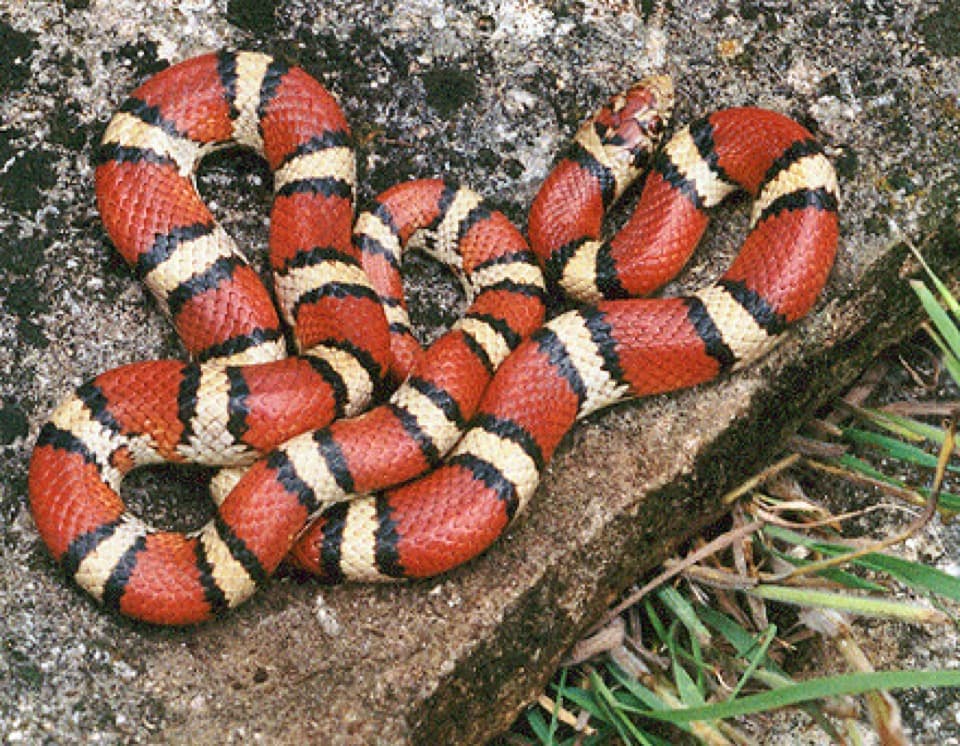
Milk snake
Also known as Milksnake, Lampropeltis triangulum
- Adult size
- 60–150 cm long depending on subspecies
- Lifespan
- 15–20 years
- Origin
- North America, Central America and northern South America
- Company
- Keep alone; like kingsnakes they may eat other snakes
- Colourful
- Nervy
- Active
- Hardy
About the Milk snake
Milk snakes are a group of colourful, non-venomous constrictors with red, black and yellow or white bands. They range from south-eastern Canada through the United States and Mexico into South America, and their classification has been revised several times, so names used in the pet trade do not always match current scientific thinking.
Their bold bands resemble those of venomous coral snakes, a form of mimicry. The name comes from an old myth that they drank milk from cows; in reality, they visited barns to hunt rodents.
Temperament
Juvenile milk snakes are often nervous, jerky and quick to musk or bite. Many become calmer with age and gentle handling, though they tend to remain active and wriggly. They are not generally aggressive, just quick to defend themselves.
Enclosure, heat & light
Enclosure size depends on the form: smaller types can live in around 90 x 45 x 45 cm, while larger forms need at least 120 x 60 x 60 cm. Provide a warm end and cool end controlled by a thermostat, checked with a thermometer. Add burrowing substrate, plenty of hides and climbing branches. Low-level UVB is a sensible addition with shaded areas.
Diet
Milk snakes eat frozen-thawed rodents sized to their width. Hatchlings can be fussy feeders at first, sometimes needing patient encouragement. Adults are fed every 10–14 days depending on size and condition.
Enrichment & handling
Burrowing substrate, cork hides and branches give them choice and security. Occasionally moving furniture or adding leaf litter adds variety. Handle calmly and let a jittery snake move through your hands rather than gripping it.
Shedding & hygiene
They shed in one piece, and a humid hide helps. Spot-clean waste and refresh water regularly. Wash your hands after handling.
Health
Problems include retained shed, respiratory infection, mouth rot and obesity in adults. Hatchlings that refuse food persistently need advice from a vet or experienced keeper. Watch for mites in new snakes.
Prone to
- Retained shed
- Respiratory infection
- Mouth rot
- Feeding refusal in hatchlings
- Snake mites
Call a vet if you notice
- Hatchling refusing all food for several weeks
- Wheezing or mucus
- Mouth swelling or discolouration
- Sheds coming off in pieces repeatedly
- Limpness or inability to move normallyEmergency
A vet with experience of exotic pets is best placed to help. Find one before you need them.
Common questions
Do milk snakes drink milk?
No. The name comes from a myth that they milked cows; they were actually attracted to barns by rodents. Snakes cannot digest milk.
Are milk snakes venomous?
No, they are harmless constrictors. Their bright bands mimic venomous coral snakes, which may help deter predators.
Are milk snakes good for beginners?
Yes, they are hardy and manageable, although juveniles can be jumpy. Choose a form whose adult size you can house.
Written by the Petopedia editorial team to our editorial standards. General guidance, not veterinary advice.