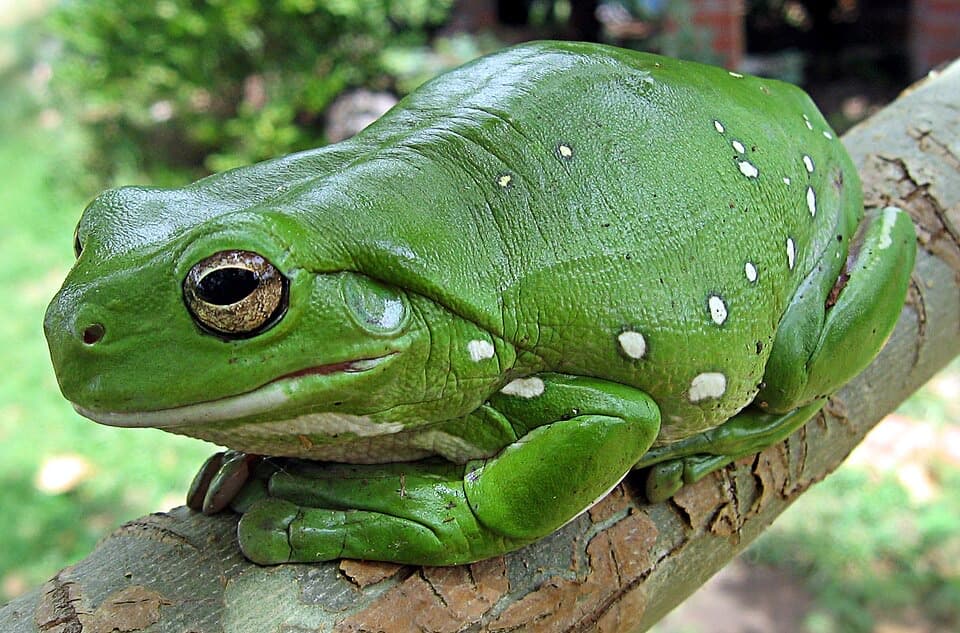
White's tree frog
Also known as Australian green tree frog, Dumpy tree frog, Litoria caerulea
- Adult size
- 7–11 cm long
- Lifespan
- 15–20 years
- Origin
- Northern and eastern Australia and southern New Guinea
- Company
- Can share with frogs of similar size; separate any that bully or try to eat smaller ones
- Placid
- Plump
- Nocturnal
- Vocal
About the White's tree frog
White's tree frog is a big, plump tree frog with waxy green skin, broad sticky toe pads and a fold of skin over the eyes that gives it a sleepy, smiling expression. In Australia it is a familiar visitor to gardens, bathrooms and water tanks, often hunting insects drawn to lights.
It is one of the most forgiving amphibians to keep and can live for many years. Like all frogs, though, it absorbs substances through its skin, so dechlorinated water, chemical-free hands and good hygiene are essential.
Temperament
These frogs are placid and often sit motionless for hours, becoming active and vocal at night. Many are unbothered by people moving around them. Occasional calm handling is usually tolerated, but it is stressful if overdone and can damage the protective skin coating.
Enclosure, heat & light
One or two adults need a tall terrarium of at least around 45 x 45 x 60 cm, with sturdy branches, broad-leaved plants and elevated hides. Daytime temperatures in the mid-20s °C with a modest night drop suit them, provided by a thermostat-controlled heat source and checked with a thermometer. Low-level UVB with plenty of shaded spots is now commonly recommended. Provide a large, shallow bowl of dechlorinated water and mist lightly so the enclosure is humid but well ventilated rather than wet.
Diet
They eat live insects such as crickets, roaches and locusts, gut-loaded beforehand and dusted with calcium, with a multivitamin used regularly. White's tree frogs are prone to obesity, so feed adults every few days and watch for fat ridges building up over the eyes. Juveniles need smaller insects more often.
Enrichment & handling
Varied perches at different heights, plants to rest on and live insects to stalk keep these frogs active. Changing the layout occasionally gives new climbing routes. If handling is needed, use clean hands rinsed in dechlorinated water with no soap, lotion or hand sanitiser left on them.
Shedding & hygiene
Frogs shed their skin regularly and usually eat it straight away. Replace the water bowl daily, as they often sit and soak in it, and clean surfaces regularly. Wash your hands after handling, as amphibians can carry salmonella.
Health
Obesity is the most common problem in captivity, along with bacterial infections such as red-leg, skin infections and impaction from swallowed substrate. Chytrid fungus is a serious amphibian disease, so quarantine new frogs and buy captive-bred animals. An exotics vet familiar with amphibians can help.
Prone to
- Obesity
- Red-leg
- Chytrid fungus
- Impaction
- Skin infections
Call a vet if you notice
- Redness on the legs or belly
- Cloudy eyes or patchy, peeling skin
- Refusing food with weight loss
- Bloating or fluid swelling
- Limp, unable to grip or breathing with difficultyEmergency
A vet with experience of exotic pets is best placed to help. Find one before you need them.
Common questions
Can you handle White's tree frogs?
Occasional brief handling is usually tolerated better than with most frogs. Always use clean, damp hands free of soap, lotion and sanitiser, and keep sessions short.
How long do White's tree frogs live?
With good care, 15–20 years is commonly reported. That is a long commitment for a frog, so plan accordingly.
Why is my White's tree frog turning brown?
They can change shade with temperature, mood and lighting, and brown can be normal. If colour change comes with lethargy, poor appetite or skin changes, see a vet.
Do White's tree frogs need UVB?
Low-level UVB with lots of shade is increasingly recommended, as it may support bone health. Discuss your set-up with an exotics vet if unsure.
Written by the Petopedia editorial team to our editorial standards. General guidance, not veterinary advice.