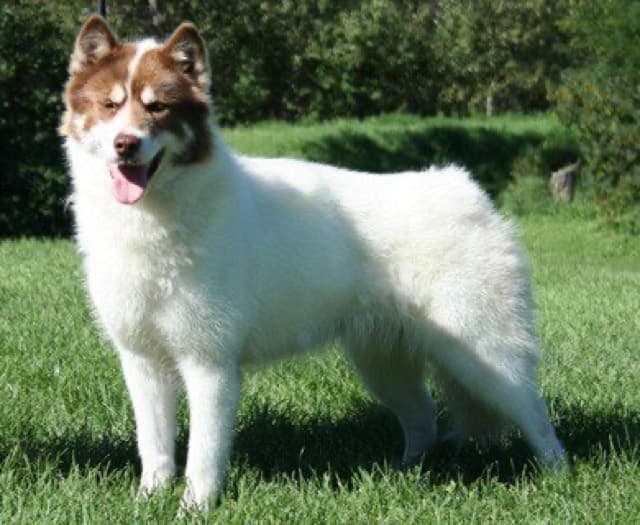
Canadian Eskimo Dog
Also known as Chien Esquimau Canadien · Kanadischer Eskimohund · Perro Esquimal Canadiense
Canada, Nordic Sledge Dogs
- Size
- Large
- Height
- —
- Weight
- —
- Life expectancy
- —
- Strong
- Hardy
- Independent
- Pack-oriented
Heights and weights are typical adult ranges; individual dogs vary.
About the Canadian Eskimo Dog
The Canadian Eskimo Dog is a large Arctic sled dog, historically used by Inuit communities for hauling loads, hunting support and travel across snow and ice. It has a strong, muscular frame, a thick double coat, erect ears and a curled tail. It is a rare breed with a strong working heritage. It is rare outside its native region and generally suits experienced owners.
Temperament
Typically strong-willed, hardy and pack-oriented, with a strong work drive. It tends to be friendly with people but can be independent and have a high prey drive, so it needs experienced, consistent handling.
Exercise
Needs a great deal of daily exercise, ideally including pulling or long-distance activity. It is not suited to a sedentary lifestyle.
Grooming
The thick double coat needs regular brushing, particularly during heavy seasonal moulting.
Care & wellbeing
Heat sensitivity is a concern for Arctic breeds, so provide shade and cool water. Secure fencing is essential, and weight and joint health matter.
Living with a Canadian Eskimo Dog
Typical tendencies for the breed. Upbringing, training and the individual matter as much.
History
A strong northern sled dog of the Canadian Arctic, kept by Inuit people to haul loads and help with hunting. It is a tough, thick-coated spitz that has survived in small numbers. It needs space, cold-tolerant surroundings and a lot of exercise.
Health
There's limited reliable published information on health issues in the Canadian Eskimo Dog. Breed clubs and your vet are the best sources.
Not every Canadian Eskimo Dog is affected, and this isn't a diagnosis. Read about common conditions and when to see a vet.
Cost to keep
Higher than average- Food, insurance and medicines cost more for a big dog
- Regular professional grooming adds up
- A commitment of many years
A relative guide, not a price — costs vary a lot by country, insurer and lifestyle.
Is a Canadian Eskimo Dog right for you?
Could suit
- Active owners who enjoy long walks, running or hiking
Think twice if
- You can't give well over an hour of exercise a day, every day
- You don't have time for frequent brushing or the cost of professional grooming
- This is your first dog — an independent breed can be a challenge to train
- You need a dog you can easily lift or carry
Not sure? Try the breed finder or read choosing the right dog breed.
Common questions
How much exercise does a Canadian Eskimo Dog need?
As a guide, around 90–120 minutes a day, split between walks, play and sniffing time. Puppies and older dogs need shorter, gentler sessions.
How much grooming does a Canadian Eskimo Dog need?
Brushing most days. Check ears, teeth and nails as part of the routine.
Are Canadian Eskimo Dogs easy to train?
Often independent-minded, so training needs patience, consistency and high-value rewards.
Do Canadian Eskimo Dogs shed?
A moderate amount. Regular brushing keeps loose hair under control.
Are Canadian Eskimo Dogs good with children?
Many get on well with children. Always supervise young children with any dog, and teach them to give the dog space.
Can a Canadian Eskimo Dog live in a flat?
It's usually a challenge — as long as they get enough daily exercise and time outdoors.
Written by Petopedia as general guidance, not veterinary advice. Ask your vet about health screening for this breed.
Breed details
- Country of origin
- Canada
- Type
- Nordic Sledge Dogs
- Internationally recognised
- 1959