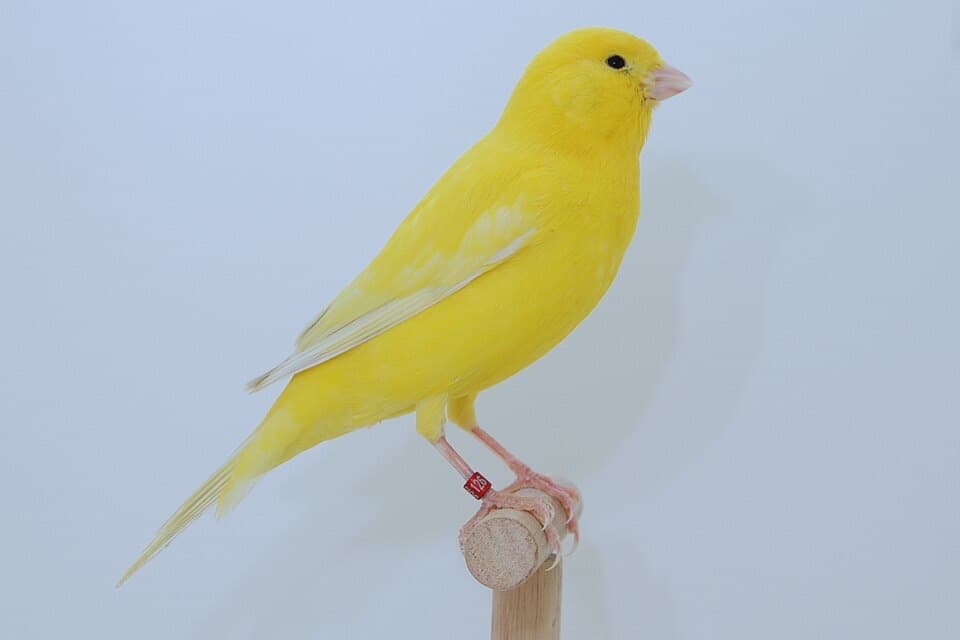
Canary
Also known as Domestic canary, Atlantic canary
- Adult size
- 12–14 cm long (type breeds vary), 15–30 g
- Lifespan
- 8–12 years
- Origin
- Canary Islands, Madeira and the Azores (wild ancestor); domesticated in Europe
- Company
- Content alone or with peaceful cage mates; males usually kept separately
- Musical
- Calm
- Independent
- Timid
About the Canary
The domestic canary descends from the wild Atlantic canary, a small finch of the Canary Islands, Madeira and the Azores. Centuries of breeding in Europe have produced three broad groups: song canaries, colour canaries and type canaries bred for shape or feathering.
Canaries are admired rather than handled. They are content to live without much human contact and reward a quiet, well-kept flight cage with song, particularly from males in spring.
Temperament
Canaries are calm, somewhat timid birds that generally prefer not to be handled. Males sing, and the song is strongest during the breeding season; hens mostly chirp. Two males kept together may fight, especially in spring. They are well suited to people who enjoy watching and listening rather than interacting.
Cage & housing
Canaries need room to fly from perch to perch, so a long flight cage, ideally 60–90 cm or more in length, is far better than a tall, narrow one. Place perches at each end to encourage flight and leave the centre clear. Keep the cage in a bright room out of direct sun, draughts and kitchen fumes. They need a regular day and night cycle; long artificial evenings can disrupt moulting and breeding.
Diet
Feed a canary seed mix or canary pellets, with daily leafy greens such as kale, chickweed or spinach in moderation. Offer egg food during moulting and breeding, as the extra protein supports feather growth. A cuttlebone or mineral block supplies calcium. Red-factor canaries may need special colour food during moult to keep their red colouring.
Company & enrichment
Canaries get most of their exercise from flight, so space matters more than toys. A bath, swing and natural branches are appreciated. A view of outdoor greenery or other birds can be stimulating. They do not need or generally want to be handled.
Nails, beak & bathing
Provide a bath dish several times a week; canaries love to splash. Nails can overgrow and may need careful trimming by an experienced person or vet. Change cage liners and clean perches regularly to prevent foot problems.
Health
Canaries can suffer from air sac mites, which cause clicking or wheezing breathing, as well as red mite infestations at night. Feather cysts are common in some type breeds with lumpy feathering. Canary pox, spread by biting insects, can be serious. A quiet, fluffed-up canary needs prompt veterinary attention.
Prone to
- Air sac mites
- Red mite
- Feather cysts
- Canary pox
- Overgrown nails
Call a vet if you notice
- Fluffed and sleeping on the floorEmergency
- Open-mouth breathing or tail bobbingEmergency
- Clicking or wheezing sounds
- Scabby lesions on the face or feet
- Stopped singing suddenly (in males)
A vet with experience of exotic pets is best placed to help. Find one before you need them.
Common questions
Do female canaries sing?
Hens usually chirp and call but rarely sing a full song. Males are the main singers.
Can canaries live alone?
Yes. Canaries are less social than parrots and many live contentedly alone, especially singing males.
Why has my canary stopped singing?
Moulting is the most common reason, but illness, stress or changes in light can also cause it. If other signs of illness appear, see a vet.
Written by the Petopedia editorial team to our editorial standards. General guidance, not veterinary advice.