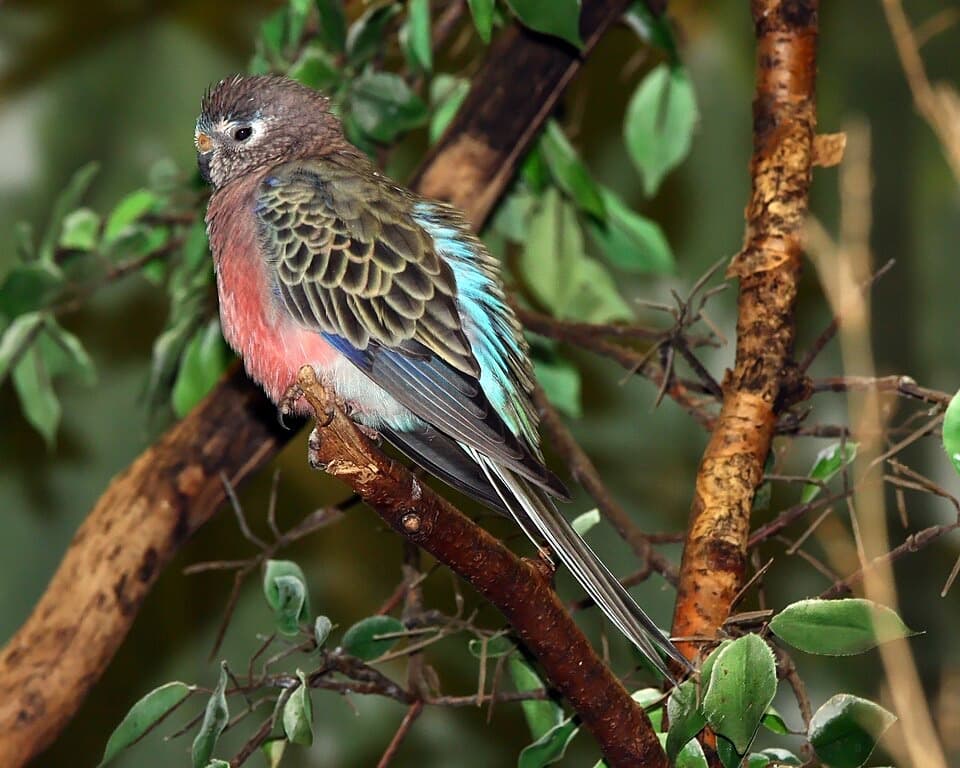
Bourke's Parakeet
Also known as Bourke's parrot, Bourkie
- Adult size
- about 19 cm long, 40–50 g
- Lifespan
- 8–15 years
- Origin
- Inland Australia
- Company
- Best in pairs or small groups; peaceful with other small birds
- Gentle
- Quiet
- Peaceful
- Crepuscular
About the Bourke's Parakeet
Bourke's parakeet is a small, soft-coloured parrot from the arid interior of Australia, with brownish plumage, pink belly and blue highlights. A popular captive variety is the rosy Bourke's, which is mostly pink.
Bourke's are among the quietest parrots and are most active at dawn and dusk. They are gentle and suit people looking for a calm aviary bird rather than a cuddly pet.
Temperament
Bourke's are peaceful, gentle birds that rarely bite. They are less interested in handling than budgies or cockatiels, though some become tame. They are most active in the early morning and evening. They usually mix well with other peaceful birds of similar size.
Cage & housing
Bourke's do best in a spacious flight cage or aviary where they can fly; aim for at least around 90 cm long for a pair. Provide perches at different heights and a ground area for foraging. Keep them out of draughts and damp. They are crepuscular, so avoid disrupting them at dawn and dusk.
Diet
Feed a small parrot seed mix or pellet base, with plenty of greens and vegetables. They forage on the ground in the wild, so scattering food on the floor encourages natural behaviour. Provide grit or cuttlebone as advised by an avian vet. Avoid avocado and chocolate.
Company & enrichment
Bourke's need flight space and ground foraging opportunities. They are not toy-focused like other parrots, but appreciate swings and natural branches. A calm environment suits them. Pairs or small groups keep each other company.
Nails, beak & bathing
Offer a shallow bath. Claws that grow sharp can be clipped by a vet. Clean the aviary floor regularly to reduce parasite risk.
Health
Bourke's are generally hardy but birds with access to an earth floor can pick up intestinal worms, so an avian vet may recommend regular faecal checks. Respiratory infections occur in damp or draughty housing, and hens can become egg-bound. Because they are quiet and undemanding, illness can be missed, so watch daily for changes in posture or droppings.
Prone to
- Intestinal worms
- Respiratory infections
- Egg binding
Call a vet if you notice
- Fluffed and inactiveEmergency
- Straining to layEmergency
- Breathing difficulty
- Weight loss
- Diarrhoea
A vet with experience of exotic pets is best placed to help. Find one before you need them.
Common questions
Are Bourke's parakeets quiet?
Yes, they are among the quietest parrots, with soft chirps.
Can Bourke's live with budgies?
They can sometimes share an aviary with peaceful species, but budgies can be pushy. Supervise introductions carefully.
Do Bourke's parakeets like to be handled?
They are generally not as handleable as budgies, though some become tame with patience.
Written by the Petopedia editorial team to our editorial standards. General guidance, not veterinary advice.