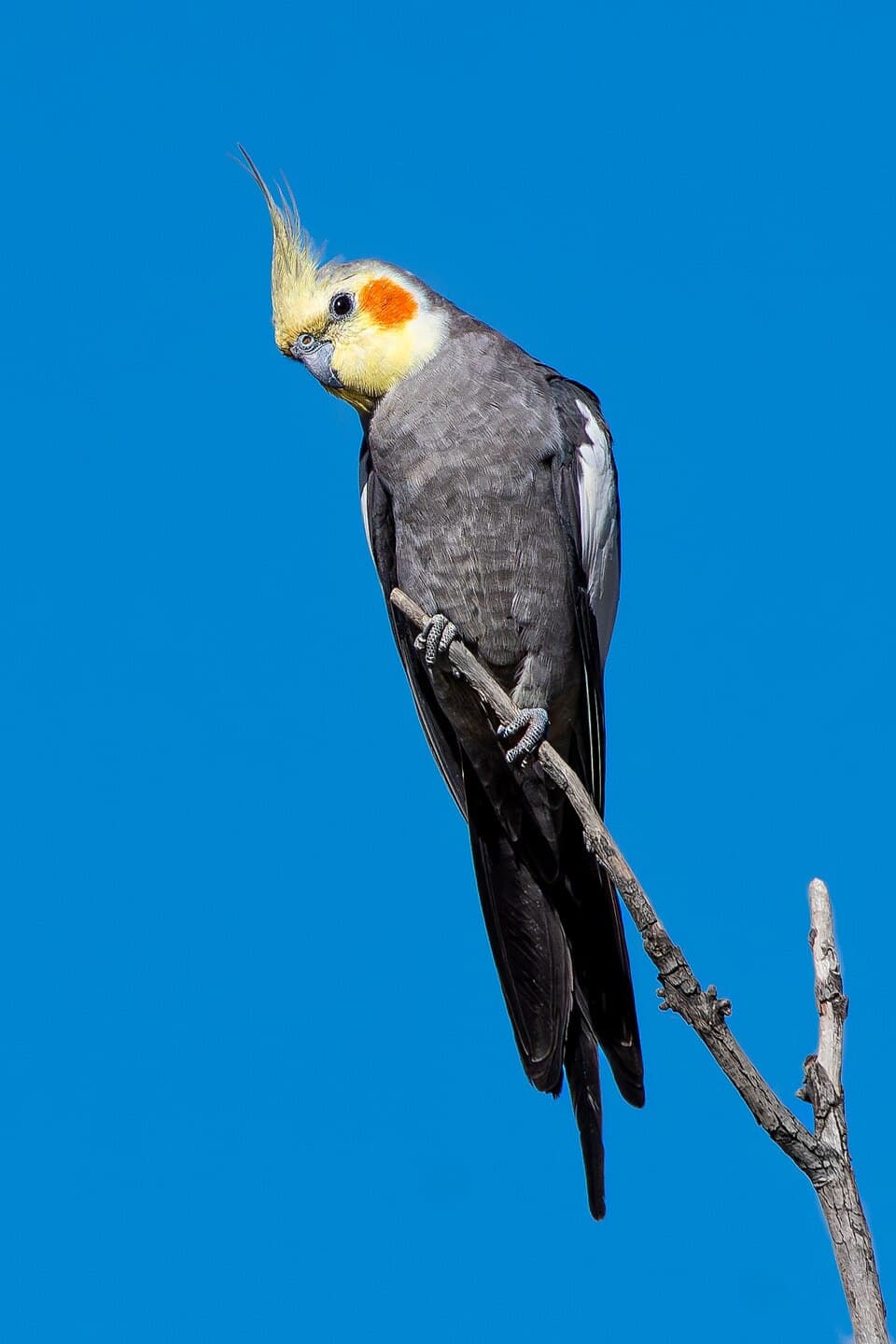
Cockatiel
Also known as Quarrion, Weero
- Adult size
- 30–33 cm long, 80–120 g
- Lifespan
- 15–25 years
- Origin
- Australia
- Company
- Affectionate flock bird; best in pairs and needs several hours of company daily
- Gentle
- Affectionate
- Musical
- Easygoing
About the Cockatiel
The cockatiel is the smallest member of the cockatoo family and is native to inland Australia. It is instantly recognisable by its upright crest and orange cheek patches, and is now bred in colours including lutino, pied, pearl and whiteface.
Gentle and affectionate, cockatiels are one of the most popular pet parrots. They do best in pairs or with a lot of daily human contact, and can live for well over 15 years, so they are a long commitment.
Temperament
Cockatiels are generally mild, cuddly birds that enjoy head scratches and sitting near their people. Males are often the better whistlers and may learn tunes, while hens tend to be quieter. They can be prone to night frights, thrashing in the cage when startled in the dark. Their contact calls can be loud and persistent if they feel left alone.
Cage & housing
A cage of at least around 60 cm wide, 50 cm deep and 70 cm tall suits one bird, with more space for a pair; horizontal bars help them climb. Provide several perch types, a flat platform and space to stretch their long tails without hitting the bars. A dim night light near the cage can reduce night frights. They need several hours a day out of the cage in a bird-proofed room.
Diet
Cockatiels do well on a base of good-quality pellets with some seed, plus daily fresh vegetables such as leafy greens, carrot, peppers and broccoli. An all-seed diet is linked to obesity and liver disease. Small amounts of fruit, cooked grains and sprouted seed add variety. Avoid avocado, chocolate, onion, caffeine and salty snacks.
Company & enrichment
Cockatiels love foraging toys, shreddable materials, swings and time on a play stand. Many enjoy whistling games and can learn to target train, step up and fly to a hand. They are ground foragers in the wild, so scattering a few treats on a tray encourages natural behaviour. Regular gentle handling keeps them tame.
Nails, beak & bathing
Cockatiels produce a fine powder down that keeps feathers healthy but can irritate people with allergies or asthma. Regular baths or misting help reduce dust and keep feathers in good condition. Nails may need trimming by a vet or experienced keeper if perches do not wear them down.
Health
Common problems include obesity, fatty liver, respiratory infections and chronic egg laying in hens, which can deplete calcium and lead to egg binding. Cockatiels are also susceptible to psittacosis and to giardia, which can cause itching and feather damage. An annual check with an avian vet is wise. Any change in breathing, appetite or droppings should be checked promptly.
Prone to
- Chronic egg laying and egg binding
- Obesity and fatty liver
- Respiratory infections
- Psittacosis
- Night frights and related injuries
- Giardia
Call a vet if you notice
- Hen straining, sitting fluffed on the floor or with a swollen abdomenEmergency
- Bleeding from a broken blood feather that will not stopEmergency
- Tail bobbing, wheezing or discharge from nostrils
- Loss of appetite or weight
- Plucking or chewing feathers
A vet with experience of exotic pets is best placed to help. Find one before you need them.
Common questions
Are cockatiels good for beginners?
They are one of the best parrot species for first-time owners because of their gentle nature. They still need daily interaction, out-of-cage time and avian vet care for many years.
Do cockatiels talk?
Some males learn a few words, but cockatiels are better known for whistling tunes. Hens usually whistle and talk less.
Why is my cockatiel thrashing at night?
This is known as night frights and happens when a sudden noise or movement startles the bird in the dark. A night light, covering only part of the cage and keeping the cage in a quiet spot can help; check for injuries or broken feathers afterwards.
Why is there dust around my cockatiel's cage?
Cockatiels produce powder down, a fine dust that helps waterproof their feathers. Regular bathing and an air purifier can reduce it.
Written by the Petopedia editorial team to our editorial standards. General guidance, not veterinary advice.