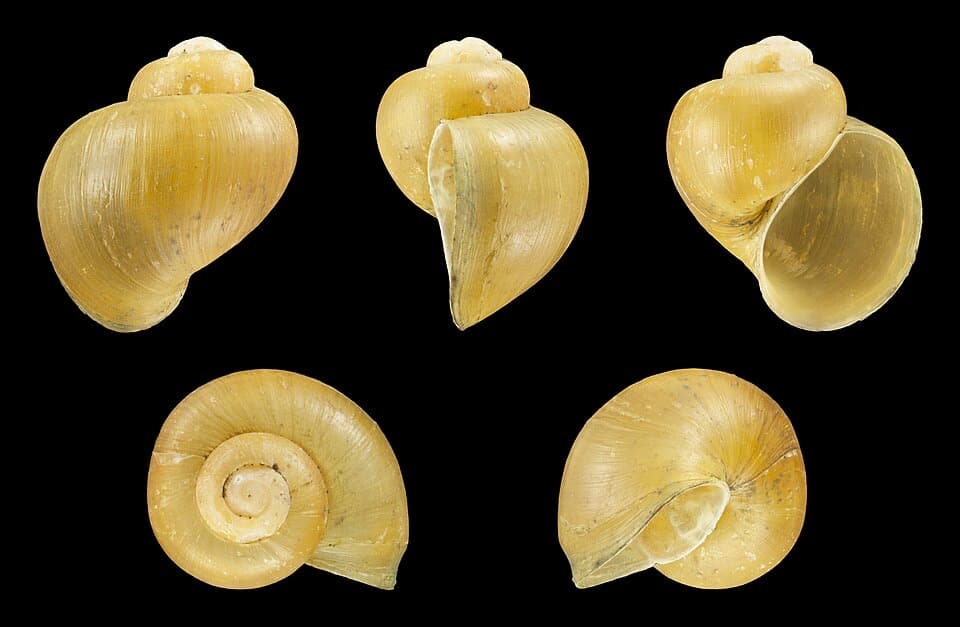
Mystery snail
Also known as Apple snail, Spike-topped apple snail, Pomacea diffusa
- Adult size
- Shell up to about 5 cm
- Lifespan
- 1–2 years
- Origin
- South America, particularly the Amazon basin
- Company
- Can live alone or in groups
- Peaceful
- Curious
- Colourful
- Grazing
About the Mystery snail
Mystery snails are large, air-breathing freshwater snails with shells in gold, ivory, blue, purple, black and other shades. They carry a long tube called a siphon, which they stretch up to the surface to breathe, alongside gills for use underwater.
The name 'apple snail' covers several related species, some of which are notorious plant-eaters and serious invasive pests. Mystery snails are usually gentler on healthy aquarium plants, preferring algae, leftovers and decaying leaves, though identification in shops is not always reliable.
Females lay pinkish clutches of eggs above the waterline, usually on the lid or glass. Removing unwanted clutches is the simplest way to stop a tank filling with baby snails.
Temperament
Mystery snails are peaceful and pose no threat to fish or shrimp. They can, however, be harassed by fish that nip at their soft bodies and feelers, such as many puffers, larger loaches and some cichlids. They are often busiest at night or after feeding, and may rest closed up for periods during the day, which is normal.
Tank & water
One snail can live in a tank of around 20 litres or more, though larger, established tanks give more grazing and more stable water. Keep the water at roughly 20–28°C, as snails tend to live faster and shorter lives at the warm end. Moderately hard water with enough calcium helps them build strong shells, and soft, acidic water can wear the shell away. A well-fitting lid with an air gap above the water is important, as mystery snails climb out and need space to lay eggs.
Diet
Although they graze algae and biofilm, mystery snails need food of their own, such as sinking algae wafers, vegetable pellets and blanched vegetables like courgette or spinach. Calcium-rich foods help support shell growth. Offer small amounts and remove leftovers within a day so they do not decay in the tank.
Behaviour & tank mates
Mystery snails spend their time gliding over glass, plants and decor in search of food, and they are fun to watch when they ride the surface or extend their siphon. Smooth surfaces, plants and a varied menu keep them active. They do not need companions but several can share a tank, bearing in mind that a male and female will produce eggs.
Tank maintenance
Weekly partial water changes of around a quarter help keep the water clean, as large snails add noticeably to the waste load. Check the lid and glass above the waterline for egg clutches during maintenance, and look over the shell for cracks or pitting.
Health
Thin, pitted or cracked shells are often linked to low calcium or acidic water. Mystery snails are very sensitive to copper, which appears in some fish treatments and plant products, so check labels before using anything in their tank. A snail that stays closed for days, floats continuously or hangs out of its shell limply may be unwell or dead; a dead snail rots quickly and smells strongly, so remove it promptly to protect water quality. Never release snails into ponds or waterways, as apple snails can become destructive invaders and their sale is restricted in some regions.
Prone to
- Shell erosion and pitting
- Copper sensitivity
- Calcium deficiency
- Failure to thrive in soft, acidic water
Call a vet if you notice
- A strong, foul smell from an unmoving snail (check whether it has died and remove it promptly)
- Several snails or fish unwell at once — test the waterEmergency
- Deep cracks or holes in the shell
- Staying closed up for several days
- Floating continuously and unable to sink or grip surfaces
- Body hanging limply out of the shell
An aquatic vet or experienced aquatic specialist is best placed to help. Find one before you need them.
Common questions
Do mystery snails eat live plants?
Mystery snails generally prefer algae, leftovers and dying leaves over healthy plants, though a hungry snail may nibble soft species. Feeding them properly helps protect plants.
How do I stop mystery snails breeding?
They lay visible egg clutches above the waterline, so removing clutches before they hatch keeps numbers under control. Keeping a single snail also avoids breeding.
Is my mystery snail dead or sleeping?
Mystery snails often rest closed up or hang loosely for hours, which is normal. A dead snail usually gives off a strong, unpleasant smell and may fall out of its shell when lifted gently.
Can I put mystery snails in my garden pond?
No. Apple snails must never be released into ponds or the wild, as some species have become serious invasive pests. Rehome unwanted snails through an aquatic shop or another keeper instead.
Written by the Petopedia editorial team to our editorial standards. General guidance, not veterinary advice.