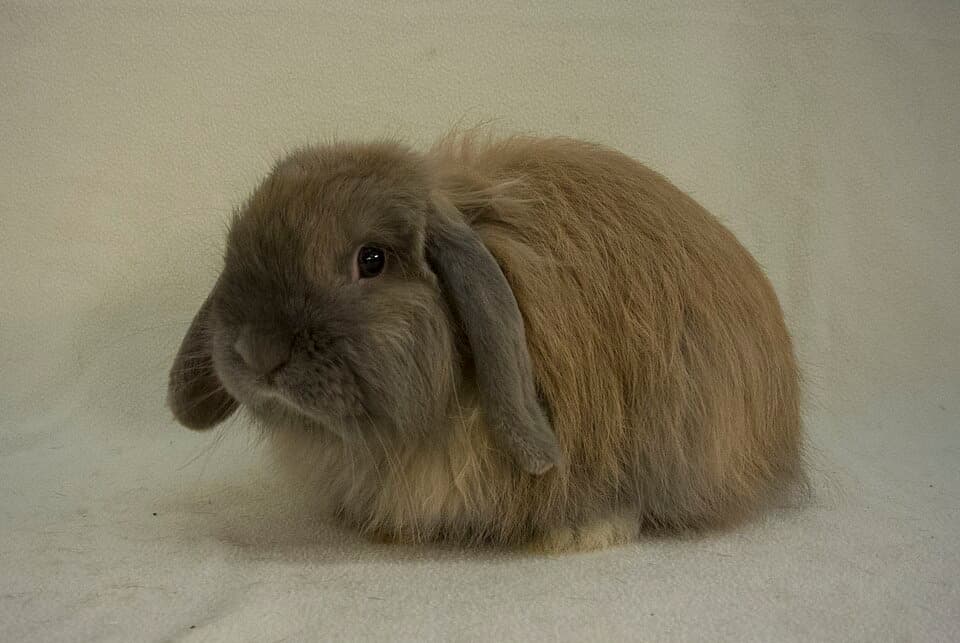
Cashmere Lop
- Adult size
- About 1.8–2.5 kg (miniature version smaller)
- Lifespan
- 7–10 years
- Origin
- United Kingdom
- Company
- Keep in a neutered pair or group
- Gentle
- Friendly
- Relaxed
- Soft-coated
About the Cashmere Lop
The Cashmere Lop is a medium-small lop-eared rabbit with a soft, longer coat. It was developed in the UK in the 1980s, reportedly from longer-coated rabbits appearing in Dwarf Lop litters, and is recognised by the British Rabbit Council; a smaller Miniature Cashmere Lop also exists.
The breed is far less common outside the UK. Its coat is longer than a normal rabbit coat but not as demanding as an Angora's, though it still needs regular brushing.
Temperament
Cashmere Lops are usually gentle, friendly and relaxed. Many enjoy calm attention and being stroked. As with most rabbits, they prefer staying on the ground to being lifted.
Housing
Provide a large living space with room to run, explore and hide. Keep bedding clean and dry to stop the coat from matting or becoming soiled. Shade and ventilation are important in hot weather, as the longer coat holds heat.
Diet
Unlimited hay helps both teeth and digestion, and is especially important for longer-coated rabbits that swallow fur during grooming. Add a daily serving of leafy greens and a small portion of pellets. Keep sweet treats minimal and water always available.
Exercise & enrichment
Chew toys, tunnels and digging boxes suit them well. Regular gentle grooming sessions can double as bonding time. Interactive foraging, such as hay stuffed with herbs, keeps them busy.
Grooming
Brush the coat at least once or twice a week, more during moults, to prevent tangles. Check the ears, rear end and nails regularly.
Health
As a lop breed, Cashmere Lops can be prone to ear canal problems and dental disease. Their longer coat increases the risk of swallowed fur contributing to gut slowdown, and of flystrike if the rear becomes soiled. Routine vet checks and vaccinations where available are recommended.
Prone to
- Ear canal problems
- Dental disease
- Gut slowdown from swallowed fur
- Flystrike
Call a vet if you notice
- Not eating or no droppingsEmergency
- Maggots or soiled fur at the rearEmergency
- Head shaking or scratching at the ears
- Head tilt or loss of balance
- Drooling or dropping food
A vet with experience of exotic pets is best placed to help. Find one before you need them.
Common questions
What is a Cashmere Lop rabbit?
It is a UK lop breed with a soft, longer coat, developed in the 1980s. A smaller Miniature Cashmere Lop is also recognised there.
How often should I brush a Cashmere Lop?
At least once or twice a week, and more frequently during moults. Regular brushing helps prevent mats and reduces swallowed fur.
Are Cashmere Lops recognised in the United States?
The breed is mainly recognised and shown in the UK. Its availability and recognition elsewhere are limited.
Written by the Petopedia editorial team to our editorial standards. General guidance, not veterinary advice.