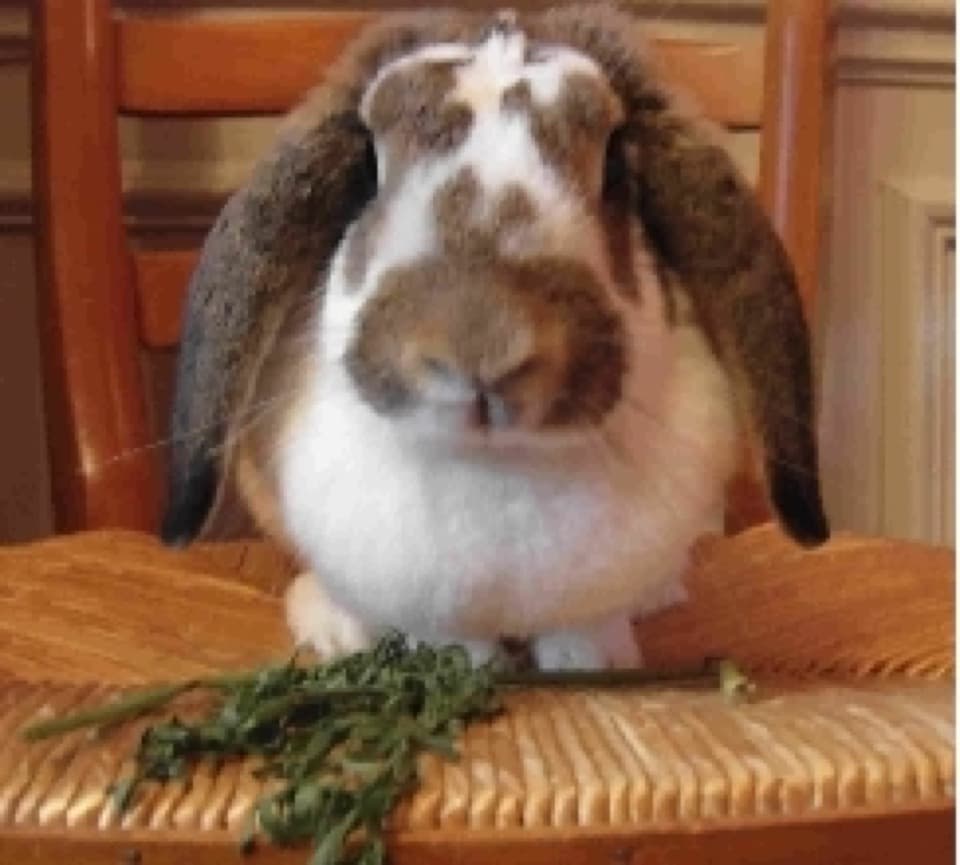
French Lop
- Adult size
- About 4.5–6.5 kg
- Lifespan
- 5–8 years
- Origin
- France
- Company
- Keep in a neutered pair or group
- Mellow
- Friendly
- Easy-going
- Hefty
About the French Lop
The French Lop is a large, heavy-boned lop-eared rabbit with a broad head and thick, drooping ears. It was developed in France in the 19th century, widely believed to have come from crossing English Lops with a large French breed, and was originally raised for meat.
Today it is mostly kept as a pet or show rabbit, valued for a calm, easy-going personality. It is a big rabbit, so space, joint care and weight management are central to keeping one well.
Temperament
French Lops are usually relaxed and friendly, with a reputation for being mellow companions. They tend to be less jumpy than smaller breeds and may enjoy long sessions of being stroked. Some can be stubborn, especially around food, and unneutered bucks may become territorial.
Housing
A French Lop needs a large enclosure or house space with room to lie stretched out and move freely. Cushioned, non-slip flooring protects its heavy frame, and shelters must be big enough to turn around comfortably. Outdoor housing needs good weather protection and shade, as these rabbits can overheat.
Diet
Offer unlimited hay and a generous mix of leafy greens every day. Measure pellets according to the rabbit's weight, since French Lops can become overweight, and keep carrots and fruit to small treats. Fresh water should always be available.
Exercise & enrichment
They enjoy exploring and will happily spend time investigating boxes, tunnels and hay-stuffed toys. Gentle floor-level attention is usually welcome. Lifting should be kept to a minimum and done carefully, with full support under the body.
Grooming
Brush the coat weekly and more often during moults. Check the ears regularly for wax or redness, inspect the rear end daily and keep nails trimmed.
Health
Lop ears make French Lops prone to ear canal infections, which can sometimes spread inwards and affect balance. Dental disease is relatively common in lop breeds. Their size predisposes them to sore hocks and arthritis, and obesity increases the risk of flystrike.
Prone to
- Ear canal infections
- Dental disease
- Sore hocks
- Arthritis
- Obesity and flystrike
Call a vet if you notice
- Refusing food or not producing droppingsEmergency
- Head tilt, rolling or loss of balance
- Discharge or strong smell from the ears
- Maggots or a heavily soiled rearEmergency
- Limping or a hunched, reluctant posture
A vet with experience of exotic pets is best placed to help. Find one before you need them.
Common questions
How big do French Lops get?
French Lops are a large breed, usually weighing around 4.5–6.5 kg as adults. They are much bigger than the popular dwarf and mini lop breeds.
Are French Lops friendly?
They are generally known for being calm and good-natured. As with any rabbit, early gentle handling and neutering help them become confident companions.
Do French Lops need special care for their ears?
Their ears should be checked regularly for wax, redness or smell. Do not clean deep inside the ear yourself; a vet can examine and treat any build-up safely.
Written by the Petopedia editorial team to our editorial standards. General guidance, not veterinary advice.