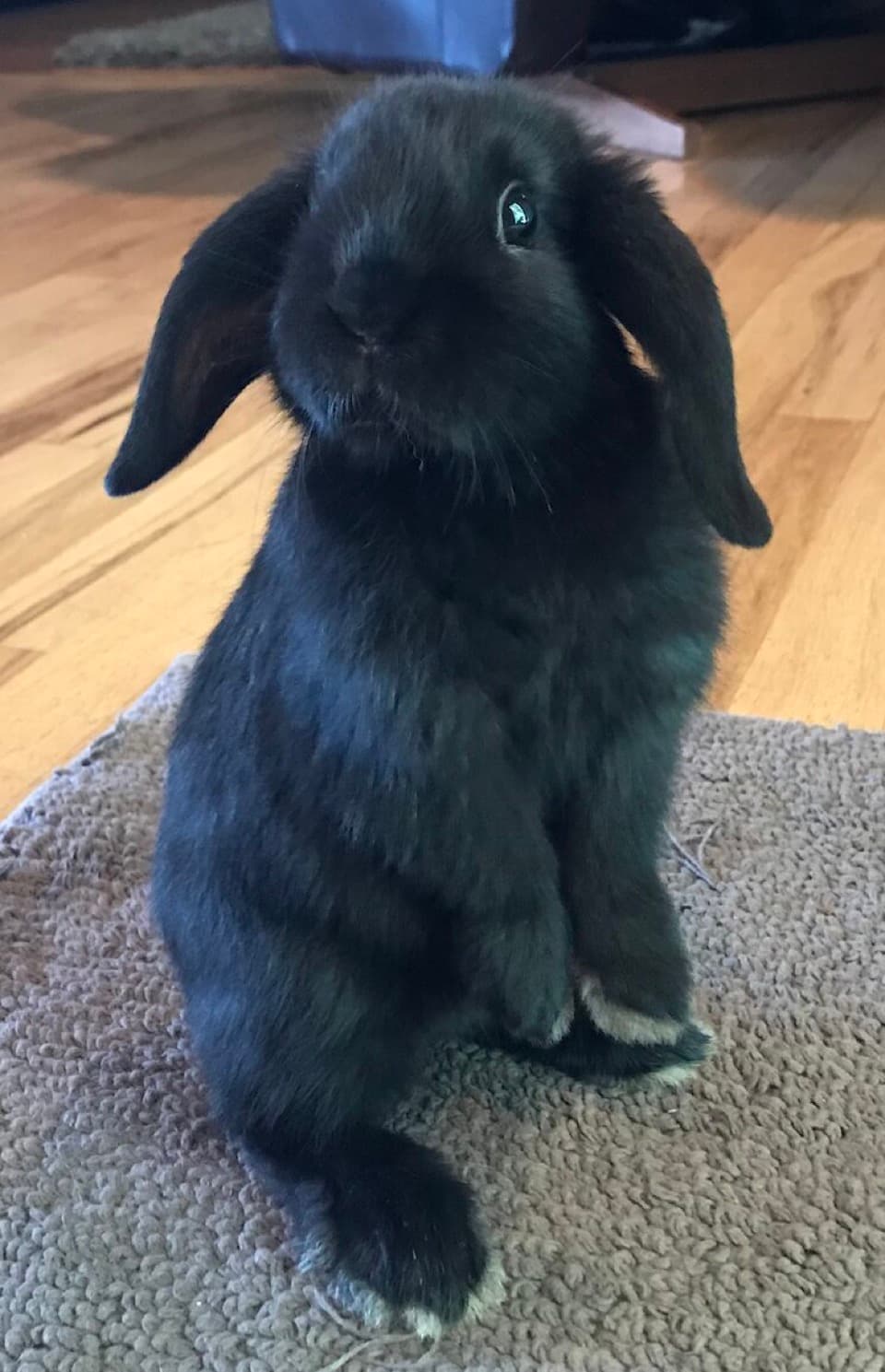
Holland Lop
- Adult size
- About 0.9–1.8 kg
- Lifespan
- 7–12 years
- Origin
- Netherlands
- Company
- Keep in a neutered pair or group
- Curious
- Playful
- Affectionate
- Compact
About the Holland Lop
The Holland Lop is a small, compact rabbit with a short, rounded face and ears that hang down beside its cheeks. It was developed in the Netherlands in the mid-20th century by crossing French Lops with Netherland Dwarfs, and it has since become one of the most popular pet rabbits in the world.
Its teddy-bear looks draw many first-time owners, but a Holland Lop is a real rabbit with real needs: daily free-roaming exercise, a bonded companion and a diet built around hay. Kept well, they are inquisitive, playful animals that become very attached to their routine and their people.
Temperament
Most Holland Lops are curious and sociable once they feel safe, happily investigating new objects and following their owners around the room. They are lively in short bursts, often at dawn and dusk, and spend much of the day dozing. Like most rabbits they prefer interaction at floor level to being picked up, and many will come for a stroke on their own terms.
Housing
Despite their small size, Holland Lops need a large, secure living space rather than a cage or hutch on its own; many welfare groups suggest an enclosure of around 3 m by 2 m with a tall shelter, or a rabbit-proofed room. They can live indoors or outdoors, but outdoor setups need weatherproof shelter, protection from predators and shade, because rabbits cope poorly with heat. Provide hiding places, a large litter tray filled with hay and plenty of floor space to hop and sprint.
Diet
Good-quality grass hay or fresh grass should make up the great majority of what a Holland Lop eats, available at all times. Add a daily portion of washed leafy greens and herbs, plus a small measured amount of plain rabbit pellets rather than a muesli-style mix. Fruit and root vegetables such as carrot are sugary treats to give sparingly, and fresh water should always be available.
Exercise & enrichment
Holland Lops enjoy tunnels, cardboard boxes to chew and dig in, and scattered forage for them to search out. Several hours of exercise outside any smaller sleeping area every day helps keep their weight and digestion healthy. If you need to lift one, support the hindquarters fully and keep it close to your body, as a frightened rabbit can kick hard enough to injure its spine.
Grooming
Their medium-length coat needs a weekly brush, increasing to daily during heavy moults to reduce the amount of fur they swallow. Check nails every few weeks and keep an eye on their teeth and bottom, especially in warm weather.
Health
The short, rounded skull of the Holland Lop makes it more prone to dental problems, including overgrown incisors and molar spurs that can stop a rabbit eating. Lop ears can trap wax and debris, so ear infections are worth watching for. Vaccination against myxomatosis and rabbit haemorrhagic disease (RHD), where available, and neutering are recommended, and an annual vet check is a good habit.
Prone to
- Dental malocclusion and molar spurs
- Ear wax build-up and ear infections
- Gastrointestinal stasis
- Obesity if overfed pellets
Call a vet if you notice
- Not eating or no droppings for several hoursEmergency
- Drooling, a wet chin or dropping food
- Head shaking, scratching at the ears or a smell from the ear
- Hunched posture or teeth grinding, which can signal pain
- Soiled bottom or maggots, especially in summerEmergency
A vet with experience of exotic pets is best placed to help. Find one before you need them.
Common questions
How big do Holland Lops get?
Holland Lops are a small breed, with most adults weighing roughly 0.9–1.8 kg. Breed standards set an upper weight limit, though pet rabbits can vary a little either side.
Are Holland Lops good for children?
They can be lovely family pets, but they do not enjoy being carried around and can be hurt if dropped. They suit families where children are happy to sit on the floor and let the rabbit come to them, with an adult in charge of care.
Do Holland Lops need a friend?
Yes. Rabbits are social animals, and a Holland Lop is usually happiest living with another neutered rabbit. Introductions should be done gradually in neutral territory.
Why are my Holland Lop's teeth growing so long?
Rabbit teeth grow continuously and are worn down by chewing hay. Short-faced breeds can have teeth that do not meet properly, so overgrowth needs a vet's assessment rather than home trimming.
Written by the Petopedia editorial team to our editorial standards. General guidance, not veterinary advice.