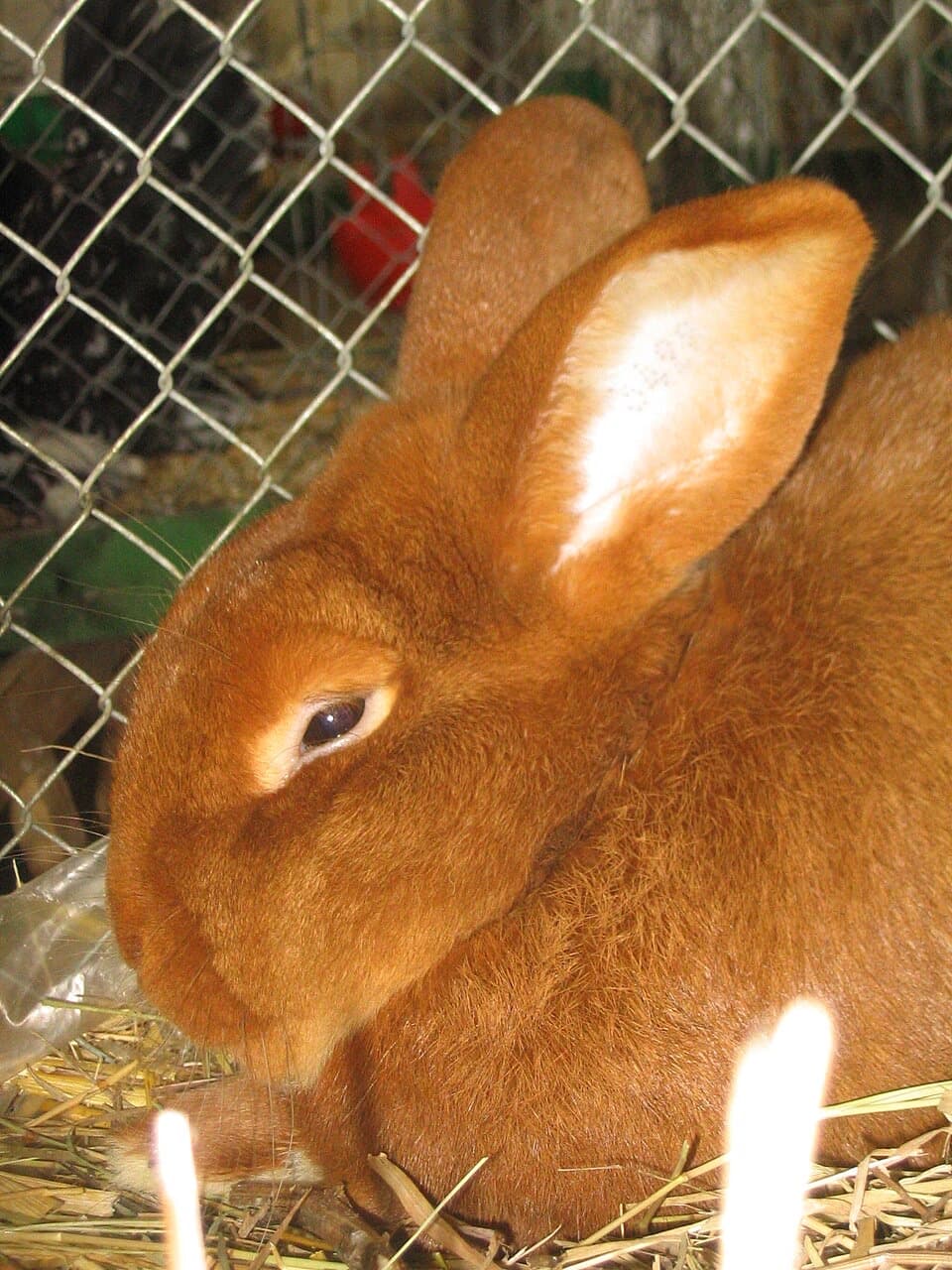
New Zealand
Also known as New Zealand White, New Zealand rabbit
- Adult size
- About 4–5.5 kg
- Lifespan
- 5–10 years
- Origin
- United States (despite the name)
- Company
- Keep in a neutered pair or group
- Steady
- Confident
- Good-natured
- Muscular
About the New Zealand
The New Zealand is a large, muscular rabbit, best known in its white form with pink eyes, though red, black and other colours exist. Despite its name, the breed was developed in the United States in the early 20th century, and the reason for the name is not certain.
It has been widely used in meat production and laboratory research, and many New Zealands now end up in rescues. As pets they can be steady and friendly, but their size means they need a lot of space.
Temperament
New Zealands are generally calm, confident and good-natured. Many are curious and enjoy human company once they settle in. Rescued individuals may take time to trust people, especially if they have had little handling.
Housing
A large rabbit like this needs a spacious enclosure, a rabbit-proofed room or free run of part of the house. Use cushioned, non-slip flooring to protect the feet, and provide a tall shelter. Outdoor setups must offer good shelter from heat, cold and predators.
Diet
Unlimited hay should form most of the diet, with a generous daily portion of leafy greens. Feed pellets in measured amounts to avoid obesity, which is common in large, less active rabbits. Water must always be available.
Exercise & enrichment
New Zealands enjoy room to stretch, big boxes, wide tunnels and food scattered for foraging. Daily interaction at floor level helps them bond. Teach them to step into a carrier to avoid frequent lifting of a heavy rabbit.
Grooming
The dense, short coat needs weekly brushing and extra care during moults. White fur shows staining easily, which can help you spot soiling early. Keep nails trimmed and check feet and teeth regularly.
Health
Their weight makes them prone to sore hocks, especially if kept on hard or wet floors. Obesity, dental disease and gut stasis are other common concerns. Unspayed females have a high risk of uterine cancer, so neutering is strongly recommended.
Prone to
- Sore hocks
- Obesity
- Dental disease
- Uterine cancer in unspayed females
Call a vet if you notice
- Not eating or not passing droppingsEmergency
- Blood in the urine or vaginal discharge in females
- Painful, swollen hocks
- Weepy eyes or crusty nose
- Maggots on the skinEmergency
A vet with experience of exotic pets is best placed to help. Find one before you need them.
Common questions
Are New Zealand rabbits from New Zealand?
No. The breed was developed in the United States in the early 1900s, and the origin of the name is unclear.
Do New Zealand rabbits make good pets?
Many make calm, friendly pets. Their large size means they need lots of room and a family prepared for higher food and vet costs.
How big do New Zealand rabbits get?
Adults typically weigh around 4–5.5 kg, making them a large breed.
Written by the Petopedia editorial team to our editorial standards. General guidance, not veterinary advice.