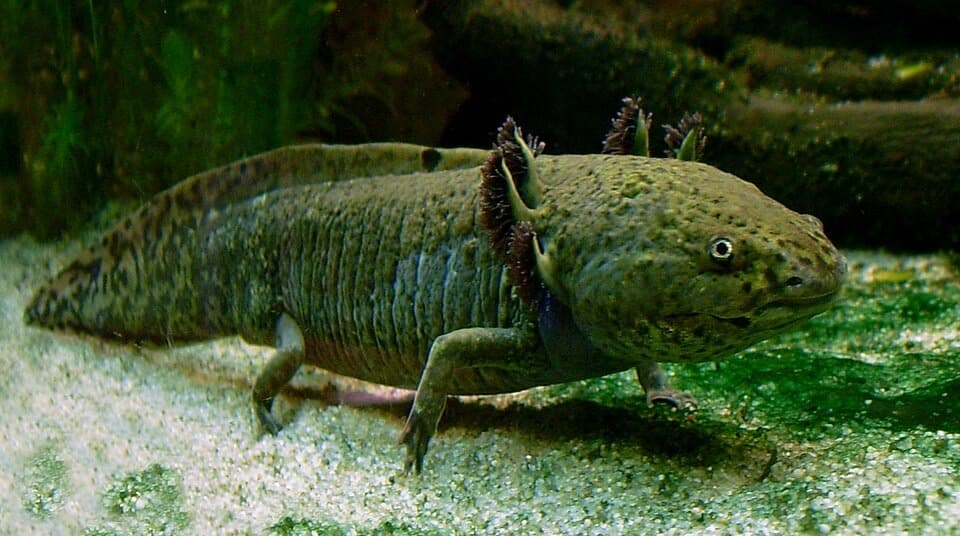
Axolotl
Also known as Mexican walking fish, Ambystoma mexicanum
- Adult size
- 15–30 cm long
- Lifespan
- 10–15 years
- Origin
- Lake Xochimilco and the former Lake Chalco, near Mexico City
- Company
- Can live with other axolotls of similar size; never with fish
- Aquatic
- Calm
- Curious
- Regenerative
About the Axolotl
The axolotl is a salamander that normally keeps its larval features for life, including feathery external gills and a finned tail, and lives entirely underwater. Despite the nickname 'Mexican walking fish', it is an amphibian, not a fish.
Wild axolotls are critically endangered, surviving only in the remaining canals of Xochimilco, but they are widely bred in captivity. They are fascinating, low-key pets for people prepared to manage water quality carefully and keep the tank cool. Keeping them is restricted or requires a permit in some places, including several US states, so check local law first.
Temperament
Axolotls are calm, slow-moving and often curious about movement outside the tank. They are not pets for handling: their skin is delicate and their skeleton is partly cartilage. They may nip at tankmates' gills and limbs, which usually regrow but can become infected.
Enclosure, heat & light
One adult needs at least a 75–90 cm long aquarium with a good volume of water, and more space for each additional axolotl. Keep water cool, ideally around 16–18 °C, and avoid temperatures above about 23–24 °C, which cause stress and illness; fans or chillers may be needed in summer. The tank must be fully cycled before the axolotl arrives, with a gentle filter, regular partial water changes and regular testing for ammonia, nitrite and nitrate. Use a bare bottom, large smooth stones or fine sand, because gravel can be swallowed and cause impaction. They do not need UVB and prefer dim lighting with hides.
Diet
Axolotls are carnivores and do well on earthworms, sinking axolotl or carnivore pellets and occasional bloodworms. Offer food with tongs or drop it in front of the axolotl, and remove leftovers to protect water quality. Juveniles eat daily and adults every two to three days.
Enrichment & handling
Hides, live or silk plants and varied tank layouts give axolotls security. Gentle feeding with tongs lets them use their natural suction-feeding strike. Avoid handling except when absolutely necessary; use a fine net or container to move them.
Shedding & hygiene
Axolotls shed their skin in thin layers, which is normal. Water quality is the main hygiene task, including regular partial water changes and gravel-free tanks. Wash your hands before and after working in the tank, and keep soaps, creams and chemicals out of the water.
Health
Most problems stem from warm water or poor water quality, including stress, fungal infections, gill damage and loss of appetite. Forward-curled gills, floating or a curled tail tip can be early stress signs. Impaction from swallowed gravel is also common. Exotic vets experienced with amphibians can advise on treatment.
Prone to
- Water quality stress
- Fungal infections
- Impaction from gravel
- Gill damage
- Heat stress
Call a vet if you notice
- White cotton-like patches on skin or gills
- Gills curled forward or shrinking
- Floating or unable to stay down
- Not eating for over a week
- Bloated body
- Lying still and unresponsive in warm waterEmergency
A vet with experience of exotic pets is best placed to help. Find one before you need them.
Common questions
Can you hold an axolotl?
It is best not to. Their skin is delicate and they have a soft skeleton, so only move them when necessary using a net or container.
What water temperature do axolotls need?
They prefer cool water, around 16–18 °C, and should not be kept above about 23–24 °C. In warm summers a fan blowing across the surface or an aquarium chiller may be needed.
Can axolotls live with fish?
No. Fish can nip their gills, and axolotls may try to eat small fish, which can choke them.
Are axolotls legal to keep?
They are legal in many places, but some US states and other regions restrict or require a permit. Check local regulations before buying.
Written by the Petopedia editorial team to our editorial standards. General guidance, not veterinary advice.