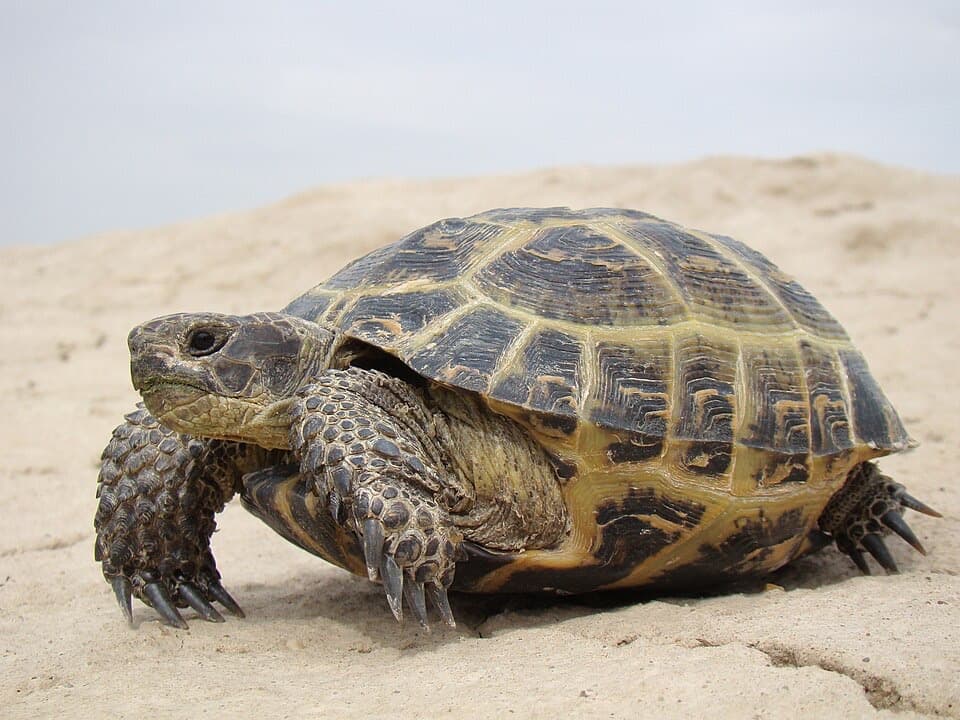
Horsfield tortoise
Also known as Russian tortoise, Central Asian tortoise, Steppe tortoise, Testudo horsfieldii
- Adult size
- 15–20 cm shell length
- Lifespan
- 40–50 years
- Origin
- Central Asia, including Kazakhstan, Uzbekistan, Turkmenistan, Afghanistan, Iran and Pakistan
- Company
- Usually best alone; males can be aggressive towards other tortoises
- Busy
- Hardy
- Escape-prone
- Burrowing
About the Horsfield tortoise
The Horsfield, or Russian, tortoise is a compact, round-shelled tortoise from dry steppes and rocky hillsides in Central Asia. In the wild it spends much of the year in burrows, emerging during the short spring to feed and breed.
They are hardy and characterful, but they are strong diggers and climbers that will escape from poorly designed enclosures. Large numbers have historically been imported from the wild, so look for captive-bred animals where possible and arrange a vet check for any new tortoise.
Temperament
Horsfields are busy, inquisitive tortoises that explore, dig and climb with surprising determination. Many become confident around their keepers. Males can be pushy and aggressive towards other tortoises.
Enclosure, heat & light
A secure outdoor pen with buried walls to prevent digging out, sunny basking spots and a heated shelter suits them in warm weather. Indoors, a large open tortoise table with a basking lamp, a cooler end, and UVB is preferred to a glass tank, with a thermostat and thermometer to control temperatures. A deep soil and sand substrate lets them dig. They come from dry habitats and do poorly in damp, cold conditions.
Diet
Horsfields need a high-fibre, low-protein diet of weeds and leafy plants such as dandelion, plantain, clover and mallow, with suitable flowers. Avoid fruit, bread and protein-rich foods. Provide calcium as advised and shallow water.
Enrichment & handling
Digging areas, rocks and slopes to climb, and plants to hide among provide enrichment. Scattering food encourages natural foraging. Lift by supporting the shell from below with both hands, keeping the tortoise close to the ground.
Shedding & hygiene
Occasional shallow warm soaks help hydration. Rough surfaces help wear down nails and beaks naturally. Wash hands after handling and cleaning.
Health
Common issues include respiratory infections, often linked to damp or cold housing, metabolic bone disease, parasites in wild-caught tortoises and overgrown beaks. A faecal test is worthwhile for any newly acquired Horsfield. Hibernation should only take place after a vet health check and with careful temperature control, and never with an underweight or unwell tortoise.
Prone to
- Respiratory infection
- Metabolic bone disease
- Intestinal parasites
- Overgrown beak and nails
Call a vet if you notice
- Runny nose or open-mouth breathing
- Swollen eyes
- Weight loss or poor appetite
- Not eating after hibernation
- Shell injury or crackEmergency
A vet with experience of exotic pets is best placed to help. Find one before you need them.
Common questions
Is a Horsfield tortoise the same as a Russian tortoise?
Yes. Horsfield, Russian, Central Asian and steppe tortoise are all names used for the same species.
Do Horsfield tortoises dig?
Yes, they are strong diggers and burrowers. Outdoor enclosures need buried walls to stop escapes.
Do Horsfield tortoises hibernate?
They naturally hibernate, but only do so after a vet health check and with careful temperature control. Unwell or underweight tortoises should not hibernate.
Written by the Petopedia editorial team to our editorial standards. General guidance, not veterinary advice.