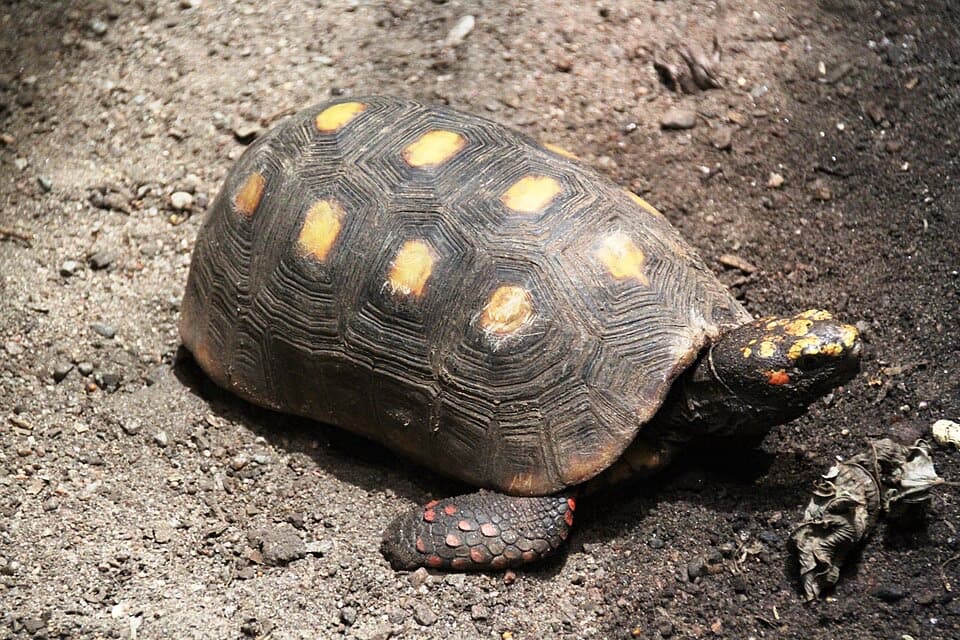
Red-footed tortoise
Also known as Redfoot tortoise, Chelonoidis carbonarius
- Adult size
- 30–35 cm shell length, sometimes larger
- Lifespan
- 40–50 years
- Origin
- Northern South America, Panama and several Caribbean islands
- Company
- Can sometimes share a large enclosure; separate males that fight
- Easy-going
- Omnivorous
- Tropical
- Sociable
About the Red-footed tortoise
The red-footed tortoise has a dark, loaf-shaped shell with yellowish centres to each scute, and bright red or orange scales on its legs and head. It lives in savanna edges, dry forest and rainforest margins in South America and nearby islands.
Its needs are very different from those of the small Mediterranean tortoises often sold alongside it. Red-foots come from warm, humid places, eat fruit and some animal food as part of a varied diet, and do not hibernate. They also grow considerably bigger, so plan for a large heated enclosure that will last for decades.
Temperament
Red-foots are generally easy-going and confident, often walking over to greet a keeper at mealtimes. They tend to be most active after warm rain or misting and in the morning. Males may posture with head movements and shove rivals, especially if space is limited.
Enclosure, heat & light
An adult needs a very large indoor enclosure, frequently a converted room or custom pen, with outdoor time only when the weather is reliably warm. Keep the environment warm and humid, with a basking spot under a lamp, cooler shaded areas and a damp hide, all controlled by thermostats and checked with thermometers. Provide UVB indoors. Moisture-holding substrates such as soil, bark or leaf litter help keep humidity up and protect against shell pyramiding.
Diet
As omnivores in the wild, red-foots eat a varied mix of leafy greens, weeds, flowers and vegetables, with fruit making up a meaningful share. Small amounts of animal protein are also eaten in the wild, and many vets suggest offering a little occasionally; ask yours how much is appropriate. A calcium supplement is usually advised. Fresh water in a shallow dish they can climb into should always be available.
Enrichment & handling
Leaf litter, logs, tunnels and dense planting give red-foots places to forage and hide. Morning misting and scattering food through the enclosure encourage natural searching. When lifting, use both hands under the shell and keep the tortoise close to the ground, as falls can crack shells.
Shedding & hygiene
Regular warm, shallow soaks help hydration, particularly for juveniles. Overgrown beaks or nails suggest a problem with diet or surfaces and should be checked by a vet. Wash hands after handling and cleaning, and keep children from kissing or snuggling the tortoise.
Health
Common problems include pyramiding of the shell in dry conditions, respiratory infections when kept too cold, shell rot from dirty or constantly wet substrate, and intestinal parasites. Too much protein may contribute to growth problems. A yearly check with an exotics vet and a faecal test is a sensible routine.
Prone to
- Shell pyramiding
- Respiratory infection
- Shell rot
- Intestinal parasites
Call a vet if you notice
- Bubbles from the nose, wheezing or open-mouth breathing
- Soft, smelly or flaking patches on the shell
- Puffy or closed eyes
- Lethargy with no interest in food
- A cracked or broken shellEmergency
A vet with experience of exotic pets is best placed to help. Find one before you need them.
Common questions
Do red-footed tortoises hibernate?
No. They are tropical tortoises and should be kept warm all year. Attempting to hibernate one can be fatal.
Can red-footed tortoises eat fruit?
Yes, fruit is a natural part of their diet, unlike for Mediterranean species. It should be balanced with plenty of greens, weeds and flowers.
How big do red-footed tortoises get?
Adults commonly reach 30–35 cm in shell length and some grow larger. That size calls for a room-sized enclosure rather than a tank.
Can red-footed tortoises live with other species of tortoise?
Mixing species is not recommended. They have different temperature, humidity and diet needs and can share diseases to which the other species has no resistance.
Written by the Petopedia editorial team to our editorial standards. General guidance, not veterinary advice.