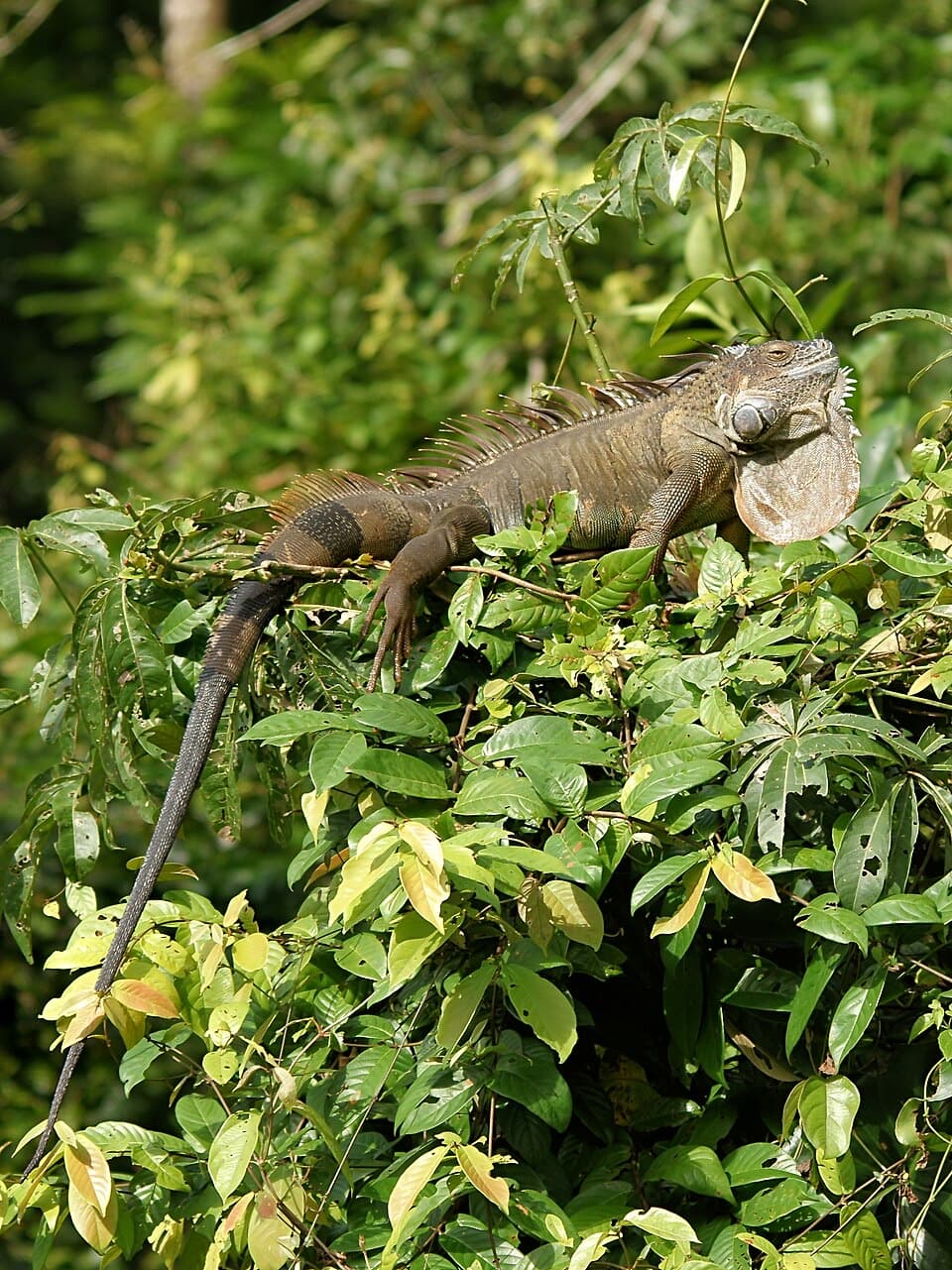
Green iguana
Also known as Common iguana, American iguana, Iguana iguana
- Adult size
- 1.2–2 m long including tail
- Lifespan
- 15–20 years
- Origin
- Central and South America and parts of the Caribbean
- Company
- Usually kept alone; males fight and may harass females
- Powerful
- Arboreal
- Herbivorous
- Strong-willed
About the Green iguana
The green iguana is a large, tree-dwelling lizard from tropical forests in the Americas. Small hatchlings are sold cheaply in some places, but they grow into powerful animals well over a metre long that need room-sized housing and specialist care for many years.
Many iguanas are given up because owners did not expect their size, strength or adult behaviour. They can be rewarding for experienced keepers with the space and commitment, but they are not suitable for beginners. Introduced populations are causing problems in parts of the world, including Florida, so they must never be released.
Temperament
Iguanas vary widely: some become calm with patient, consistent handling, while others stay defensive. Adults use tail whips, scratches and bites to defend themselves. Mature males can become aggressive during the breeding season, sometimes towards particular people.
Enclosure, heat & light
Adults need an enclosure measured in metres, often a custom build or converted room roughly 2 m long, 1 m deep and 2 m tall at a minimum, with sturdy climbing branches and shelves. Provide a hot basking area and cooler areas, controlled by thermostats and checked with thermometers, plus strong UVB covering the basking zone. They need high humidity and benefit from a large water container for bathing. Substrates should be easy to clean and not swallowable.
Diet
Green iguanas are strict herbivores, eating mostly calcium-rich leafy greens such as spring greens, collards, dandelion and watercress, with smaller amounts of other vegetables and occasional fruit. Animal protein, including insects and pet foods, can damage their kidneys over time. Chop food finely for young iguanas and dust with calcium as advised by a vet. Fresh food should be offered daily.
Enrichment & handling
Large climbing frameworks, basking shelves, bathing opportunities and supervised free-roaming in iguana-proofed rooms all help. Daily calm interaction builds trust over time. Approach from the side rather than from above, and support the body and tail when lifting; learn to read signs like head-bobbing, dewlap extension and tail-cocking.
Shedding & hygiene
Iguanas shed in patches and benefit from regular bathing to help skin come away. Claws are sharp and may need trimming by a vet or experienced keeper. They often defecate in water, so change bathing water promptly, and wash hands thoroughly after any contact.
Health
Metabolic bone disease is very common in iguanas kept with poor UVB or diet, along with kidney disease linked to high-protein diets. Burns from unguarded heat sources, injuries from falls and egg-related problems in females also occur. Regular check-ups with an exotics vet are important for such a long-lived lizard.
Prone to
- Metabolic bone disease
- Kidney disease
- Thermal burns
- Egg binding
- Mouth rot
Call a vet if you notice
- Swollen limbs or jaw, twitching or weakness
- Drinking a lot, weight loss or a sunken appearance
- Burns or blistering on the belly or back
- A gravid female straining or lethargicEmergency
- Falls followed by limping or paralysisEmergency
A vet with experience of exotic pets is best placed to help. Find one before you need them.
Common questions
How big do green iguanas get?
Adults commonly reach between 1.2 and 2 metres including the tail and can be very strong. Males are generally larger and heavier than females.
Are green iguanas good pets for beginners?
No. Their size, long lifespan, strict herbivorous diet and adult behaviour make them a project for experienced keepers with lots of space.
What do green iguanas eat?
They are herbivores and should eat mostly leafy greens with other vegetables and a little fruit. Insects and meat are not appropriate and can harm their kidneys.
Can I release my iguana if I can't keep it?
No. Releasing iguanas is harmful, often illegal and unkind to the animal. Contact a reptile rescue or an exotics vet for help rehoming it.
Written by the Petopedia editorial team to our editorial standards. General guidance, not veterinary advice.