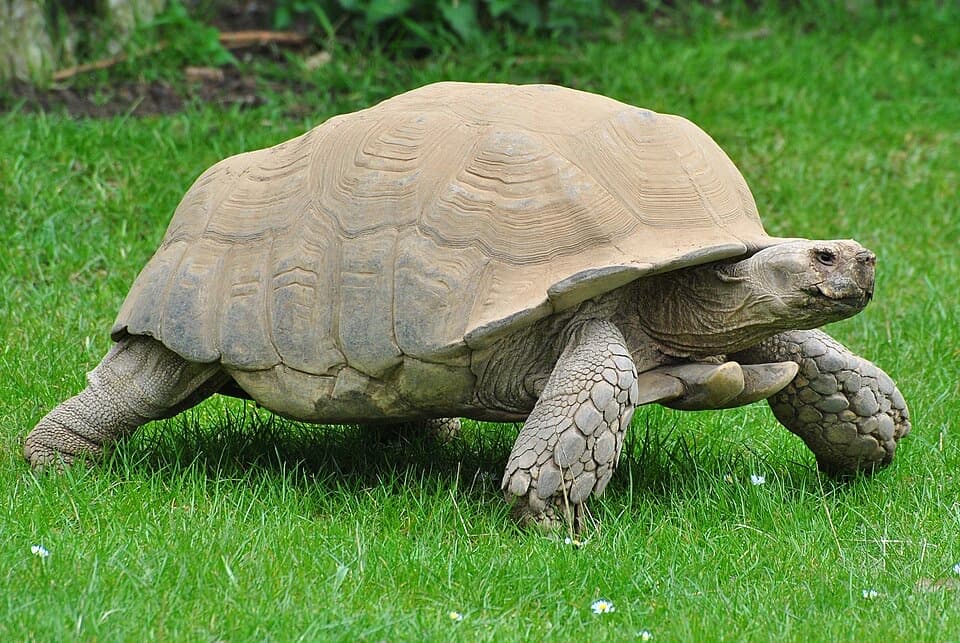
Sulcata tortoise
Also known as African spurred tortoise, Centrochelys sulcata
- Adult size
- 60–80 cm shell length; adults often well over 50 kg
- Lifespan
- 50–100 years
- Origin
- The Sahel, along the southern edge of the Sahara from Mauritania and Senegal east to Ethiopia
- Company
- Usually kept alone; males fight and can injure each other badly
- Massive
- Long-lived
- Powerful
- Burrowing
About the Sulcata tortoise
The sulcata, or African spurred tortoise, is the largest mainland tortoise in the world, behind only the giant tortoises of the Galápagos and Aldabra. In the dry Sahel it survives extreme heat and drought by digging burrows that can be several metres long.
Hatchlings are palm-sized and sold widely, which hides what is coming. Adults commonly reach 60–80 cm in shell length and can weigh well over 50 kg, and they may live for 50 years or much longer. Rescues regularly take in sulcatas whose owners could no longer cope, so a buyer needs a large, secure garden, a heated building and a plan for who will care for the tortoise later in its life.
Temperament
Sulcatas are bold, inquisitive and extremely strong, and many seem to enjoy interacting with their keepers. A grown tortoise will push through flimsy fences, uproot plants and move garden furniture. Males can ram and try to flip each other, causing serious injury.
Enclosure, heat & light
Adults need a large, grassy outdoor area with solid, partly buried fencing, and a heated, insulated shed they can enter at any time, as they are not cold-hardy and must not hibernate. In cooler climates they spend much of the year indoors, which means room-sized heated space with a basking lamp, a cooler area and UVB, controlled by a thermostat. Juveniles can start in a large tortoise table but outgrow it quickly. Never let them burrow where a collapsing tunnel or foundations could cause harm.
Diet
Sulcatas are grazers that need a very high-fibre diet of grasses, grass hay and broad-leaved weeds. Fruit, high-protein foods and rich vegetables can lead to digestive upset, bladder stones and abnormal shell growth. Calcium supplementation is usually advised and fresh water should always be available, including a shallow soaking area for youngsters.
Enrichment & handling
A large grazing pasture is the best enrichment, along with sunny basking spots, varied terrain and safe digging areas. Daily outdoor time in warm weather keeps them active and helps natural UVB exposure. Adults are too heavy to lift safely alone, so plan how you will move one to a vet.
Shedding & hygiene
Warm soaks help keep hatchlings and juveniles hydrated. Rough ground keeps beaks and nails in trim; overgrowth should be checked by a vet. Wash hands after handling and cleaning, and supervise children around such a powerful animal.
Health
Shell pyramiding, metabolic bone disease, bladder stones and respiratory infections in cold or damp conditions are the most common problems. Intestinal parasites can also occur. An exotics vet can help plan diet and housing at each stage of growth.
Prone to
- Shell pyramiding
- Metabolic bone disease
- Bladder stones
- Respiratory infection
- Intestinal parasites
Call a vet if you notice
- Straining without passing urine or droppings
- Runny nose, wheezing or open-mouth breathing
- Soft shell or noticeably lumpy growth
- Loss of appetite for more than a few days in warm conditions
- Flipped onto its back and unable to right itself, or shell injuryEmergency
A vet with experience of exotic pets is best placed to help. Find one before you need them.
Common questions
How big do sulcata tortoises get?
Adults commonly reach 60–80 cm in shell length and can weigh well over 50 kg, with males usually larger. They are the largest tortoise likely to be offered as a pet.
How long do sulcata tortoises live?
They routinely live for 50 years or more, and longer lifespans are reported, though exact maximums are uncertain. Owning one is realistically a multi-generational commitment.
Can sulcata tortoises live outside all year?
Only in warm, dry climates. In cooler countries they need a heated shed or indoor space for much of the year, as cold and damp quickly make them ill.
Are sulcata tortoises good pets for beginners?
Not usually. Their size, strength, digging and lifespan make them a serious undertaking that suits experienced keepers with a lot of space.
Written by the Petopedia editorial team to our editorial standards. General guidance, not veterinary advice.