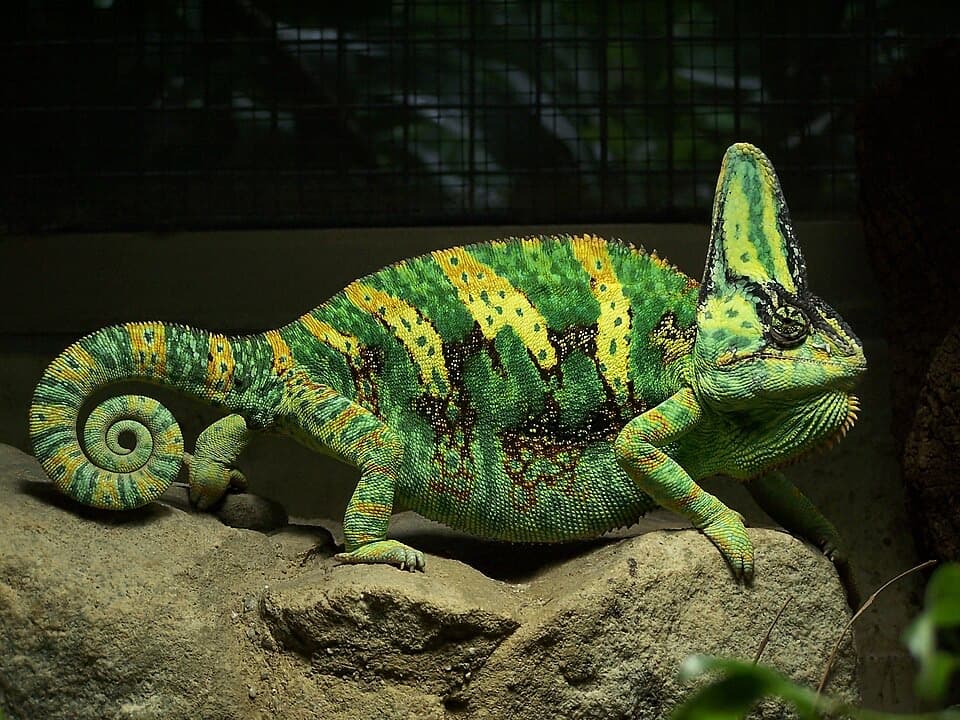
Veiled chameleon
Also known as Yemen chameleon, Cone-head chameleon, Chamaeleo calyptratus
- Adult size
- Males 45–60 cm, females 25–35 cm including tail
- Lifespan
- 4–8 years
- Origin
- Yemen and south-western Saudi Arabia
- Company
- Strictly solitary; even seeing another chameleon can cause stress
- Solitary
- Territorial
- Arboreal
- Watchful
About the Veiled chameleon
The veiled chameleon is a large chameleon with a tall casque on its head, independently moving eyes and a projectile tongue. It comes from mountain valleys and plateaux on the Arabian Peninsula and is the most widely bred chameleon in captivity.
Watching a chameleon hunt and change colour is fascinating, but these are display animals, not pets for handling. They need a tall, well-ventilated enclosure, careful hydration, strong UVB and close attention to supplementation, and females face particular egg-laying risks.
Temperament
Veiled chameleons are solitary and often defensive, hissing, puffing and gaping when approached. Most tolerate occasional brief handling at best, and regular handling causes chronic stress. Colour shifts towards dark or vivid patterns often signal stress or territorial behaviour.
Enclosure, heat & light
An adult male needs a tall, mesh-sided enclosure of at least around 60 x 60 x 120 cm, as good airflow is vital and stagnant glass tanks contribute to respiratory disease. Provide a basking spot at the top with a temperature gradient down to cooler lower levels, controlled by a thermostat and checked with thermometers. Strong UVB is essential, plus dense live or artificial foliage for cover and climbing. Chameleons rarely drink from bowls, so use a dripper and misting to provide droplets on leaves, and allow the enclosure to dry between mistings. A night-time temperature drop is natural and beneficial.
Diet
They eat a variety of live insects such as locusts, crickets, roaches and silkworms, gut-loaded beforehand and dusted with calcium. A multivitamin and appropriate vitamin supplements should be used as directed, as both deficiency and over-supplementation cause problems. Veiled chameleons also nibble some plant material, so offering safe leaves can help. Juveniles feed daily; adults less often to avoid obesity.
Enrichment & handling
A dense, changing network of branches and vines at different angles and thicknesses keeps a chameleon active. Releasing insects into a feeding cup or letting them climb encourages hunting. Keep handling to essential moments such as health checks, letting the chameleon walk onto your hand rather than grabbing it.
Shedding & hygiene
Chameleons shed in pieces, and good hydration and misting help skin come away. Never peel skin, particularly around the eyes and casque. Clean droppings and dead insects promptly, and wash hands after any contact.
Health
Metabolic bone disease, dehydration, respiratory infections, eye problems and mouth rot are common. Females can produce eggs without a male and need a deep, moist laying bin; egg binding is a frequent and serious cause of death. Sunken eyes, poor tongue strike or limb weakness need prompt attention from an exotics vet with chameleon experience.
Prone to
- Metabolic bone disease
- Egg binding in females
- Dehydration
- Respiratory infection
- Eye infections
- Mouth rot
Call a vet if you notice
- Sunken eyes or eyes kept closed during the day
- Weak or missed tongue strikes
- Bent limbs, swollen joints or trouble gripping
- A female digging repeatedly without laying, or weak and bloatedEmergency
- Mucus, bubbles or open-mouth breathing
- Lying on the floor of the enclosureEmergency
A vet with experience of exotic pets is best placed to help. Find one before you need them.
Common questions
Do veiled chameleons like being handled?
Generally not. They are solitary, easily stressed animals, so they are best enjoyed by watching, with handling kept for health checks or necessary moves.
How do chameleons drink?
They lap droplets from leaves rather than drinking from standing water. A slow dripper and regular misting are needed to keep them hydrated.
Why does my female chameleon lay eggs without a male?
Female veiled chameleons can produce infertile eggs regardless of mating. Provide a deep, damp laying bin and see a vet straight away if she struggles to lay or seems unwell.
How long do veiled chameleons live?
Males often live around 5–8 years with good care. Females usually live shorter lives, partly because of the strain of repeated egg production.
Written by the Petopedia editorial team to our editorial standards. General guidance, not veterinary advice.