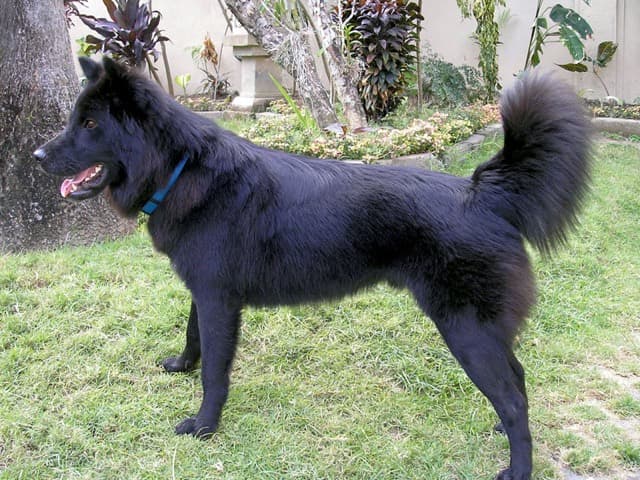
Kintamani-Bali Dog
Also known as Anjing Kintamani-Bali · Chien de Bali - Kintamani · Kintamani-Bali-Hund · Perro Kintamani-Bali
Indonesia, Asian Spitz and related breeds
- Size
- Medium
- Height
- 44–57 cm
- Weight
- —
- Life expectancy
- —
- Alert
- Independent
- Loyal
- Hardy
Heights and weights are typical adult ranges; individual dogs vary.
About the Kintamani-Bali Dog
The Kintamani-Bali Dog is a medium-sized spitz-type dog from the island of Bali, Indonesia, from the Kintamani highlands. It is a provisionally recognised breed, with a thick, usually white or light-coloured coat, pricked ears and a curled tail. It has long been a village and farm dog. It is a relatively new addition to formal recognition.
Temperament
Typically alert, independent and loyal, and may be wary of strangers. It can be strong-willed, so early socialisation and consistent training are helpful.
Exercise
Needs daily walks and play, around an hour, plus mental activity. It does well with space to explore.
Grooming
Thick double coat that sheds. Brush weekly and more often during seasonal shedding.
Care & wellbeing
It is adapted to a warm climate but a thick coat can cause overheating, so provide shade. Keep up parasite control and dental care.
Living with a Kintamani-Bali Dog
Typical tendencies for the breed. Upbringing, training and the individual matter as much.
History
A Bali island native dog from the Kintamani highlands, a spitz-type village dog of Indonesia. It was recognised as a breed in recent decades, and traditionally lived alongside people as a guard and companion.
Health
There's limited reliable published information on health issues in the Kintamani-Bali Dog. Breed clubs and your vet are the best sources.
Not every Kintamani-Bali Dog is affected, and this isn't a diagnosis. Read about common conditions and when to see a vet.
Cost to keep
About average- Moderate food and insurance costs
- Little or no professional grooming needed
- A commitment of many years
A relative guide, not a price — costs vary a lot by country, insurer and lifestyle.
Is a Kintamani-Bali Dog right for you?
Could suit
- Owners who can manage a good walk or two each day
Not sure? Try the breed finder or read choosing the right dog breed.
Common questions
How big does a Kintamani-Bali Dog get?
Adult Kintamani-Bali Dogs typically stand about 44–57 cm at the shoulder. Individuals vary, and males are often larger than females.
How much exercise does a Kintamani-Bali Dog need?
As a guide, around 60–90 minutes a day, split between walks, play and sniffing time. Puppies and older dogs need shorter, gentler sessions.
How much grooming does a Kintamani-Bali Dog need?
Brushing a few times a week. Check ears, teeth and nails as part of the routine.
Are Kintamani-Bali Dogs easy to train?
Generally trainable with consistent, reward-based practice.
Do Kintamani-Bali Dogs shed?
A moderate amount. Regular brushing keeps loose hair under control.
Are Kintamani-Bali Dogs good with children?
Many get on well with children. Always supervise young children with any dog, and teach them to give the dog space.
Can a Kintamani-Bali Dog live in a flat?
It can work — as long as they get enough daily exercise and time outdoors.
Written by Petopedia as general guidance, not veterinary advice. Ask your vet about health screening for this breed.
Breed details
- Country of origin
- Indonesia
- Type
- Asian Spitz and related breeds