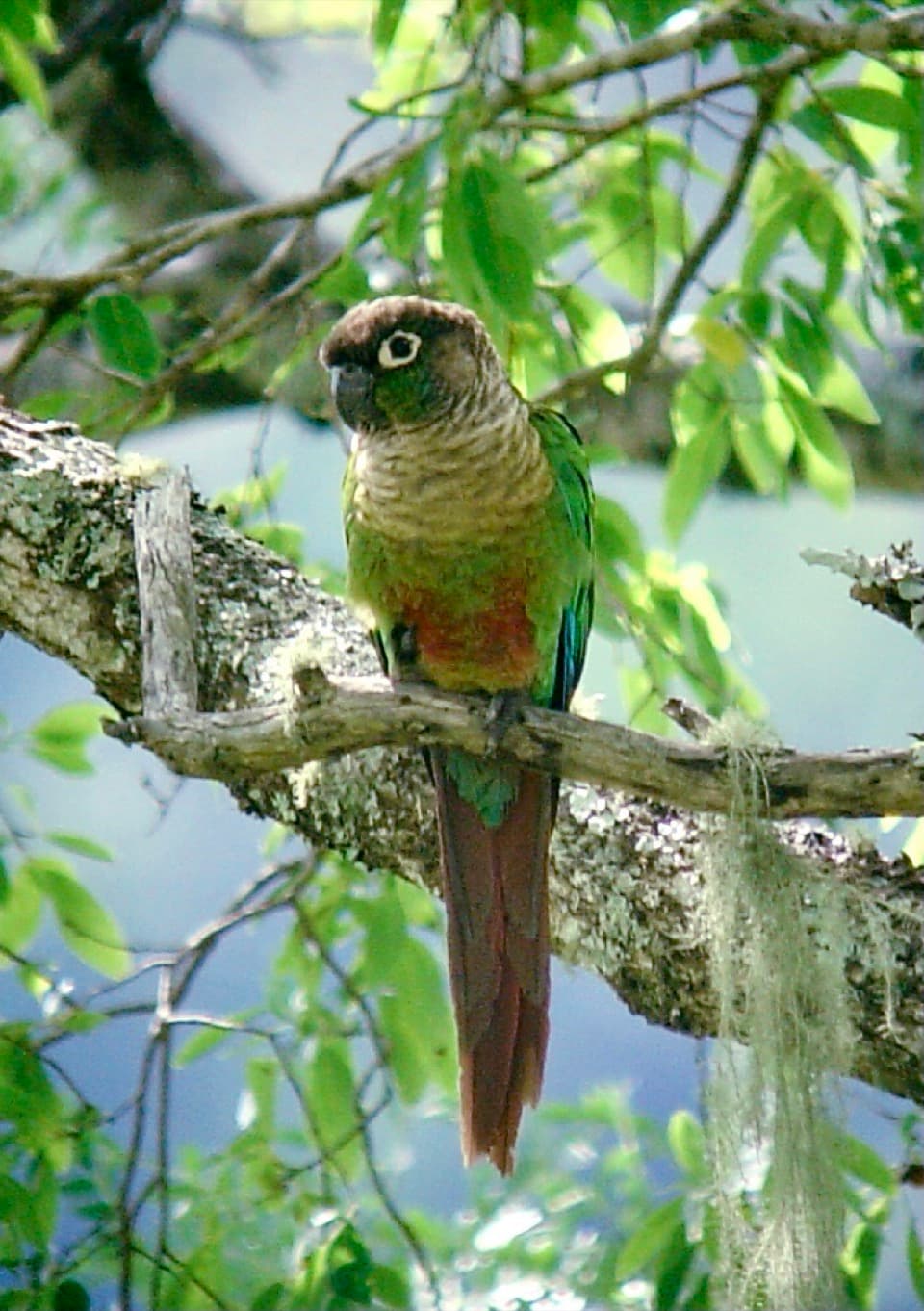
Green-cheeked Conure
Also known as Green-cheeked parakeet, Green-cheeked parrot
- Adult size
- 25–26 cm long, 60–80 g
- Lifespan
- 15–25 years
- Origin
- South America (Bolivia, Brazil, Argentina)
- Company
- Bonds closely; single with plenty of attention or a pair
- Playful
- Cuddly
- Inquisitive
- Bold
About the Green-cheeked Conure
The green-cheeked conure is a small, long-tailed parrot from the forests of central South America. Its green body, maroon tail and scalloped grey breast are joined in captivity by colour mutations such as pineapple, cinnamon and turquoise.
These conures pack a lot of personality into a small body and are quieter than many of their relatives, which has made them a popular choice for people wanting a parrot in a smaller home.
Temperament
Green-cheeks are playful, cuddly and inquisitive, often burrowing into clothing or snuggle tents. They can go through a nippy phase as youngsters and need patient training. Their calls are sharp but less piercing than sun conures. Many learn a few words in a small, gravelly voice.
Cage & housing
A cage of at least around 60 cm wide, 50 cm deep and 70 cm tall works for one bird, larger for a pair, with bar spacing of about 1.5 cm. Provide plenty of perches, swings and toys. Fabric snuggle huts are popular but should be checked often for loose threads, and removed if they trigger hormonal behaviour. Give at least two to three hours out of the cage daily and keep them away from non-stick cookware fumes, aerosols and smoke.
Diet
Offer a pellet base with daily vegetables, leafy greens and some fruit. Seeds and nuts should be treats rather than the main diet. Cooked grains, pulses and sprouted seeds add variety. Avoid avocado, chocolate, onion, caffeine and alcohol.
Company & enrichment
Green-cheeks love acrobatics, hanging toys, foraging puzzles and learning tricks such as turning around or waving. Training with small treats channels their energy and reduces nipping. Daily interaction is important; a pair can keep each other company. Rotate toys regularly to keep them interested.
Nails, beak & bathing
Most enjoy bathing in a shallow dish or under a gentle shower. If the nails start catching on fabric, have them clipped by a vet. Clean the cage regularly as they can be messy.
Health
Conures can be affected by proventricular dilatation disease, psittacosis and feather plucking. Respiratory infections and egg binding in hens are also possible. Some colour mutations may be linked to more health problems, though evidence is limited. Annual avian vet checks are wise.
Prone to
- Proventricular dilatation disease
- Psittacosis
- Feather plucking
- Egg binding
- Respiratory infections
Call a vet if you notice
- Fluffed and lethargicEmergency
- Breathing difficultyEmergency
- Straining to layEmergency
- Regurgitation or undigested food in droppings
- Feather plucking
A vet with experience of exotic pets is best placed to help. Find one before you need them.
Common questions
Are green-cheeked conures noisy?
They are one of the quieter conures but still make sharp calls, especially when wanting attention. They are generally more suitable for flats than larger parrots.
Do green-cheeked conures talk?
Some learn a handful of words, but they are not strong talkers. They are better known for their playful personalities.
Why does my green-cheek bite?
Young conures often go through a nippy stage, and bites can also signal fear, hormones or overstimulation. Positive reinforcement training and reading body language help.
Written by the Petopedia editorial team to our editorial standards. General guidance, not veterinary advice.