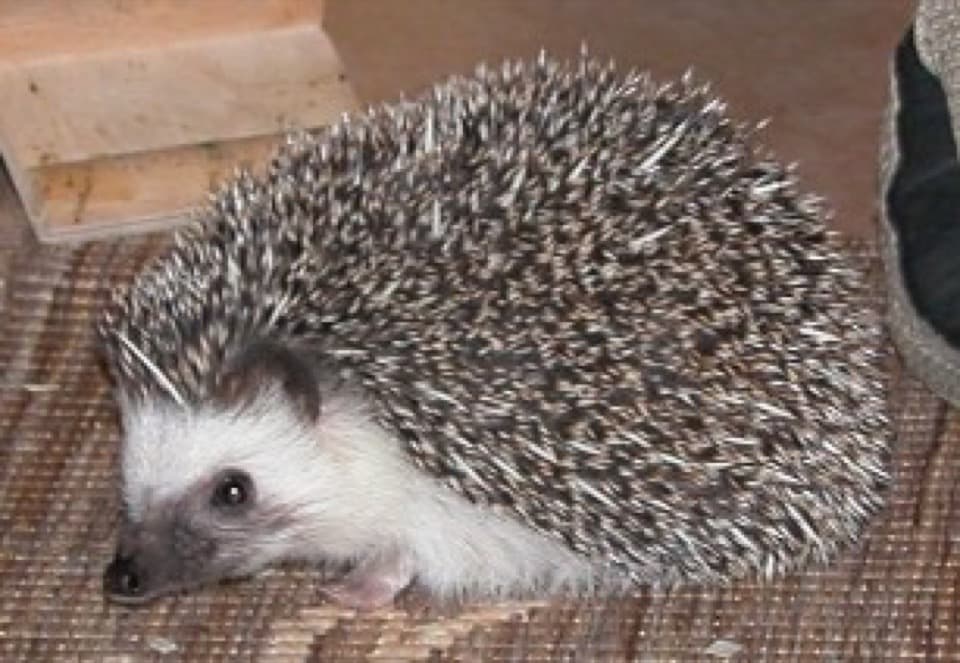
African Pygmy Hedgehog
Also known as Four-toed hedgehog, Pygmy hedgehog
- Adult size
- 15–20 cm long, 250–600 g
- Lifespan
- 3–6 years
- Origin
- Central and East Africa
- Company
- Solitary; house alone
- Shy
- Solitary
- Nocturnal
- Curious
About the African Pygmy Hedgehog
The African pygmy hedgehog is a domesticated hedgehog, thought to be mainly descended from the four-toed hedgehog, possibly with some hybrid ancestry. It is small, nocturnal and covered in spines.
Hedgehogs are solitary and need warmth, a large enclosure and an exercise wheel. They are prone to obesity, cancers and wobbly hedgehog syndrome, so they suit owners who can find a vet experienced with exotic pets.
Temperament
Hedgehogs are solitary animals that can be shy, huffing and rolling into a ball when frightened. With patient handling many become tame and relaxed. They are nocturnal, so they are most active late in the evening and at night. Adults should be housed alone.
Housing
Provide a large enclosure with solid floors, at least around 120 cm long and 60 cm wide. Keep the temperature warm, typically around 24–28 °C, as cold can trigger hibernation attempts that can be fatal. Provide a hide, a large solid wheel and bedding. Clean the enclosure regularly.
Diet
Feed a complete hedgehog food or a vet-approved low-fat, high-protein insectivore diet, with small amounts of live insects. Overfeeding is a common cause of obesity, so weigh food. Provide fresh water at all times. Avoid milk, grapes and raisins.
Exercise & enrichment
A large solid wheel, at least around 28 cm across, gives essential night-time exercise. Hiding treats in substrate encourages foraging. Handle gently every day so the hedgehog stays used to people. Supervised exploration of a safe room adds interest.
Grooming
Trim nails regularly, as they overgrow quickly. Bathe only if necessary, such as after messy wheel sessions. Clean the wheel daily, as hedgehogs often toilet while running.
Health
Hedgehogs are prone to obesity, dental disease, skin mites and cancer, which is common in middle-aged and older animals. Wobbly hedgehog syndrome is a progressive neurological disease with no cure that causes increasing loss of coordination. Regular weighing helps spot weight change early. Find a vet experienced with exotic pets before you need one.
Prone to
- Obesity
- Wobbly hedgehog syndrome
- Dental disease
- Skin mites
- Tumours
Call a vet if you notice
- Cold, lethargic or unresponsiveEmergency
- Wobbling or loss of balance
- Quill loss or flaky skin
- Lumps
- Weight loss
A vet with experience of exotic pets is best placed to help. Find one before you need them.
Common questions
Can two hedgehogs live together?
Adults are solitary and usually fight or become stressed if housed together, so each hedgehog needs its own enclosure.
What is wobbly hedgehog syndrome?
It is a progressive neurological disease that causes increasing wobbliness, then weakness and paralysis. There is no cure, but a vet can help keep an affected hedgehog comfortable.
Why is my hedgehog cold and sleepy?
A pet hedgehog that becomes cold may be trying to hibernate, which can be fatal. Warm it gradually and contact a vet straight away.
Why does my hedgehog foam at the mouth and lick its spines?
This is called self-anointing, a normal behaviour often triggered by new smells. It is not a sign of illness on its own.
Written by the Petopedia editorial team to our editorial standards. General guidance, not veterinary advice.