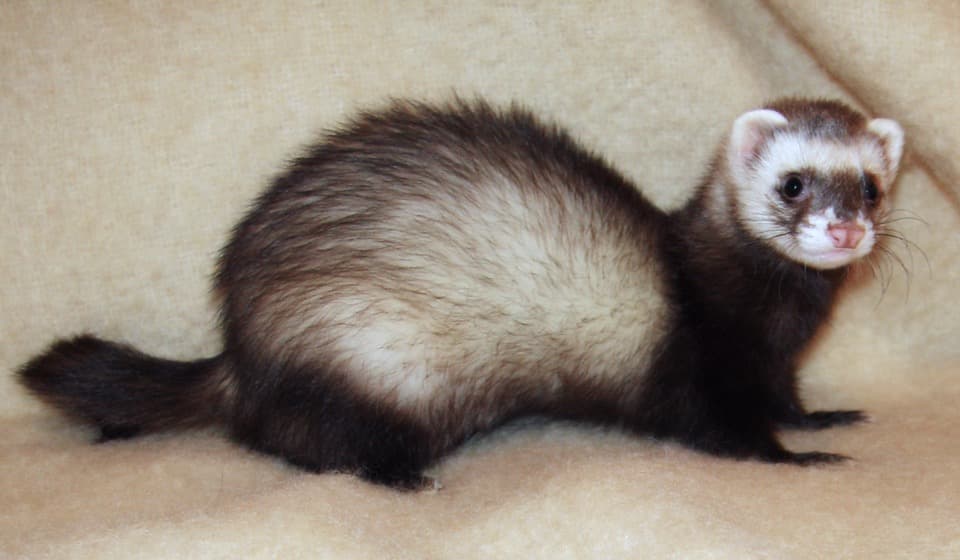
Ferret
Also known as Domestic ferret, Polecat ferret
- Adult size
- 35–50 cm long excluding tail, 0.6–2 kg (males larger)
- Lifespan
- 6–10 years
- Origin
- Domesticated in Europe from the European polecat (exact history uncertain)
- Company
- Social; best in pairs or groups with daily play time
- Playful
- Curious
- Mischievous
- Energetic
About the Ferret
The ferret is a domesticated member of the weasel family, probably descended from the European polecat and kept for centuries for hunting rabbits. Today it is also popular as a playful household pet.
Ferrets are strict carnivores with high energy, a musky smell and a need for company. They are restricted or banned in a few places, so check local rules before getting one.
Temperament
Ferrets are curious, mischievous and playful, often performing a bouncing 'war dance' when excited. They are social and usually happiest in pairs or groups. Kits can nip while learning boundaries, but most adults are gentle with regular handling. They sleep for long periods, then play hard.
Housing
Ferrets need a large, secure multi-level enclosure or a ferret-proofed room, plus several hours of supervised play outside it daily. They are escape artists and can squeeze through tiny gaps. They overheat easily, so keep them out of direct sun and hot rooms. Provide hammocks, sleeping boxes and a litter tray.
Diet
Ferrets are obligate carnivores and need a high-protein, high-fat, low-fibre diet based on meat, such as a complete ferret food or a carefully balanced raw meat diet. They cannot digest plant matter well, so avoid fruit, vegetables and sugary treats. A water bottle or heavy bowl should never run dry. Ask a vet for advice on balancing a raw diet.
Exercise & enrichment
Tunnels, balls, digging boxes and hide-and-seek games are favourites. Ferrets need several hours of play daily. They can be trained to use a litter tray and walk on a harness. Supervised exploration of new spaces keeps them stimulated.
Grooming
Trim nails regularly and clean ears as advised by a vet. Bathing too often can increase smell by stripping oils, so bathe only occasionally. Clean bedding and litter often to reduce odour.
Health
Ferrets are prone to adrenal disease, which causes hair loss and other signs, and insulinoma, a pancreatic tumour causing low blood sugar. Unneutered females can develop life-threatening anaemia if left in season. Vaccination against canine distemper may be recommended depending on where you live. Regular vet checks are important, especially as ferrets age.
Prone to
- Adrenal disease
- Insulinoma
- Lymphoma
- Oestrogen-related anaemia in unspayed females
- Canine distemper
- Swallowed foreign objects
Call a vet if you notice
- Collapse, seizures or staring and droolingEmergency
- Vomiting or straining to pass faeces — ; possible blockageEmergency
- Pale gums or swollen vulva in a female
- Hair loss, especially on the tail
- Weight loss or lethargy
A vet with experience of exotic pets is best placed to help. Find one before you need them.
Common questions
Do ferrets smell?
Ferrets have a natural musky odour. Regular cleaning of bedding and litter helps more than bathing.
Can ferrets live alone?
They are social and usually happier with at least one companion.
Do ferrets need vaccinations?
In some areas vets recommend vaccination against canine distemper. Ask your vet about local risks.
Are ferrets legal everywhere?
No, some places restrict or ban them. Check local rules.
Written by the Petopedia editorial team to our editorial standards. General guidance, not veterinary advice.