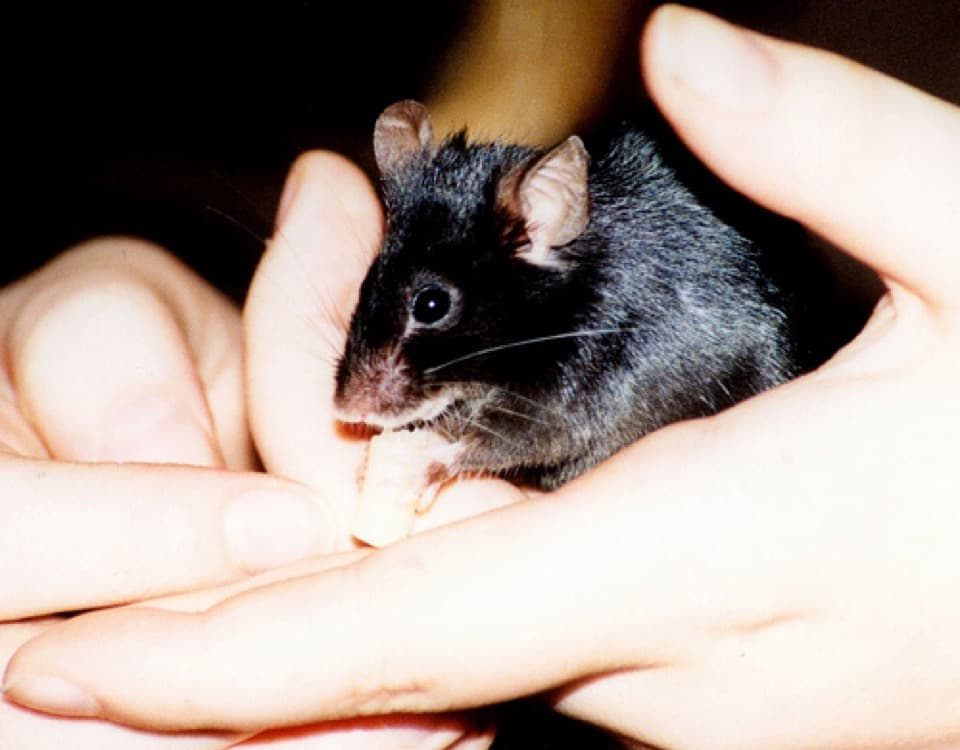
Fancy Mouse
Also known as Pet mouse, Domestic mouse
- Adult size
- 7–10 cm long excluding tail, 20–40 g
- Lifespan
- 1–3 years
- Origin
- Domesticated from the house mouse; long kept in Asia and later developed as a fancy in Britain
- Company
- Females in groups of two or more; adult males usually kept alone
- Curious
- Busy
- Skittish
- Nocturnal
About the Fancy Mouse
Fancy mice are domesticated house mice, bred for centuries in Asia and later in Europe for different colours, markings and coat types including satin, long-haired and rex. They are small, fast and fascinating to watch, especially at dusk and night when they are most active.
Females are sociable and live happily in groups, while adult males usually fight and are mostly kept on their own. Mice have short lives of around one to three years and are prone to respiratory disease and tumours, so they suit people who enjoy watching and gentle handling rather than cuddling.
Temperament
Mice are curious, busy and quick, and can be skittish until they learn to trust you. With patient hand-feeding, many become tame enough to sit in a cupped hand. Groups of females huddle together to sleep and groom each other, while males have a strong musky smell and are territorial. In some groups a dominant mouse nibbles the whiskers or fur of others, known as barbering.
Housing
Mice need a well-ventilated home of at least around 60 cm long for a small group, either a tank with a mesh lid or a cage with bar spacing no wider than about 0.7 cm, as they can squeeze through tiny gaps. Fill it with deep dust-free bedding, nesting material, tubes and several levels to climb. Ammonia builds up quickly in poorly ventilated tanks, so clean toilet corners often. Keep them away from draughts, direct sun and other pets.
Diet
Feed a complete mouse block or nugget rather than a loose seed mix, which lets them pick out fatty favourites. Small amounts of vegetables such as broccoli or cucumber add variety, and an occasional bit of boiled egg provides extra protein. Sugary, salty and fatty human snacks cause weight gain and should be avoided. Check the water supply every day.
Exercise & enrichment
A solid running wheel of at least around 20 cm across lets them burn off energy, and cardboard tubes, boxes and egg boxes make great disposable toys. Scattering food in the bedding encourages natural foraging. Lift mice by scooping them in cupped hands rather than by the tail. Swap the layout every week or two to keep them exploring.
Grooming
Mice keep themselves clean and should not be bathed. Look over their nails, teeth and coat now and then for overgrowth, scabs or thinning fur. Spot-clean toilet areas often but leave some old nesting material when deep cleaning, as a completely fresh-smelling home can stress them.
Health
Respiratory infections, often linked to mycoplasma and made worse by dusty bedding or ammonia, are very common and can cause sneezing, chattering breathing and a hunched posture. Mammary and other tumours often appear as lumps in older mice. Fur mites cause itching and scabs, and fight wounds are common between males. Mice hide illness well and decline fast, so see an exotics vet as soon as anything changes.
Prone to
- Respiratory infections (mycoplasma)
- Mammary and other tumours
- Fur mites
- Barbering
- Fight wounds in males
Call a vet if you notice
- Laboured, clicking or chattering breathingEmergency
- Hunched, puffed-up and not movingEmergency
- New lumps or swellings
- Hair loss, scabs or constant scratching
- Weight loss or not eating
A vet with experience of exotic pets is best placed to help. Find one before you need them.
Common questions
Can male mice live together?
Adult males usually fight, sometimes seriously, so most are kept alone. Females are much happier in groups.
Why do pet mice smell?
Males produce a stronger musky scent than females. Regular spot cleaning helps, but deep cleaning too often can make males scent-mark more.
Why are my mice missing whiskers?
This is often barbering, where a dominant mouse nibbles the whiskers or fur of cage mates. Mites and other skin problems can look similar, so a vet check is worthwhile.
How long do pet mice live?
Most live between one and three years, with many reaching around two.
Written by the Petopedia editorial team to our editorial standards. General guidance, not veterinary advice.