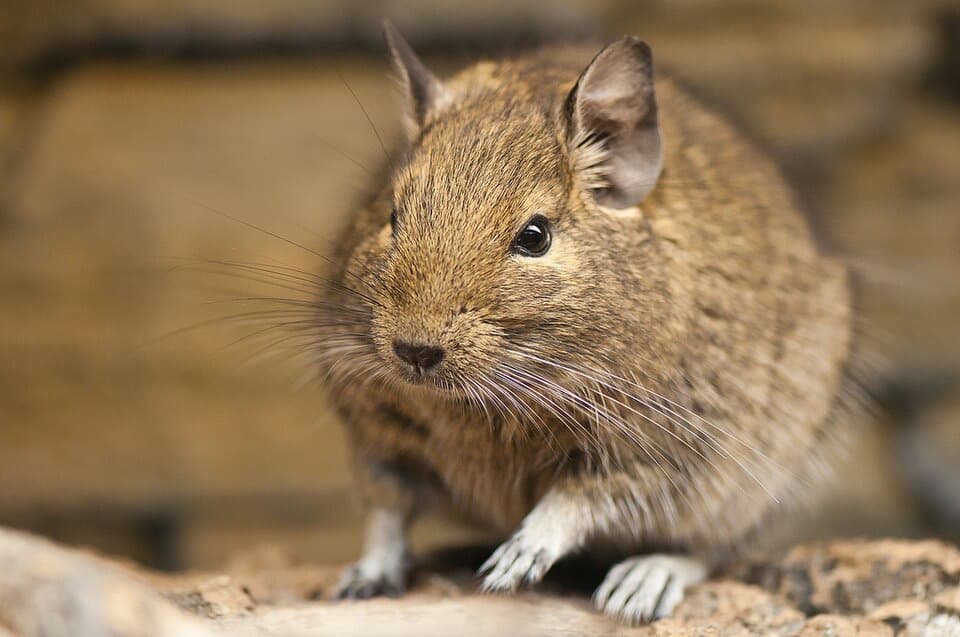
Degu
Also known as Common degu, Brush-tailed rat
- Adult size
- 25–31 cm long including tail, 170–300 g
- Lifespan
- 5–8 years
- Origin
- Chile
- Company
- Same-sex groups of at least two
- Intelligent
- Social
- Vocal
- Active
About the Degu
The degu is a small rodent from central Chile, related to chinchillas and guinea pigs. It lives in colonies and, unusually among pet rodents, is active by day.
Degus are intelligent and social but need a diet free from sugar, as they are prone to diabetes. They are best kept in groups.
Temperament
Degus are inquisitive, busy and talkative, with a surprising range of chirps, whistles and warbles used to keep in touch with each other. A lone degu is likely to become stressed and may chew its own fur, so same-sex groups of two or more are essential. With patient hand-feeding many become confident enough to climb onto their owners. Unlike most pet rodents they are awake mainly by day, with peaks of activity in the morning and late afternoon.
Housing
Give a small group a tall, multi-level enclosure of at least around 100 cm wide, 50 cm deep and 100 cm tall, with solid shelves rather than wire floors. Degus gnaw through plastic quickly, so metal, glass and untreated wood are better choices. They come from a cool climate and can overheat, so keep them out of direct sun and away from radiators. A deep layer of substrate lets them dig, and a dish of chinchilla sand gives them somewhere to roll.
Diet
Good-quality hay should make up most of the diet and be available at all times, alongside a measured portion of a complete degu food. Degus handle sugar poorly and are prone to diabetes, so fruit, sweet vegetables such as carrot, and sweetened or honey-coated treats should be avoided. Small amounts of leafy greens and herbs are suitable. Change water daily.
Exercise & enrichment
A large solid wheel, wooden chews, cork tunnels and branches to climb meet their need to gnaw and run. Scattering part of the dry food in hay turns mealtimes into a foraging task. Degus can learn to come to a call or take food from a hand. Lift them by scooping the whole body, never by the tail.
Grooming
Regular sand baths keep a degu's coat in good order. Check that the orange front teeth are even and not overgrown, and look at nails every few weeks. Spot-clean toilet corners daily and change bedding weekly.
Health
Diabetes is the best-known risk, often first noticed as cloudy eyes from cataracts or as drinking and urinating more. Overgrown teeth and tooth roots can cause weight loss and swellings on the jaw. If grabbed by the tail, the skin can strip away, a painful injury known as tail slip or degloving. A vet familiar with exotic rodents can check teeth and weight at an annual visit.
Prone to
- Diabetes
- Cataracts
- Dental problems
- Tail slip
Call a vet if you notice
- Not eating or no droppings for 12 hours or moreEmergency
- Tail skin stripped or bleedingEmergency
- Cloudy or white eyes
- Drinking and urinating noticeably more
- Drooling, weight loss or a lump on the jaw
A vet with experience of exotic pets is best placed to help. Find one before you need them.
Common questions
Why can't degus eat fruit?
Degus are very prone to diabetes, and sugary foods increase the risk. Fruit, sweet vegetables and sweetened treats are best avoided completely.
Can a degu live alone?
No. Degus are colony animals and a lone degu is likely to be stressed and bored. Keep at least two of the same sex together.
Are degus active during the day?
Yes. Unlike hamsters and many other pet rodents, degus are mainly active in daylight, which makes them rewarding to watch.
Why are my degu's eyes cloudy?
Cloudy eyes can be a sign of cataracts, which in degus are often linked to diabetes. A vet should check your degu promptly.
Written by the Petopedia editorial team to our editorial standards. General guidance, not veterinary advice.