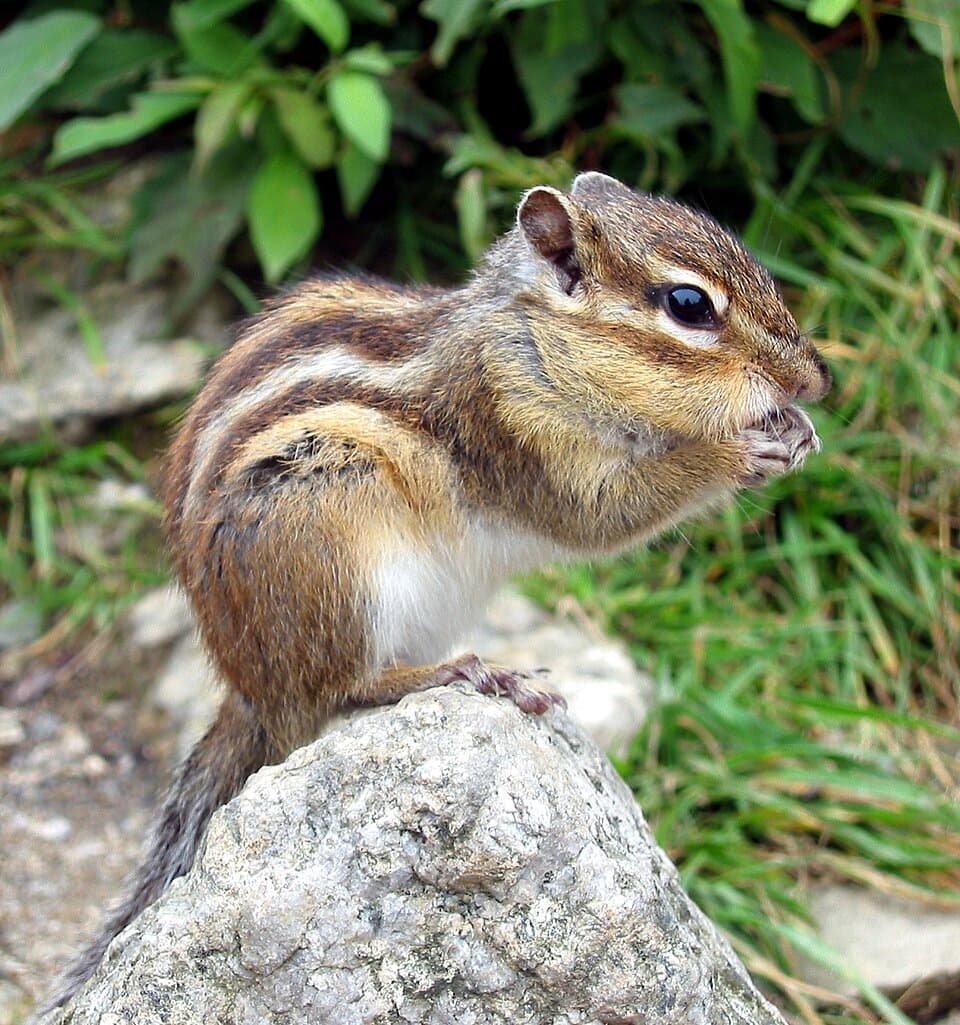
Siberian Chipmunk
Also known as Chipmunk, Common chipmunk
- Adult size
- 18–25 cm long including tail, 50–120 g
- Lifespan
- 6–10 years
- Origin
- Northern Asia (Siberia to Japan)
- Company
- Solitary or pairs; not a handling pet
- Active
- Curious
- Nervous
- Agile
About the Siberian Chipmunk
The Siberian chipmunk is a small striped ground squirrel from the forests of northern Asia, from Russia to Korea and northern Japan. It spends much of its day foraging and storing seeds and nuts in its burrow.
Chipmunks are lively and entertaining to watch, but they need large aviary-style enclosures rather than cages and rarely become handling pets. Escaped and released chipmunks have established wild populations in parts of Europe, and keeping, selling or breeding them is now restricted or banned in some countries, so check local rules first.
Temperament
Chipmunks are fast, alert and easily startled, darting for cover at sudden movements. Most dislike being held and may bite if caught, though some will take food from a hand. Adults are often territorial, so many keepers house them singly or as a carefully matched pair in a large enclosure. They are active by day and make chirping or clucking alarm calls.
Housing
An aviary-style enclosure of at least around 180 cm long, 90 cm wide and 180 cm tall gives room to run and climb; an outdoor aviary with a sheltered area suits them well where climate and local rules allow. Provide branches, several nest boxes and a deep, diggable floor. Their teeth and agility make them skilled escape artists, so check mesh and doors regularly and use a double-door entry if possible. Protect them from hot sun and freezing, damp conditions.
Diet
Feed a quality rodent or squirrel mix as a base, with fresh vegetables, a little fruit and some nuts in their shells. Chipmunks hoard food, so check nest boxes for stale or mouldy stores. Insects or a little cooked egg can provide extra protein. Clean water should always be available.
Exercise & enrichment
Natural branches, logs, tunnels and scattered food let chipmunks forage and hoard as they would in the wild. Swapping the layout from time to time adds interest. A large solid wheel may be used. Interaction is best kept to hand-feeding rather than handling.
Grooming
Chipmunks groom themselves and use dry sand or soil to clean their coats. Teeth and nails usually wear naturally on branches and hard foods. Clean nest boxes and remove old food stores regularly.
Health
Overgrown or broken teeth, injuries from falls or fights and stress from being kept in too small a space are among the most common problems. Chipmunks kept outdoors may become drowsy and inactive in cold weather, entering a state of torpor, which should be distinguished from illness. Older animals can develop tumours. Very few vets see chipmunks, so find one with exotic experience in advance.
Prone to
- Dental problems
- Injuries
- Stress
Call a vet if you notice
- Not eating or drinkingEmergency
- Bleeding or a visible injury after a fall or fightEmergency
- Overgrown, broken or misaligned teeth
- Weight loss or a hunched posture
- Discharge from eyes or nose
A vet with experience of exotic pets is best placed to help. Find one before you need them.
Common questions
Can chipmunks be tamed?
Some become confident enough to take food from a hand, but most never enjoy being held. They are best treated as animals to watch.
Is it legal to keep a Siberian chipmunk?
In some countries keeping, selling or breeding them is restricted because escaped chipmunks can become invasive. Check local rules before buying.
Do pet chipmunks hibernate?
Chipmunks kept outdoors may enter torpor in cold weather and become very inactive. If you are unsure whether a chipmunk is torpid or ill, ask a vet.
Written by the Petopedia editorial team to our editorial standards. General guidance, not veterinary advice.