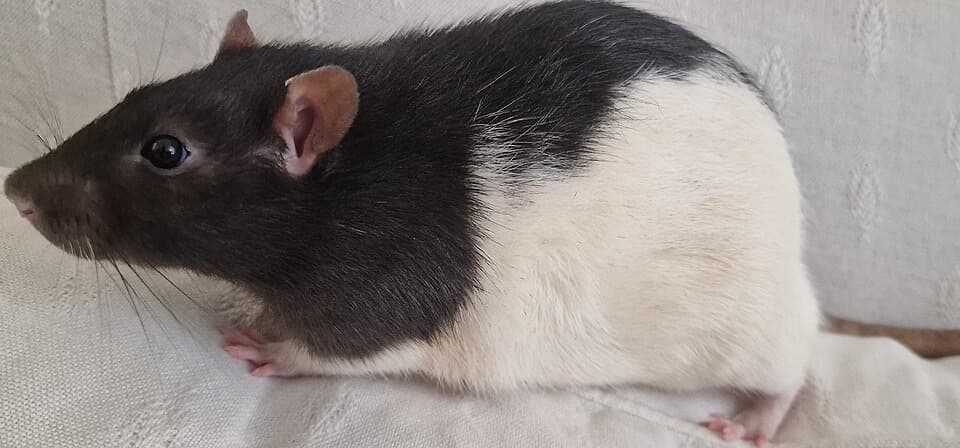
Fancy Rat
Also known as Pet rat, Domestic rat
- Adult size
- 20–25 cm long excluding tail, 250–500 g
- Lifespan
- 2–3 years
- Origin
- Domesticated from the brown rat (Europe)
- Company
- Keep in same-sex groups of at least two
- Intelligent
- Friendly
- Curious
- Social
About the Fancy Rat
Fancy rats are domesticated brown rats, bred in many colours, markings and coat types such as rex and hairless. They are intelligent, social and affectionate, and many owners compare their personalities to small dogs.
Rats should be kept in same-sex groups, need large, enriched cages and daily time out to explore. Their main drawbacks are short lives and a strong tendency to develop respiratory disease and tumours.
Temperament
Rats are friendly, curious and highly intelligent. They enjoy human company and can learn their names and tricks. They are social and should never be kept alone. Most rarely bite when handled regularly.
Housing
Provide a large, multi-level cage, at least around 80 cm wide, 50 cm deep and 80 cm tall for a small group, with bar spacing of about 1.2 cm. Solid shelves or ramps are kinder to feet than bare wire. Use dust-free paper or hemp-based bedding, as rats have sensitive lungs. Allow at least an hour a day of supervised free-range time.
Diet
Feed a complete rat block or pellet as a base, with small amounts of fresh vegetables and occasional fruit. Avoid sugary or fatty foods. Clean drinking water should be on offer at all times. Some foods, such as raw bean and green potato, are unsafe.
Exercise & enrichment
Rats love climbing, hammocks, tunnels and foraging games, such as treats hidden in paper. They learn tricks and their names quickly with food rewards. Daily handling and play are important. Rotate toys to keep them interested.
Grooming
Rats groom themselves and each other. Check nails and clean the cage regularly. Bathe only if necessary, using lukewarm water.
Health
Rats are prone to respiratory infections, often caused by mycoplasma, which can flare up with stress or dusty bedding. Mammary tumours are common in females. Regular health checks and quick action on breathing problems are important. Neutering may reduce tumour risk; discuss with a vet.
Prone to
- Respiratory infections (mycoplasma)
- Mammary tumours
- Pituitary tumours
- Bumblefoot
Call a vet if you notice
- Laboured breathing or gaspingEmergency
- Head tilt or loss of balance
- Sneezing with red discharge (porphyrin)
- Lumps under the skin
- Weight loss
A vet with experience of exotic pets is best placed to help. Find one before you need them.
Common questions
Can a rat live on its own?
Rats are very social and become lonely and stressed alone. Keep at least two of the same sex.
Why is there red around my rat's eyes or nose?
Rats produce a red-brown secretion called porphyrin when stressed or unwell. Small amounts can be normal, but a lot of it, especially with sneezing, needs a vet check.
Why do pet rats only live a few years?
Rats naturally have short lifespans of around two to three years, and tumours and respiratory disease become common as they age.
Do pet rats bite?
Well-socialised rats rarely bite. Bites usually come from fear, pain or mistaking fingers for food.
Written by the Petopedia editorial team to our editorial standards. General guidance, not veterinary advice.